The SAP data source is one of the integration methods that allows you to connect to external systems on the Kuika platform. Using your SAP system’s connection credentials, you can retrieve data directly from SAP into the application you’ve developed in Kuika, or send data to SAP.
Add a Data Source Connection to Your App with SAP
Log in to the Kuika platform and open the project you’ll be working on from the Apps screen.
Open the Datasources module from the top menu. In this module, you can view the data sources and actions in your app under the Recently modified and Data sources tabs, search using the Search by name field, and add a new data source.
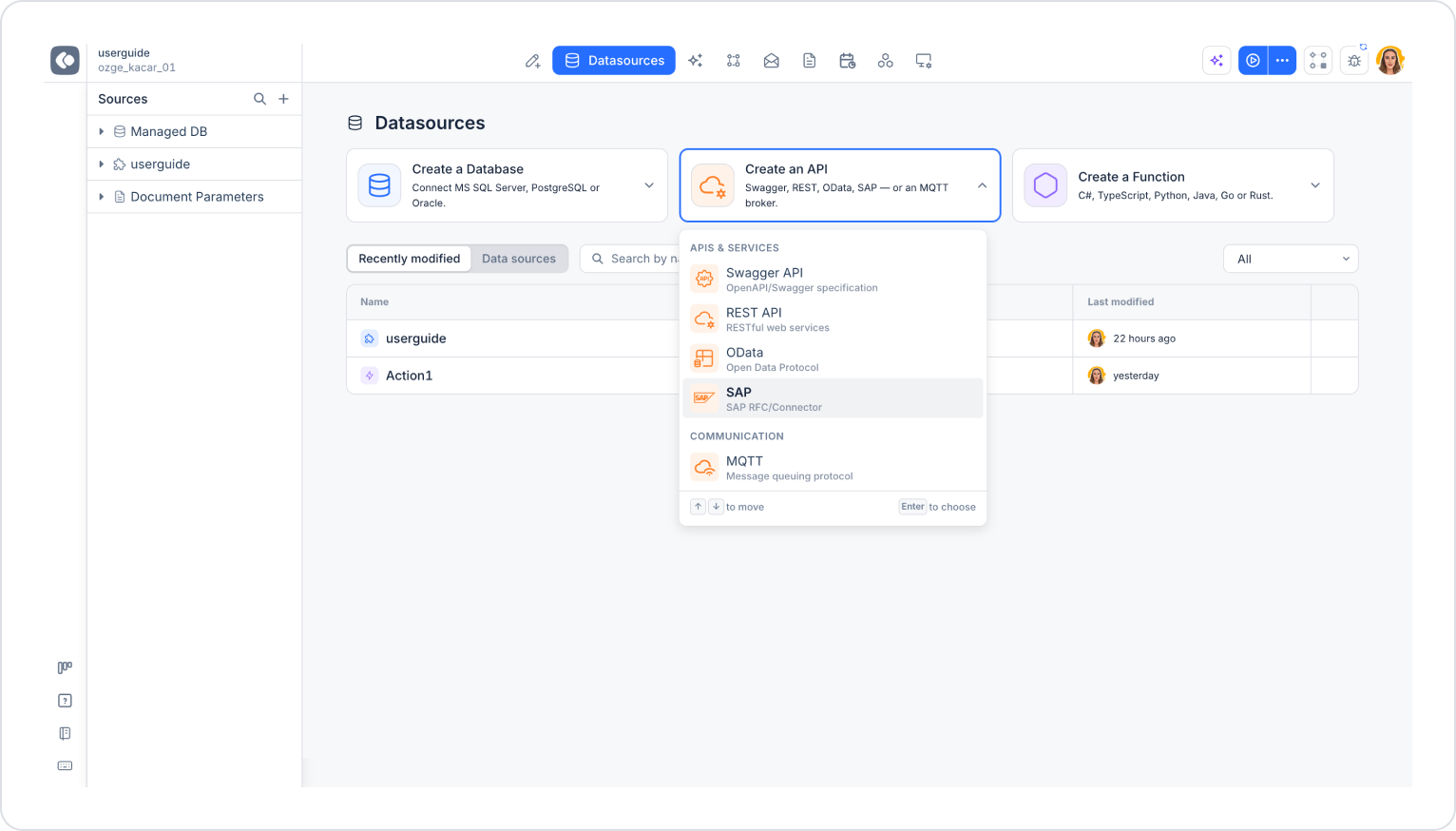
Click the Create an API card at the top of the screen. This card allows you to create Swagger, REST, OData, SAP, and MQTT broker connections.
In the list that opens, select the SAP (SAP RFC/Connector) option under the APIs & Services heading. You can use the ↑/↓ keys to navigate the list and the Enter key to make a selection.
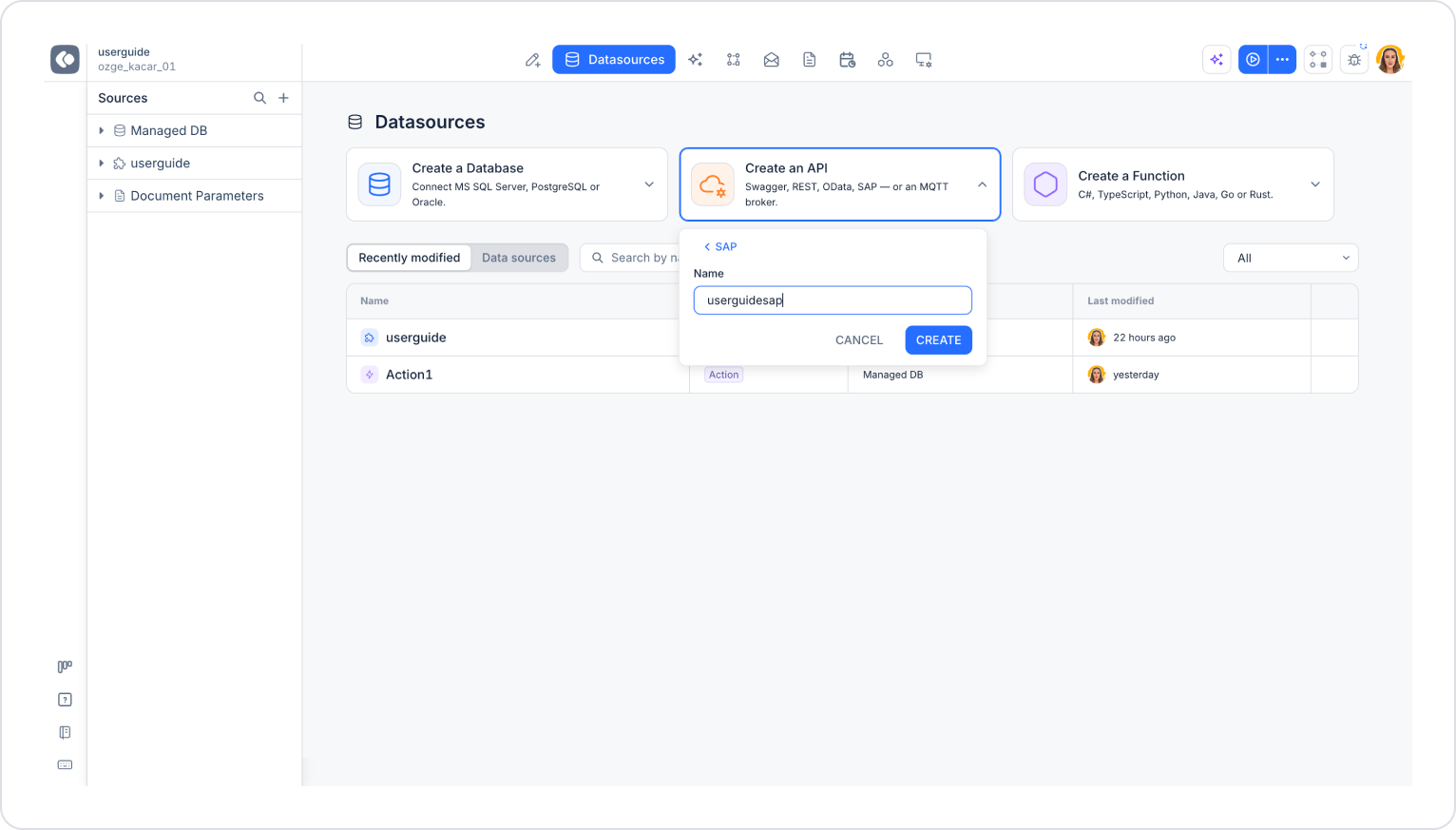
Enter a name for your data source in the Name field (e.g., userguidesap).
Click the CREATE button to complete the process. To cancel the operation, use the CANCEL button; to return to the connection type selection, use the < SAP link.
Note: You can also start the process of adding a new data source by clicking the + icon next to the Sources heading in the left panel.
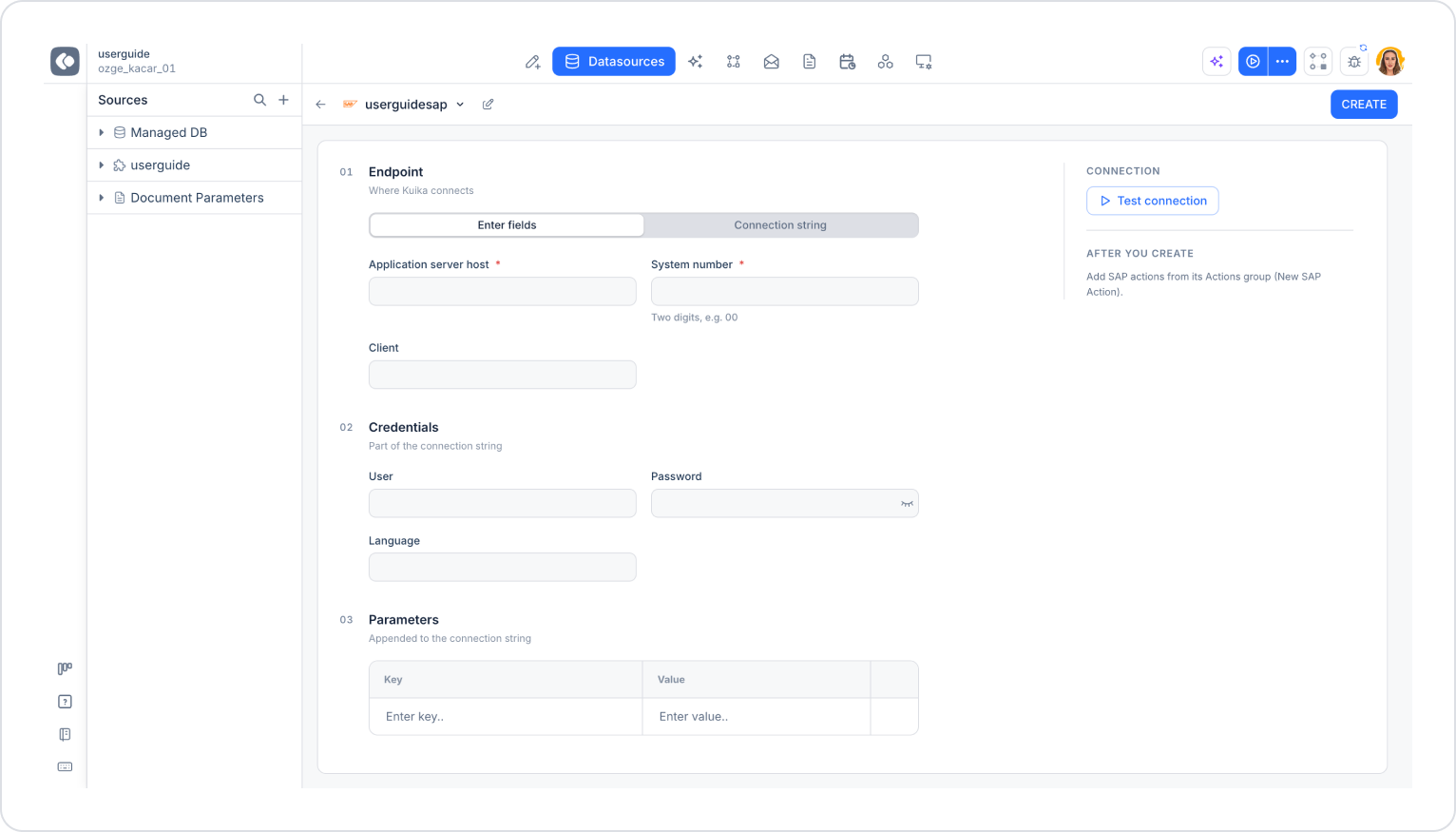
After these steps, the SAP connection settings screen opens. At the top of the screen, you’ll find the back button (←), the data source name (with a pencil icon to edit it), and the CREATE button to save the settings. In the Connection section on the right, there is a Test connection button to test the connection.
You can enter the connection information for the SAP system using either the Enter fields or Connection string tabs in the Endpoint section.
Configuring SAP Settings via Fields (Enter Fields)
In the Endpoint section, select the Enter fields tab and fill in the following fields.
01 Endpoint
Contains the SAP server information that Kuika will connect to.
Application server host (required): The address of the SAP application server. Example: myserver
System number (required): The two-digit SAP system number. Example: 00
Client: The SAP client number. Example: 100
02 Credentials
These are the credentials that are part of the connection string.
User: SAP username.
Password: SAP user password. You can show or hide the password using the eye icon.
Language: Session language. Example: EN, DE, TR
03 Parameters
You can enter additional parameters to be added to the connection string in the Key and Value fields. When you fill in a line, a new blank line appears below it; you can delete an added line using the trash can icon.
Configuring Settings via the Connection String
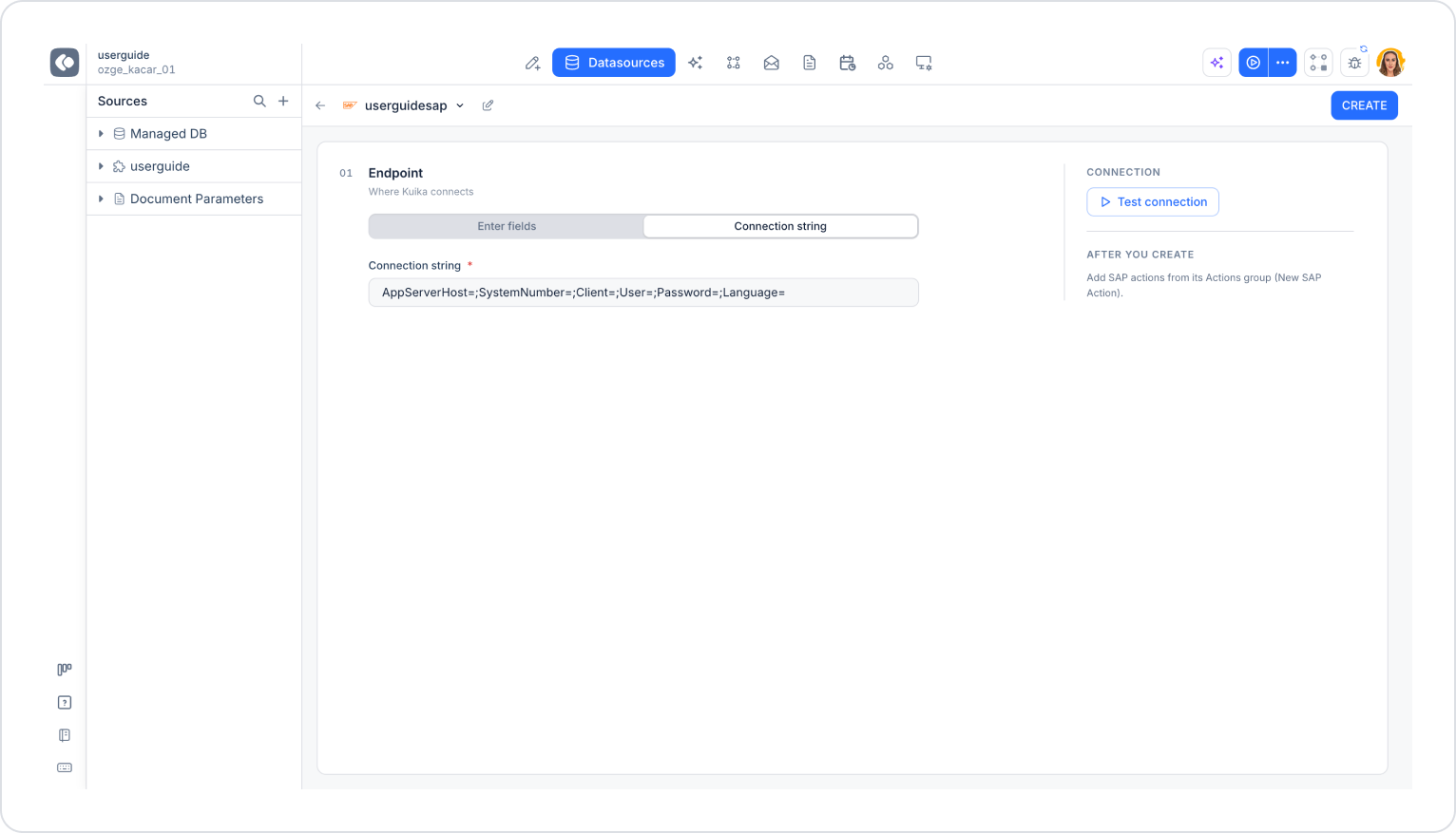
In the Endpoint section, select the Connection string tab.
Enter your SAP connection information on a single line in the Connection string (required) field. By default, the field uses the following template: AppServerHost=;SystemNumber=;Client=;User=;Password=;Language=
Click the Test connection button in the Connection section on the right to verify your connection.
If the connection is successful, click the CREATE button in the top-right corner to save your data source.
After saving, you can add SAP actions by selecting New SAP Action from the data source’s Actions group.
By following these steps, you can integrate your SAP data source into your Kuika applications. You can define the connection either through fields or using the connection string method and customize it to suit your needs.