

Kuika’s API Builder module allows you to turn the app you’re developing into a data source for other apps and services. An API (Application Programming Interface) is an interface that enables data exchange between different systems and apps in a standardized format.
This module simplifies your app’s data exchange processes. For example, a food ordering app developed in Kuika can retrieve a restaurant’s menu via an API. Similarly, when an order is placed, you can send this information to the restaurant via the API and receive feedback. In this tutorial, you’ll learn how to configure API definitions using the Kuika API Builder module.
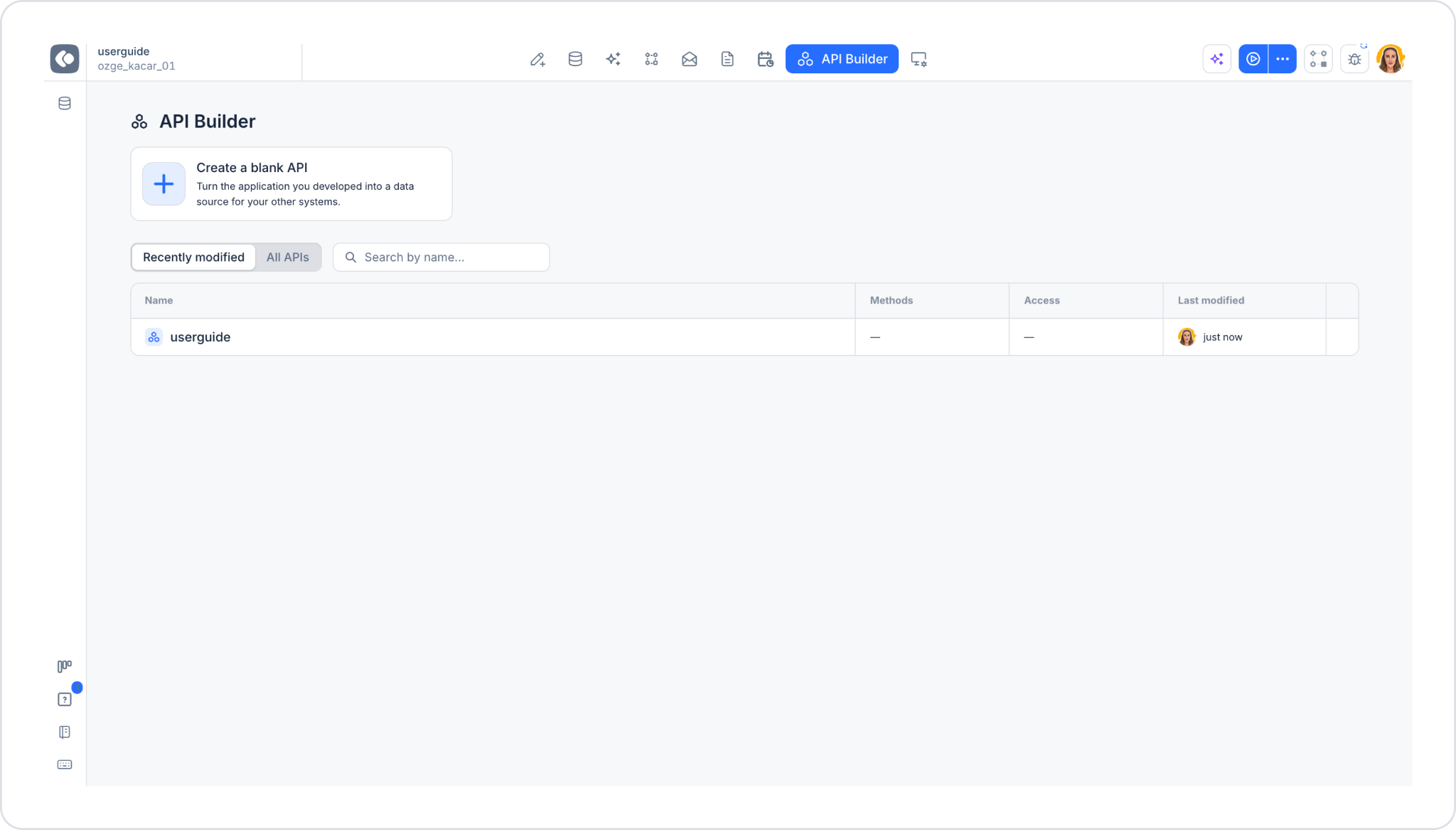
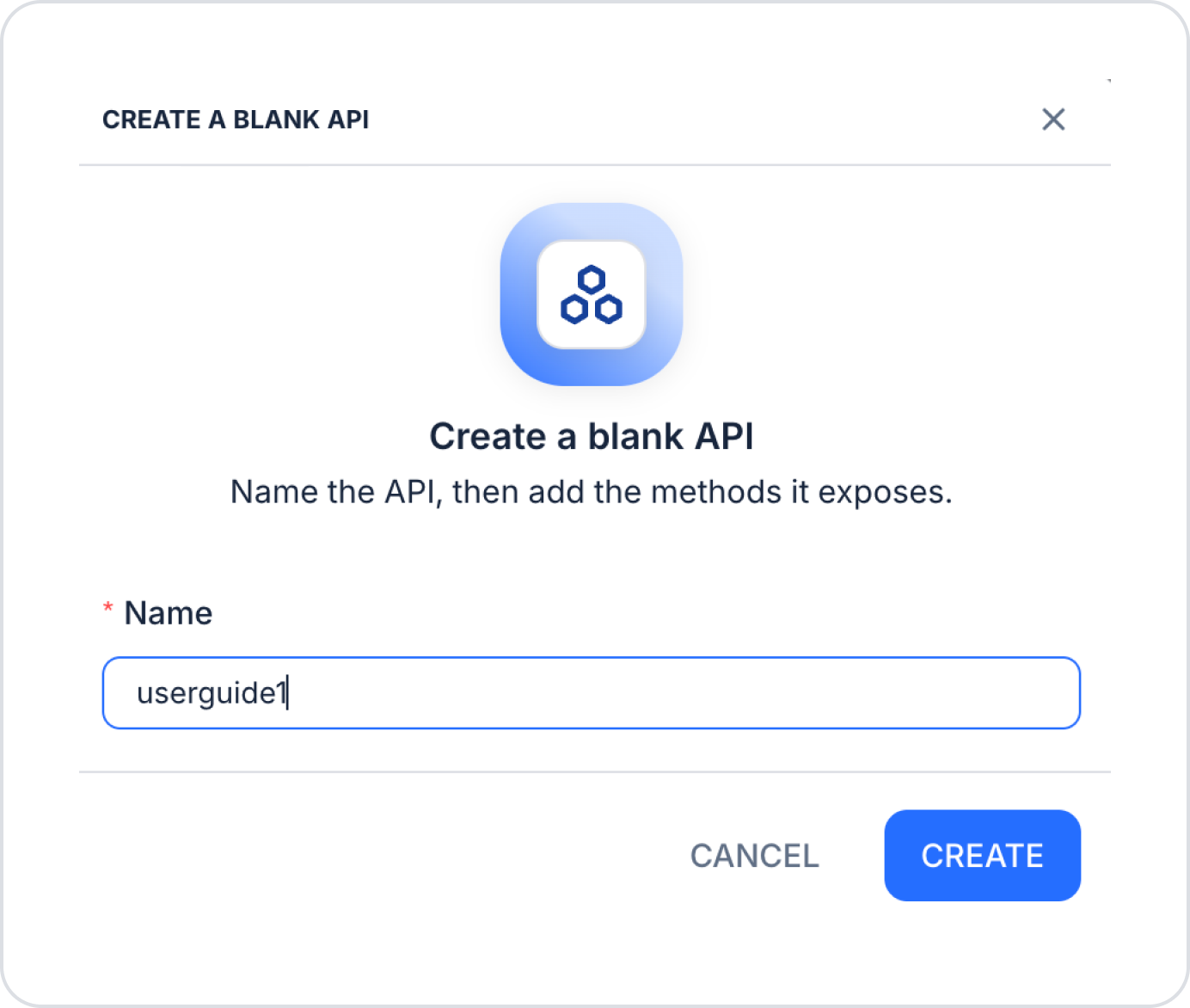
On the API Builder main screen, there are two tabs that allow you to view the APIs you’ve created:
In both lists, you can search by name using the Search by name... box. The table consists of the following columns:
Here’s what you can do in this panel:
When you enter an API you’ve created, the API name (which can be changed via a dropdown list) appears at the top, along with an edit (pencil) icon next to it.
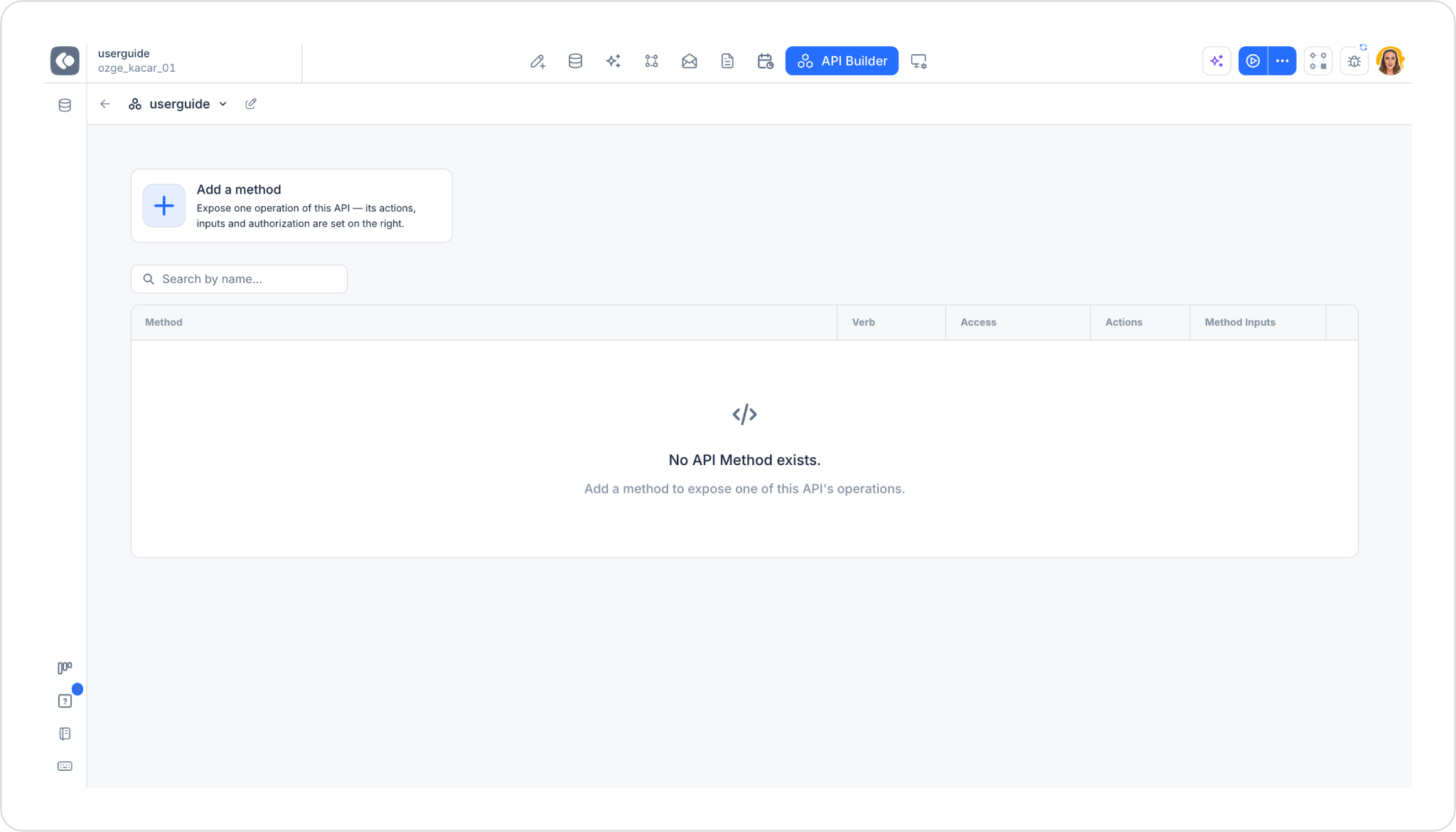
If no methods have been added yet, the screen displays an Add a method card with the message “No API Method exists. — Add a method to expose one of this API's operations.” below it.
When you click this card, the New Method window opens:
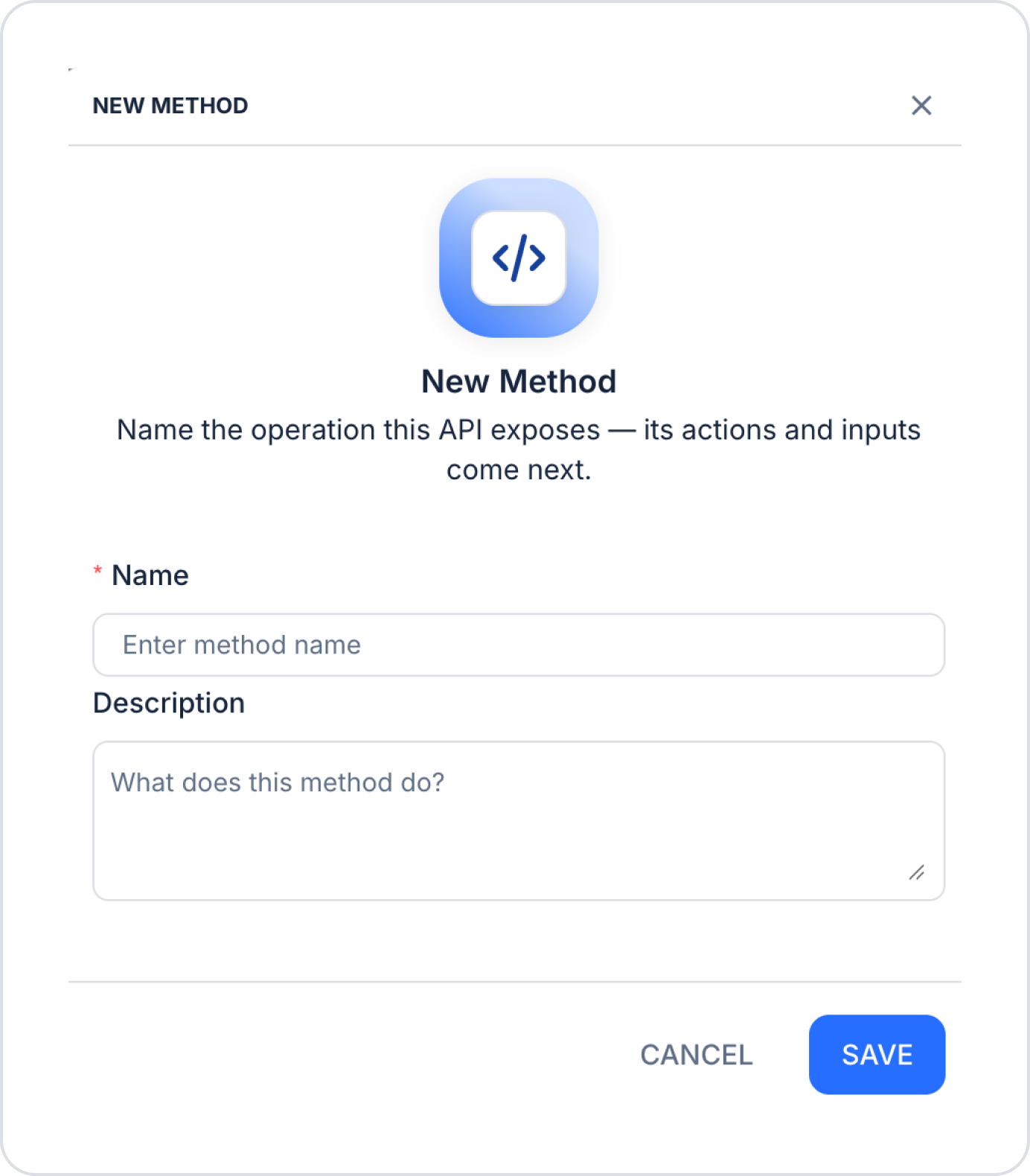
SAVE to create the method, or CANCEL to cancel.
After the method is created, a table listing the created methods appears on the left. You can search among the methods using the Search by name... box. Table columns:
When a method is selected, the Properties panel opens on the right.
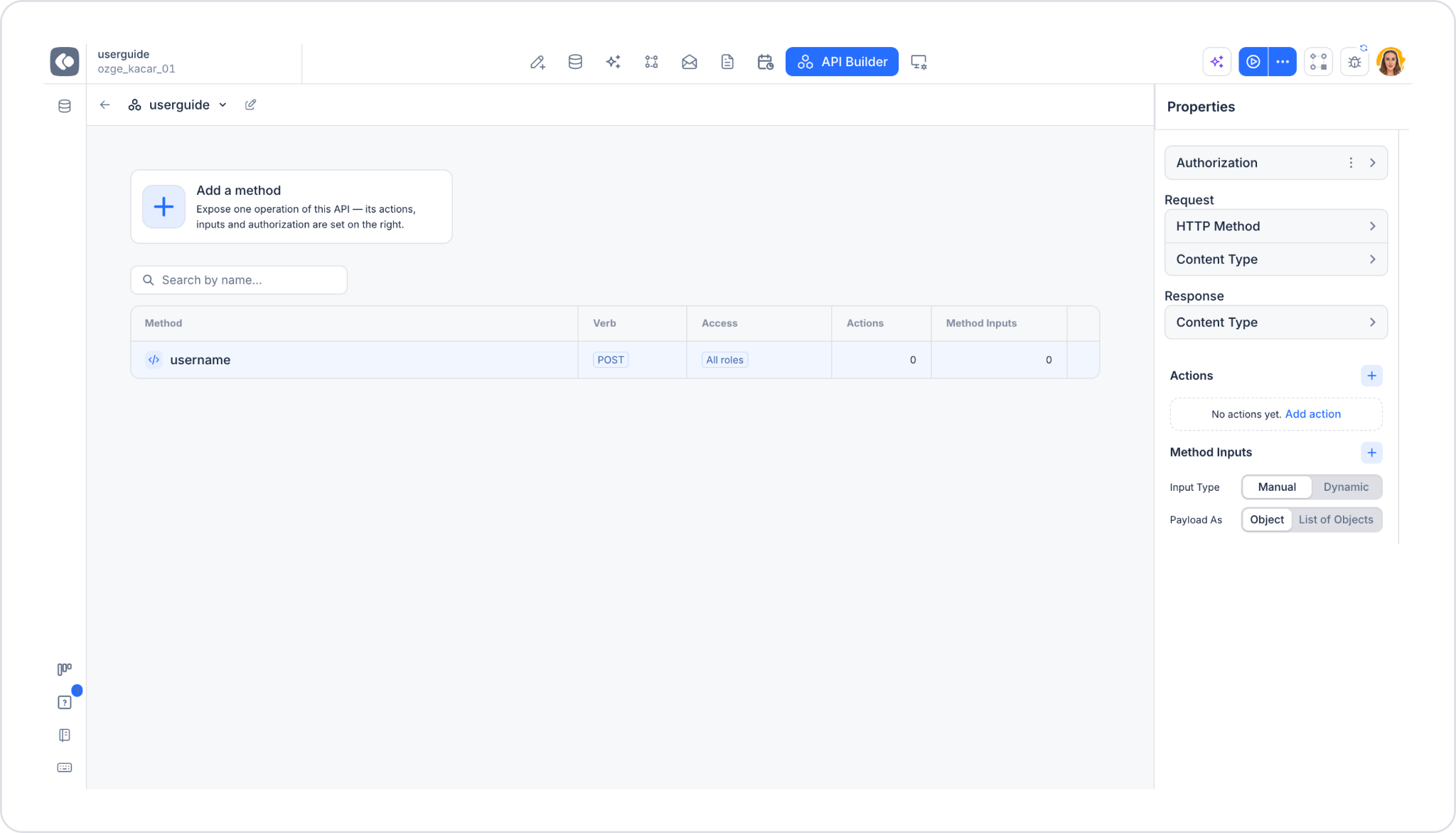
Authorization
You can configure method-specific authorization settings in this section. The panel includes a dropdown menu (⋮) and an expand arrow (>). You can set the access level for the API method:
Request Settings
Response Settings
Actions
Actions that will run when the method is called are added using the + icon on the right. If no actions have been added yet, the message “No actions yet. Add action” is displayed. Added actions:
Action results can be linked to the Response via the Symbol Picker.
Method Inputs
Allows the API to accept parameters from external sources. Click the + icon on the right to add a new input parameter.
Manual Input
Dynamic Input
When “Dynamic” is selected, the JSON Object field opens. Example structure:
{“paramName”: “Value1”,‘paramName2’: 10,“paramName3”: 10.4}This structure defines the request body expected by the method. The system automatically determines the type of the relevant parameter based on the values provided here. The critical criteria the system uses for default type determination are listed below:
An API will be created that returns the menu status based on a barcode number.


