1. Overview of the Process Automation Viewer Element
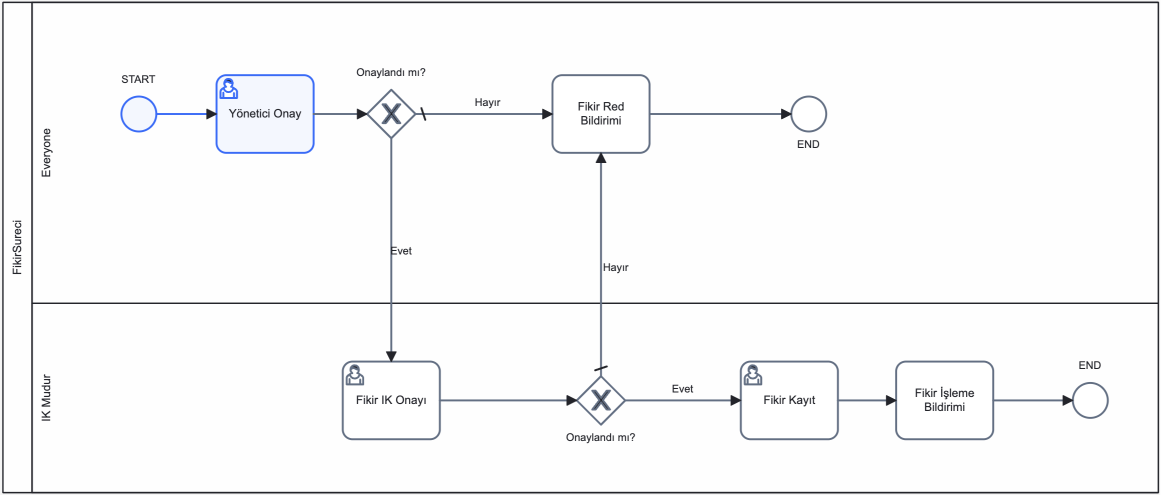
The Process Automation Viewer element allows you to visually monitor the current status of the workflows (process automation) you create on Kuika on the diagram you prepared during the design phase.
This element makes it easy to track which step a running process is at, which steps have been completed, what the pending statuses are, and how the flow is progressing in the process.
It can be used for any scenario where process management, approval mechanisms, multi-step process structures, and operational workflows need to be monitored. Users can view the process flow in real time and track the process accurately using the Viewer on the screen.
The Process Automation Viewer element is only supported in web applications.
1.1. Frequently Used Scenarios
Monitoring the current status of a running workflow. For example: Approval Process, Purchasing Flow, Request Management, Production Process.
Visually showing which steps have been completed or are pending
Showing the user where the process is stuck in complex processes. It can be used to quickly identify errors, especially in multi-step operational flows.
Presenting interdepartmental workflows transparently. This allows process owners to view progress in real time.
Provide a diagram that automatically updates as the process progresses
Provide process notifications in customer or employee applications. For example: shipment tracking, application process, payment approval, document verification flows.
Visualize process performance in management dashboards
Clearly show users any steps that are incorrect or canceled
2. Key Features
Real-time process monitoring. Visually shows which step a running Process Automation flow is currently at.
Exact match with the design diagram. The Viewer displays the same flow to the user based on the diagram created in the Process Automation design screen.
Ability to distinguish between completed, pending, and active steps. Each step is indicated with different visual states (color, symbol, etc.) to improve the readability of the process.
Displaying errors or stopped processes. Steps where the process unexpectedly stopped or encountered an error are clearly shown to the user.
Step-by-step status tracking. The status of each individual step (completed, active, pending, failed) can be viewed.
Present complex workflows in a simplified manner. Parallel workflows, conditional transitions, and multi-step structures become easy to understand.
Increase process transparency. Users can clearly track what is happening throughout the process.
Cross-departmental process visibility. Teams such as operations, accounting, and customer service can track the same process flow from a single screen.
High performance on the web interface. Viewer runs only on web applications and renders quickly, even with large diagrams.
2.1. Element Properties
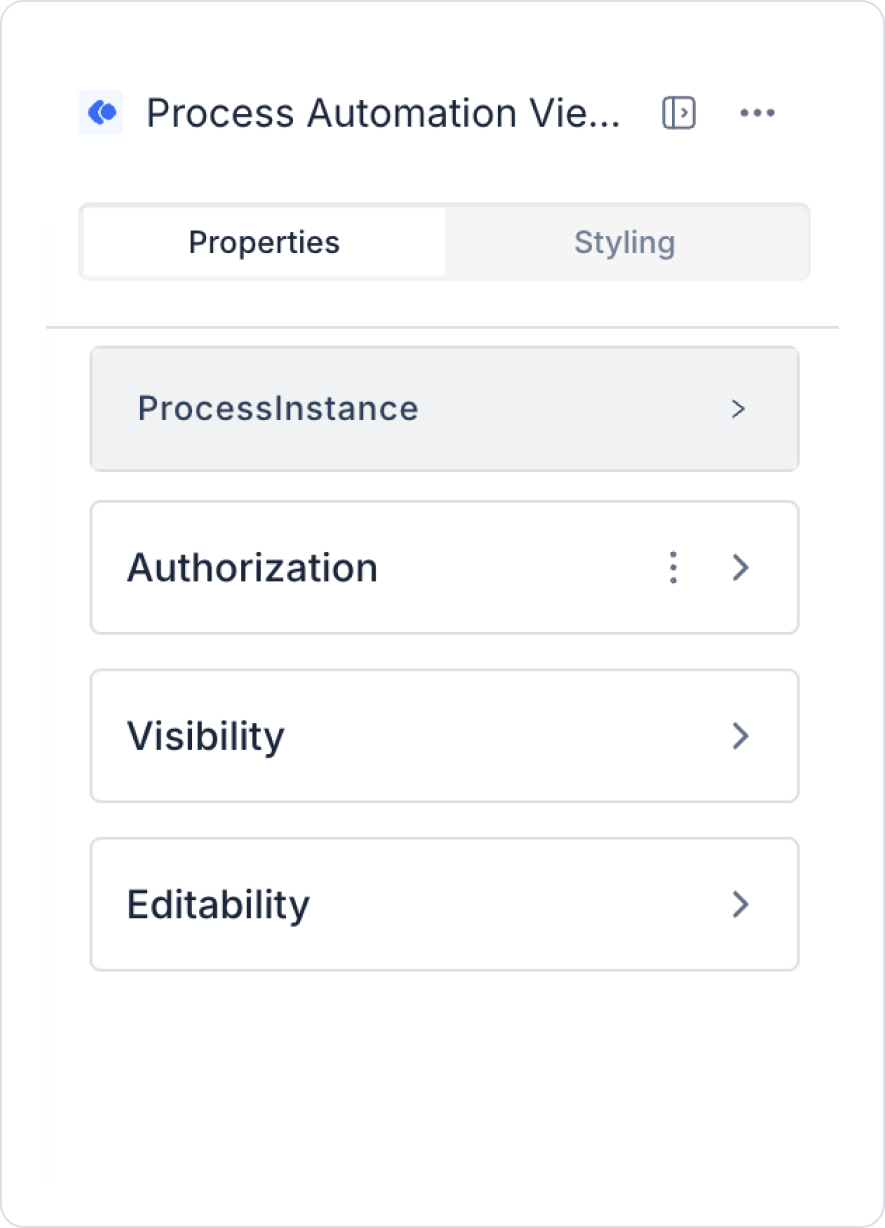
When you select the Process Automation Viewer element, you can define the process instances to be displayed via the Properties panel on the right. These settings determine which workflow and which flow instance the Viewer will display on the screen.
Process Instances: This field represents a specific instance of workflows created within Process Automation. The process steps that the Viewer will display on the screen are determined by the Instance selected here.
Functions:
Displays all steps of the selected workflow from the beginning.
Instantly shows active, completed, pending, or errored steps.
Used to monitor the status of different instances of multiple processes (e.g., different user applications, requests, approval flows).
Provides usage on administrator screens or user-specific process tracking screens.
Example of Use:
When you select the instance of the “LeaveRequestProcess” flow with InstanceId = 1287, the Viewer starts displaying the steps in the running process in real time.
2.2 Actions That Can Be Added to Elements
The Process Automation Viewer element is a passive element used only to visualize the process status.
Therefore:
Actions (ADD ACTION) cannot be directly linked to the Process Automation Viewer.
The ADD ACTION section does not appear in the right panel when the element is selected.
Actions such as starting, canceling, or retrying a workflow are not managed through the Process Automation Viewer;
they are managed through separate buttons, menus, or action buttons.
The Process Automation Viewer is only used to monitor running processes; it is not used to trigger any actions.
3. Common Properties
Some fields on the Process Automation Viewer element are common to all UI elements. Therefore, detailed descriptions of the following properties can be found in the relevant general guide pages:
Place the Viewer on process detail screens. For example: Using it on “Request Details,” “Application Details,” and “Process Tracking” pages is the most meaningful scenario.
Add a process description for the user. It is helpful to add explanatory text such as “This diagram shows the location of your request in the process” above or next to the Viewer.
Manage Process Instance information clearly. Whichever application/process the user is looking at, link the instance information for that record correctly to the Viewer.
Explain error or cancellation situations to the user with additional text. Rather than just seeing a red step in the diagram, writing a brief note underneath increases comprehensibility.
5. Limitations
Actions cannot be linked to the Process Automation Viewer. Capabilities such as starting/stopping a process cannot be managed through this element.
It can only be used in web applications. The Process Automation Viewer is not supported in mobile applications.
It only displays pre-designed Process Automation diagrams. Diagram design cannot be modified through this element.
The displayed process is limited to the selected Process Instance. If incorrect or empty instance information is linked, no flow may be displayed.