Log in to the Kuika platform and open your project from the Apps screen.
Open the Scheduled Jobs module from the top menu.
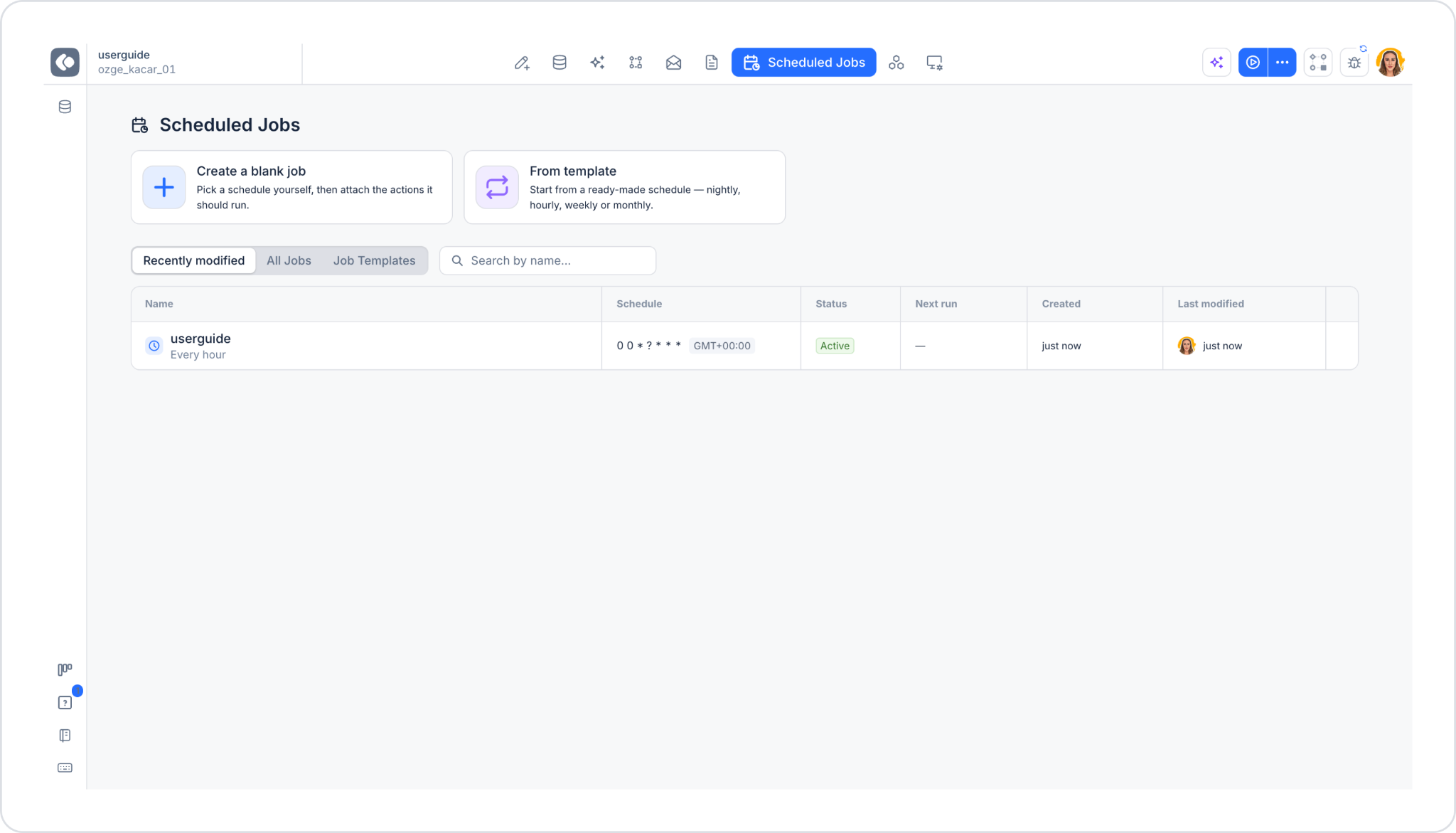
On the screen that opens, you’ll see two options:
Create a blank job: Allows you to set your own schedule and add the actions the job should run yourself (“Pick a schedule yourself, then attach the actions it should run.”).
From template: Allows you to start from a ready-made schedule template (nightly, hourly, weekly, or monthly) (“Start from a ready-made schedule — nightly, hourly, weekly, or monthly.”).
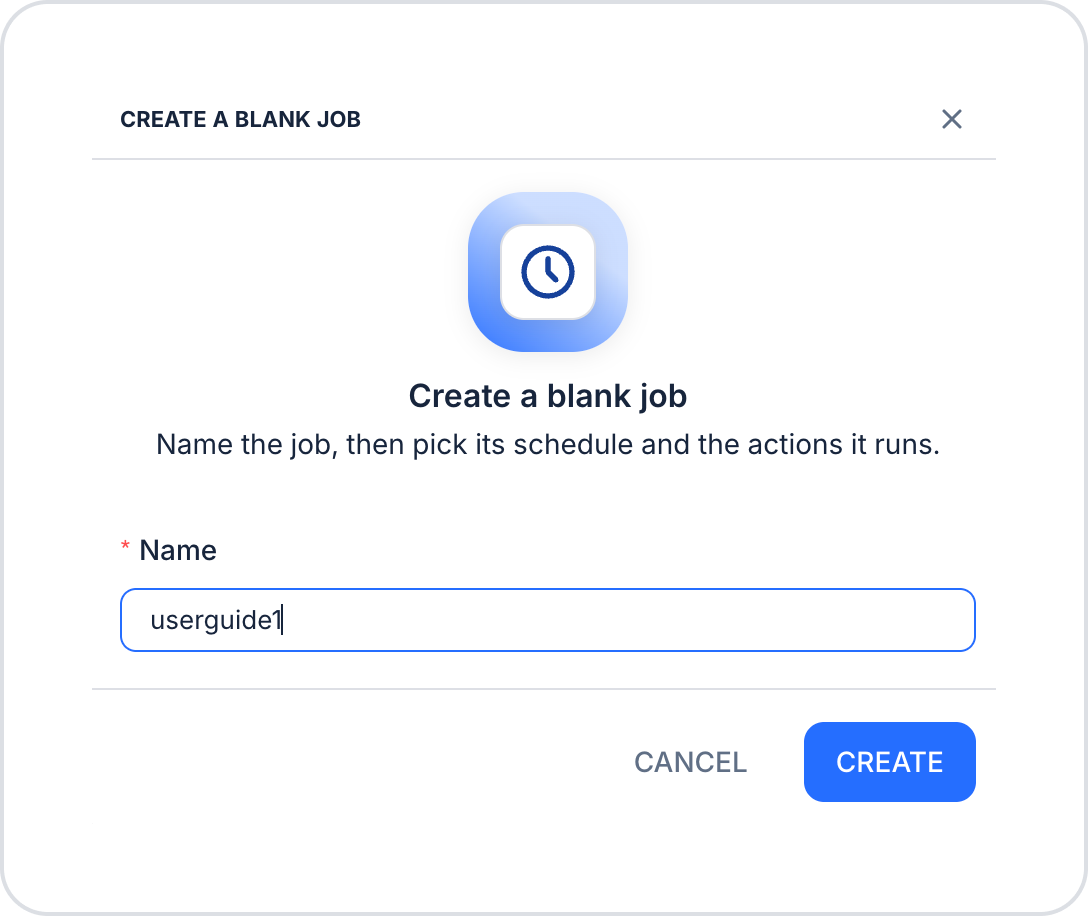
When you click the Create a blank job card, enter a Name for your job in the window that opens and click the CREATE button. You can cancel the process by clicking CANCEL.
Scheduled Jobs List
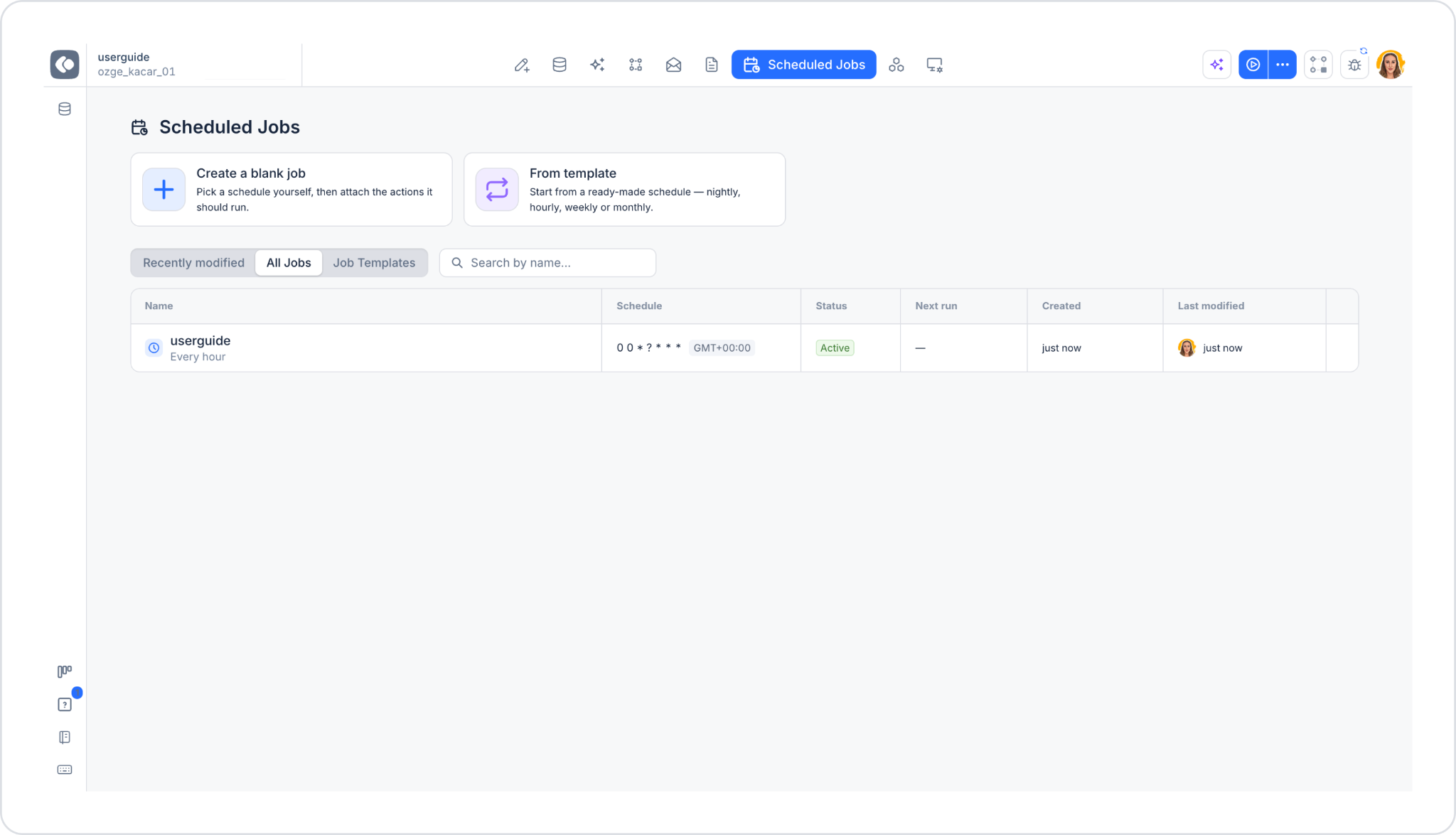
On the Scheduled Jobs main screen, there are three tabs that let you view the jobs you’ve created:
Recently modified: This is the default view, listing jobs modified within the last 30 days. If no jobs have been modified, the message “Nothing changed recently — Jobs edited in the last 30 days appear here.” is displayed.
All Jobs: This view lists all scheduled jobs in your project.
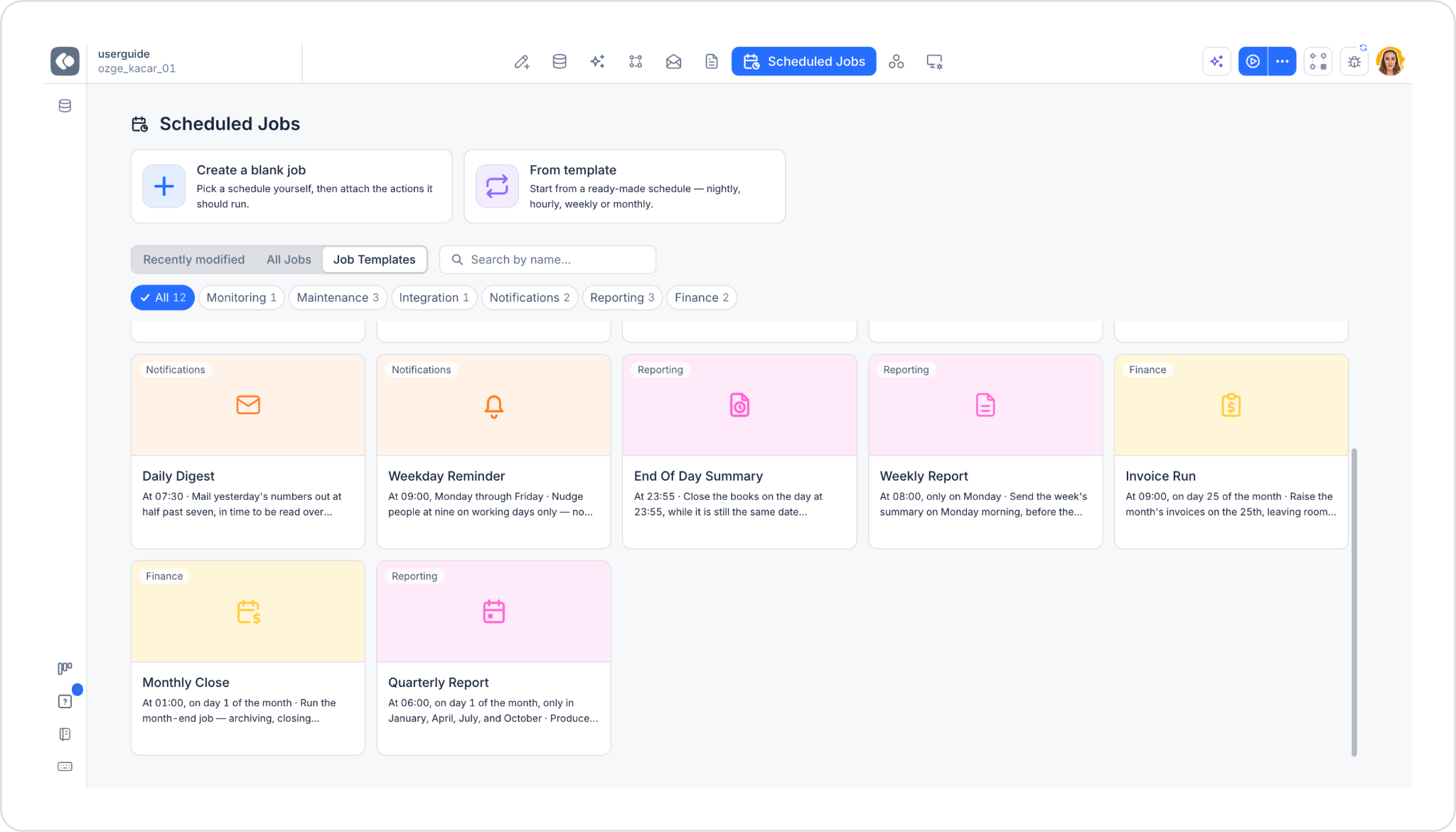
Job Templates: This view lists predefined job templates. Templates can be filtered by category tags such as Monitoring, Maintenance, Integration, Notifications, Reporting, and Finance; the number of templates in each category is displayed next to it (e.g., Maintenance 3, Reporting 3). Example templates include Health Check, Session Cleanup, Hourly Sync, Nightly Backup, Daily Cleanup, Daily Digest, Weekday Reminder, End Of Day Summary, Weekly Report, Invoice Run, Monthly Close, and Quarterly Report; each template card includes the execution frequency and a brief description.
In both lists, you can search by name using the Search by name... box.
The table in the Recently modified / All Jobs tabs consists of the following columns:
Name: The job’s name.
Schedule: The cron expression and time zone indicating the job’s schedule (e.g., “0 0 * ? * * *, GMT+00:00”).
Status: The job’s status (e.g., Active).
Next run: The job’s next execution time; if not yet determined, it is displayed as “—”.
Created: The time the job was created.
Last modified: The person who last updated the job and the time of the update.