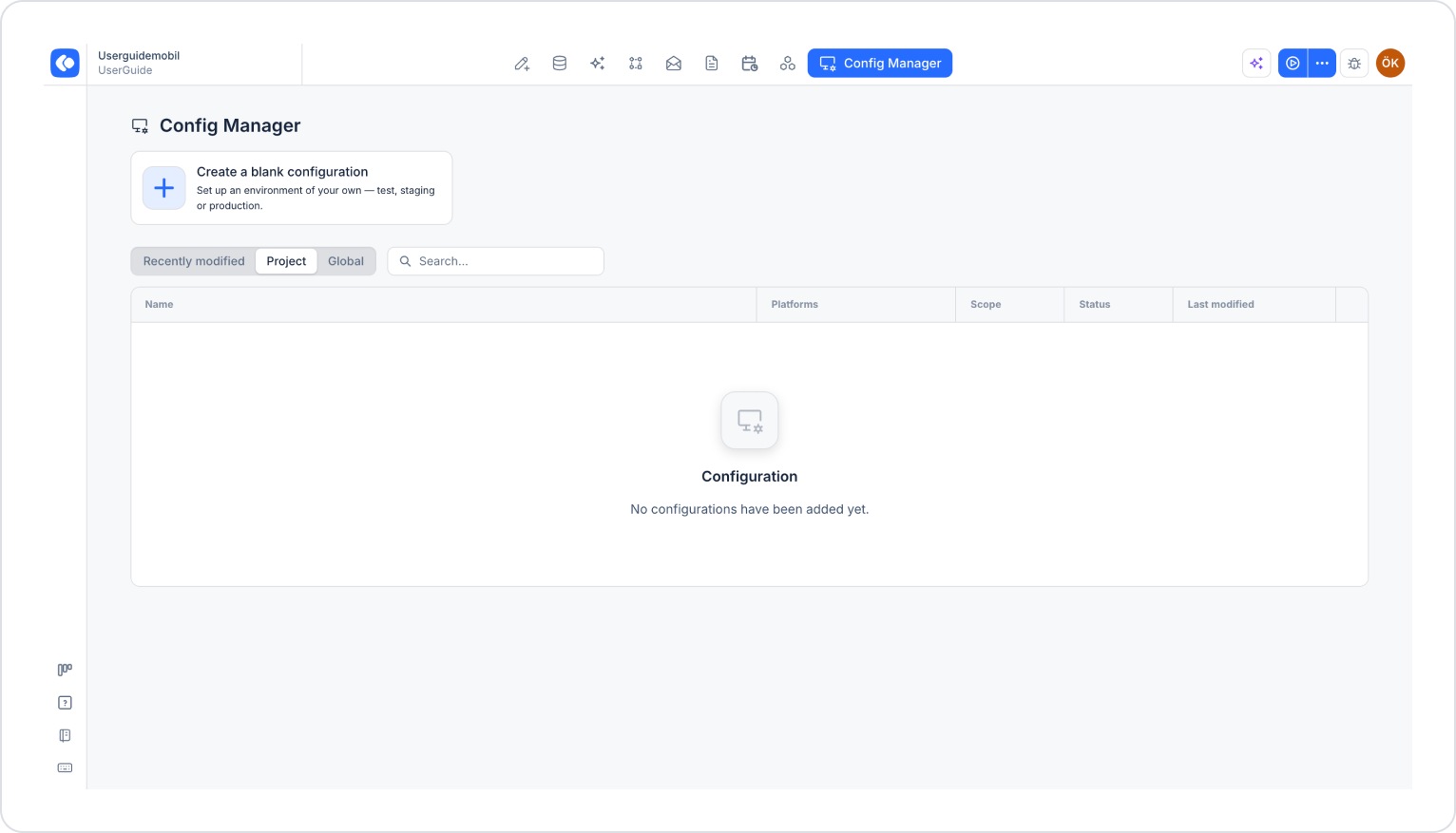
When you navigate to the Config Manager module from the top menu on the Kuika platform, you’ll see the main screen where you can list your configurations and create new ones.
1. Configuration Creation Area
Create a blank configuration: Allows you to create a new, blank configuration for different environments such as test, staging, or production.
2. Filtering and Search Area
Recently modified: Lists the most recently modified configurations.
Project: Lists configurations created specifically for the currently open app.
Global: Lists configurations available across the entire workspace.
Search: Allows you to search for configurations by name.
3. Configuration List
Created configurations are listed with the following information:
Name: The name of the configuration.
Platforms: The platforms supported by the configuration (e.g., Web).
Scope: The scope of the configuration (Project or Global).
Status: The configuration’s status.
Last modified: The user who last edited the configuration and the time of the edit.
If no configuration has been added yet, the message No configurations have been added yet. appears in the list. To edit a configuration, simply click its name in the list.
Anatomy of the Configuration Screen
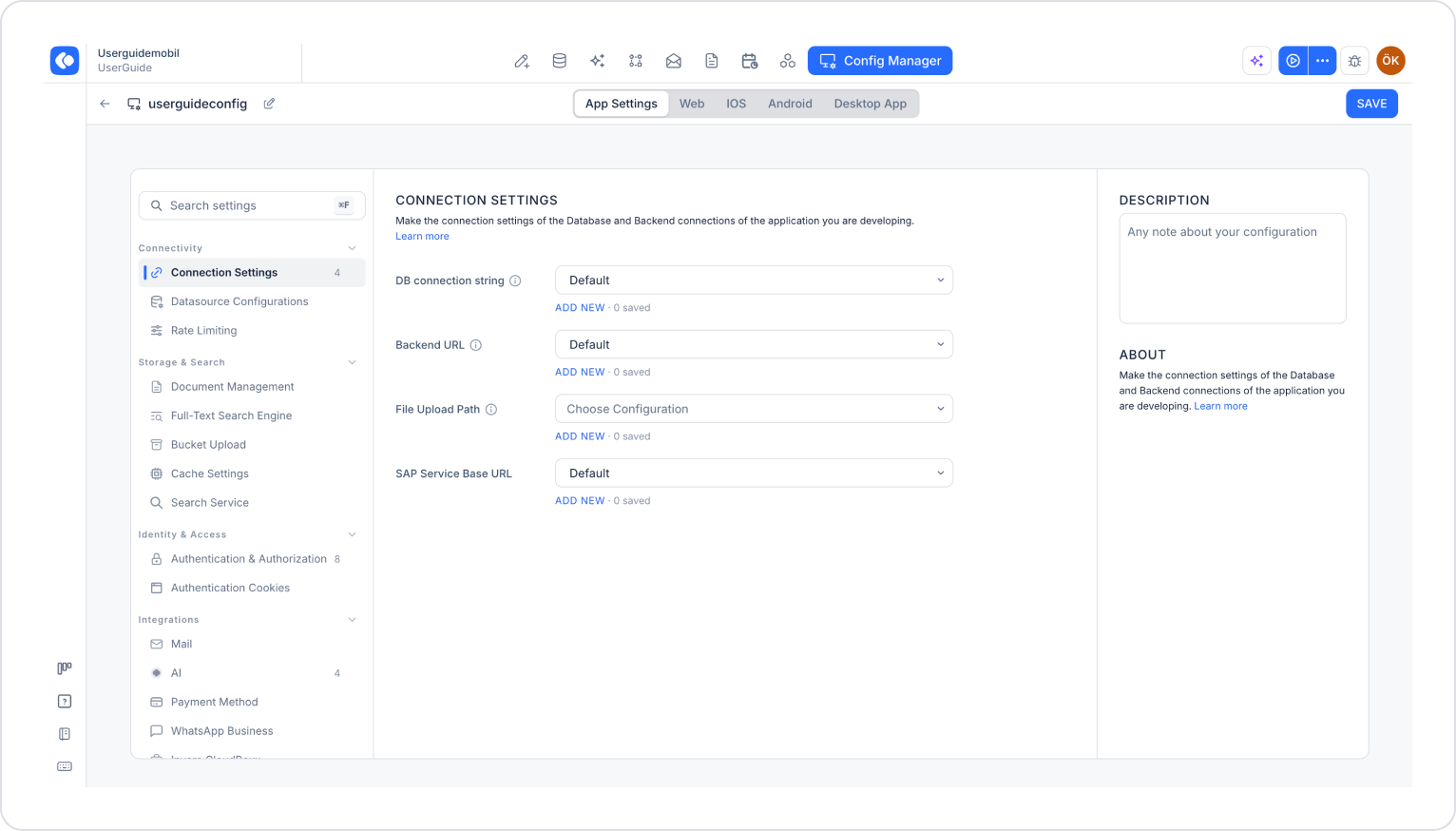
You need a configuration to preview and publish an app developed in Kuika. When you open a configuration, the configuration screen appears, consisting of the following sections.
Top Bar
Back arrow: Takes you back to the Config Manager main screen.
Name field: Displays the configuration’s name. You can change the name using the edit (pencil) icon next to it.
Tabs: Groups settings by platform: App Settings, Web, iOS, Android, and Desktop App. The iOS and Android tabs are displayed in mobile app projects.
Save: Saves the configuration settings. In an existing configuration, this button appears as Update.
Left Panel
Search settings: Allows you to search among settings (shortcut: ⌘F).
Settings menu: Lists the settings for the selected tab by category.
Middle Panel
Contains the fields for the setting selected from the left menu. In many settings, saved configurations are selected from the Choose Configuration dropdown menu; a new configuration is added using the Add New link below the menu. The number next to the link indicates the number of saved configurations.
Right Panel
In the App Settings tab: It contains the Description field, where you can add a note to the configuration, and the About field, which provides information about the selected setting.
In the Platform tabs: It contains the Platform field, where you can enable or disable platform support, as well as platform-specific options such as icons and splash screens.