User Manual

Google Map MCP Settings 

13/10/26
Google Map MCP Settings 

Overview

With Google Map MCP, you can:

  • Convert an address to latitude-longitude coordinates (Geocoding)
  • Convert coordinates to an address (Reverse Geocoding)
  • Calculate routes (driving, walking, bicycling, transit)
  • Search for places/locations in a specific area (Search Places)
  • Calculate distance and time (Distance Matrix)
  • Get place details (Place Detail)
The Distance Matrix API is used in the background to calculate the distance and time of routes. The Google Map Directions action is used for route calculations in MCP.

Config Manager Settings

  1. Log in to the Kuika platform.
  2. Open the project you want to work on from the Apps screen.
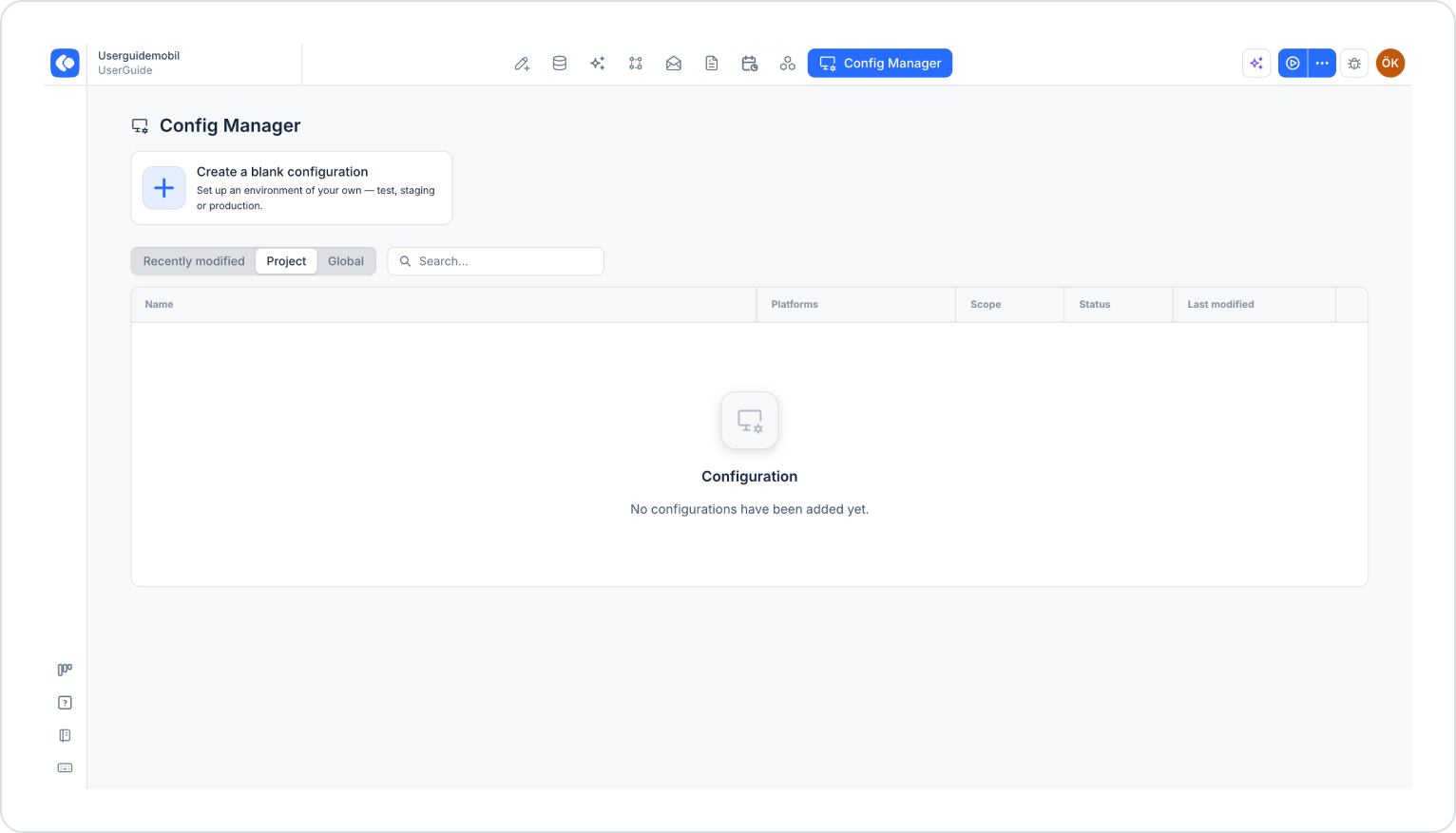
  3. Click the Config Manager module in the top menu.
  1. To edit an existing configuration, click its name in the list, or create a new configuration using the Create a blank configuration card.
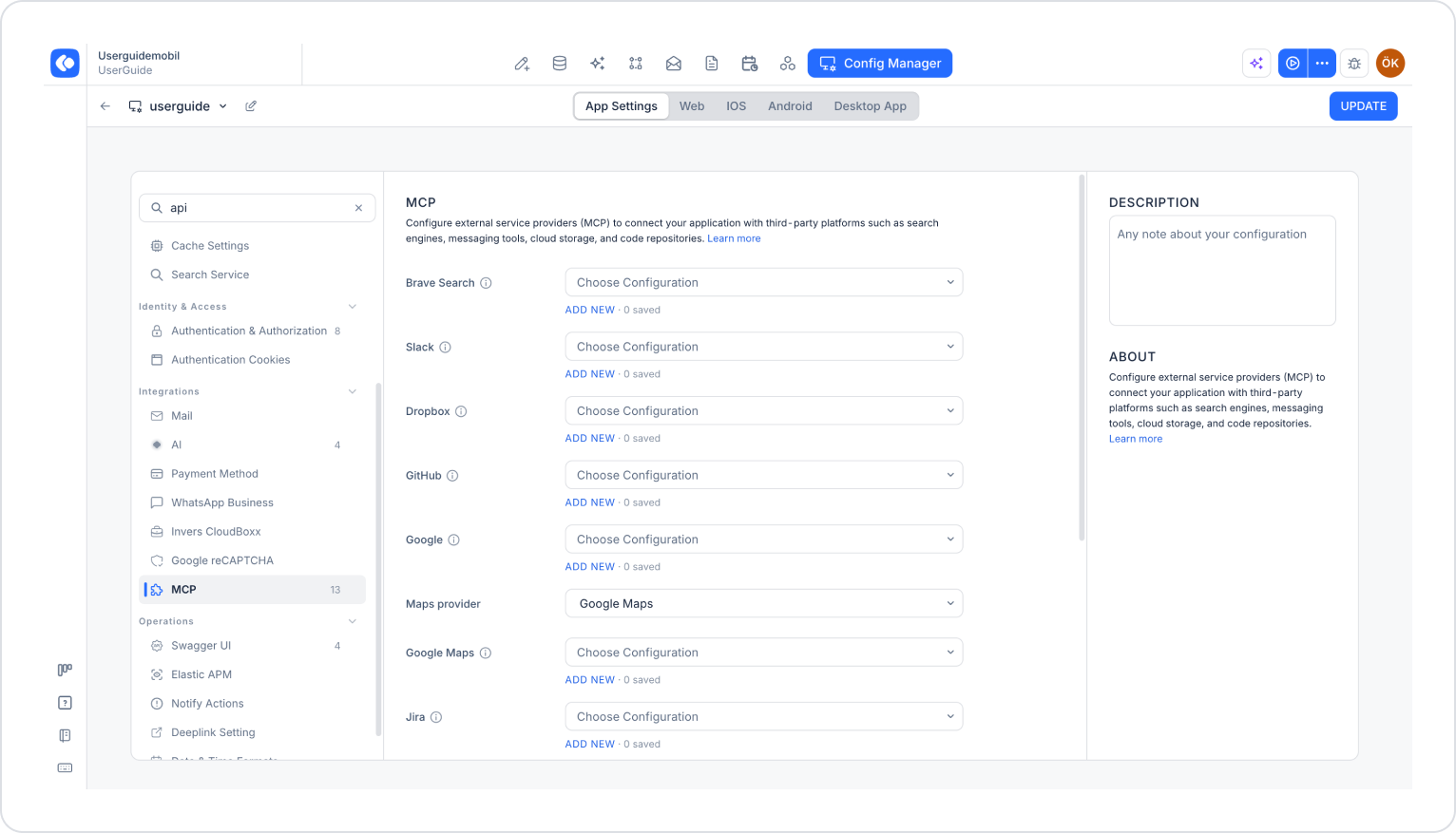
  2. Make sure the App Settings tab is selected at the top of the configuration screen.
  3. In the left menu, click the MCP option under the INTEGRATIONS heading.
  4. Make sure the Google Maps option is selected in the Maps provider field.
  5. Click the Add New link below the Google Maps field.
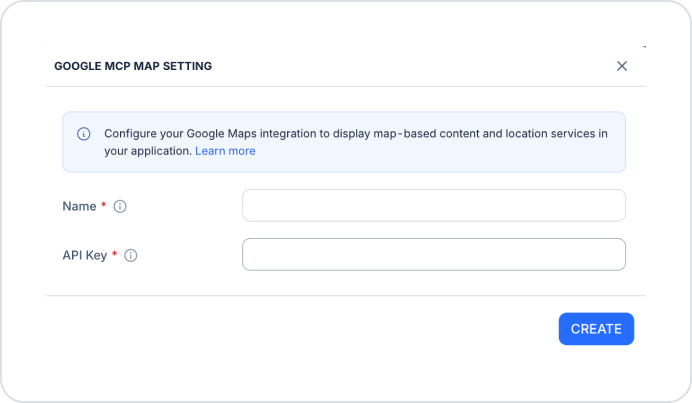
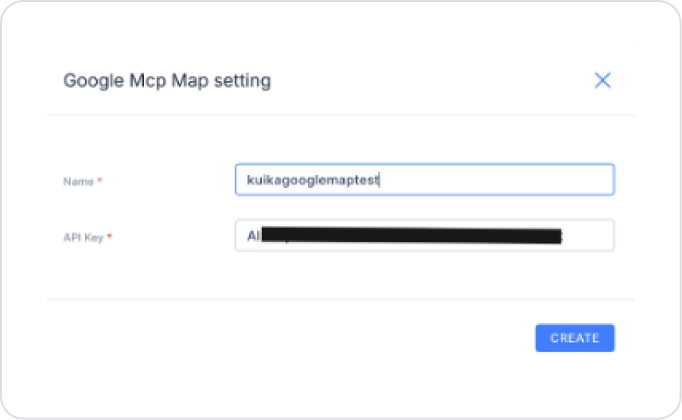
  1. In the Google MCP Map Settings window that opens, fill in the following fields (all fields are required):
  • Name: A unique name for the configuration.
  • API Key: The API key you created in the Google Cloud Console. You can create the key on the APIs & Services > Credentials page; make sure the Google Maps APIs you’ll be using are enabled in your project.
  1. Click the Create button.
  2. Select the configuration you created from the Google Maps dropdown menu.
  3. Click the Save button in the top-right corner to save your changes. (In an existing configuration, this button appears as Update.)

    Creating a Google Map API Key

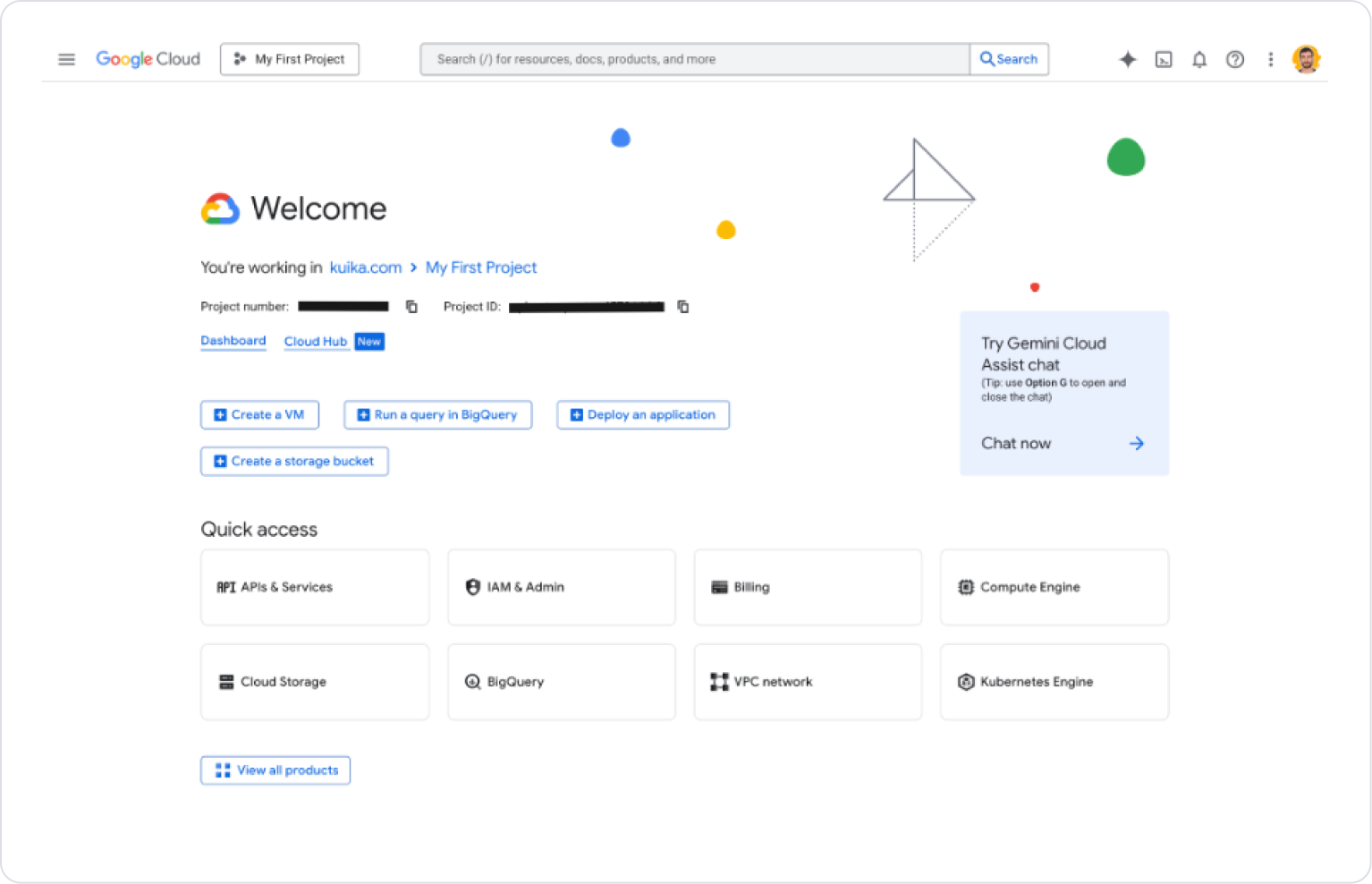
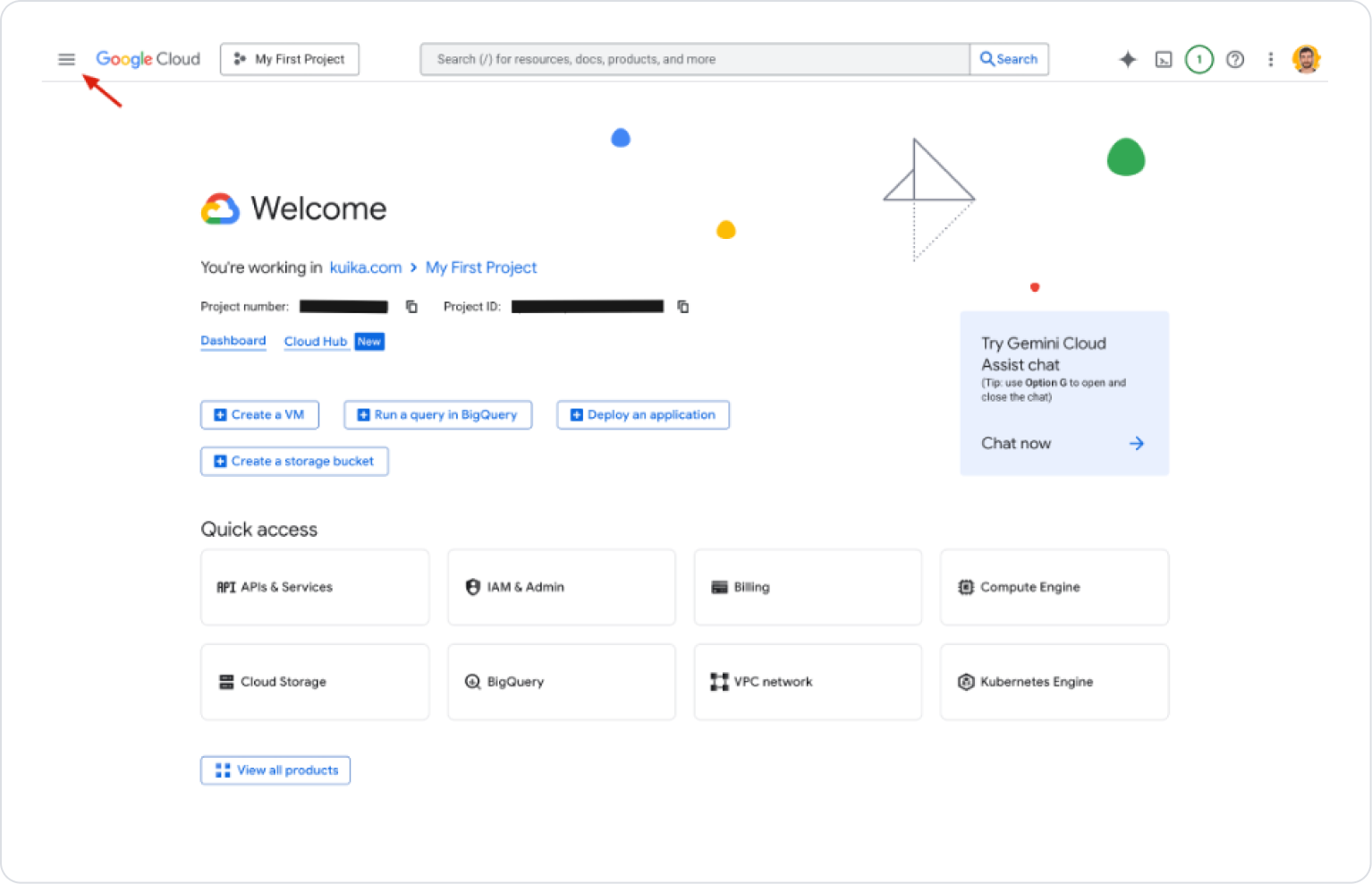
    1. Go to Google Cloud Console.
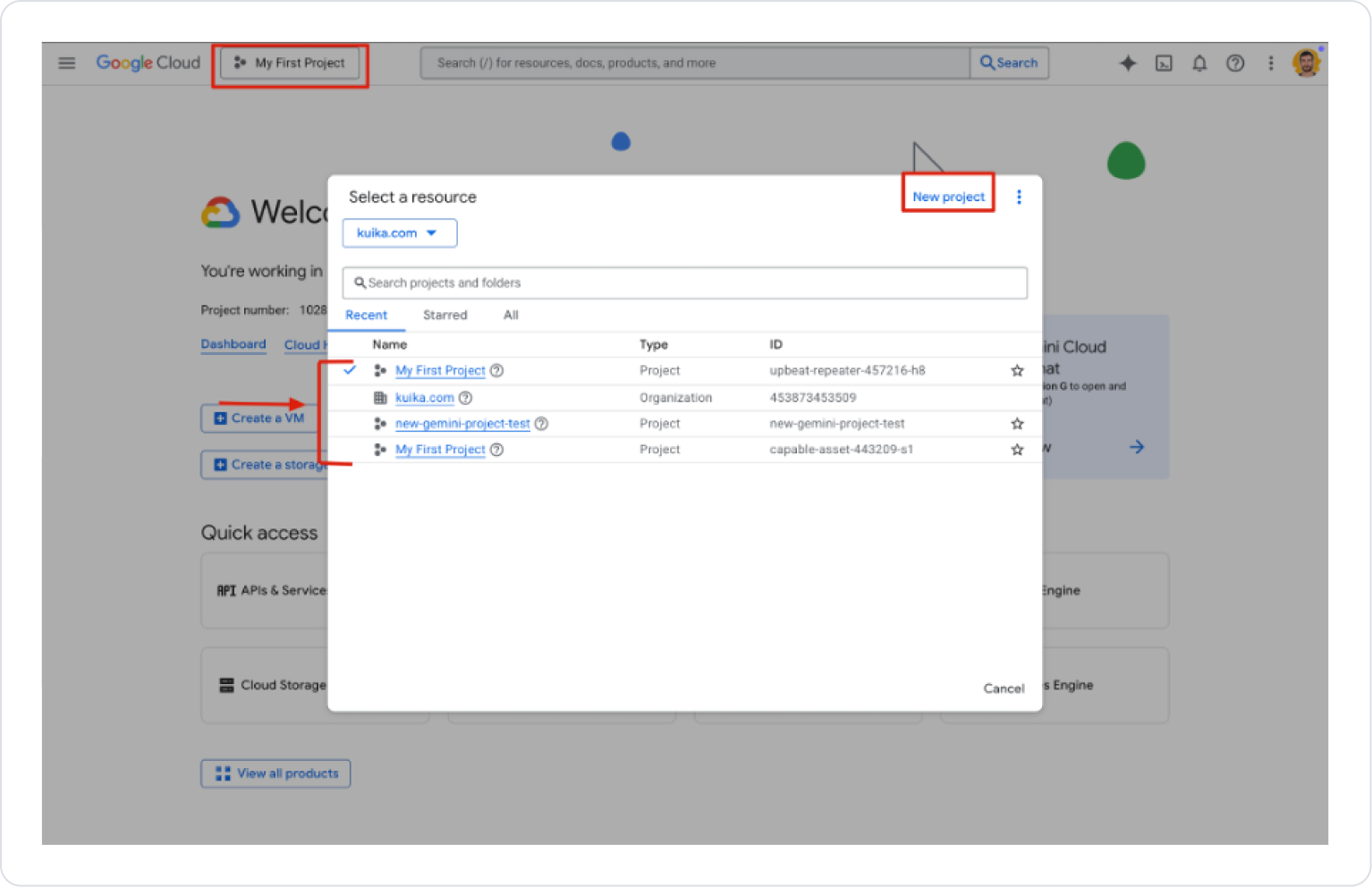
    1. Select an existing project or create a new one.
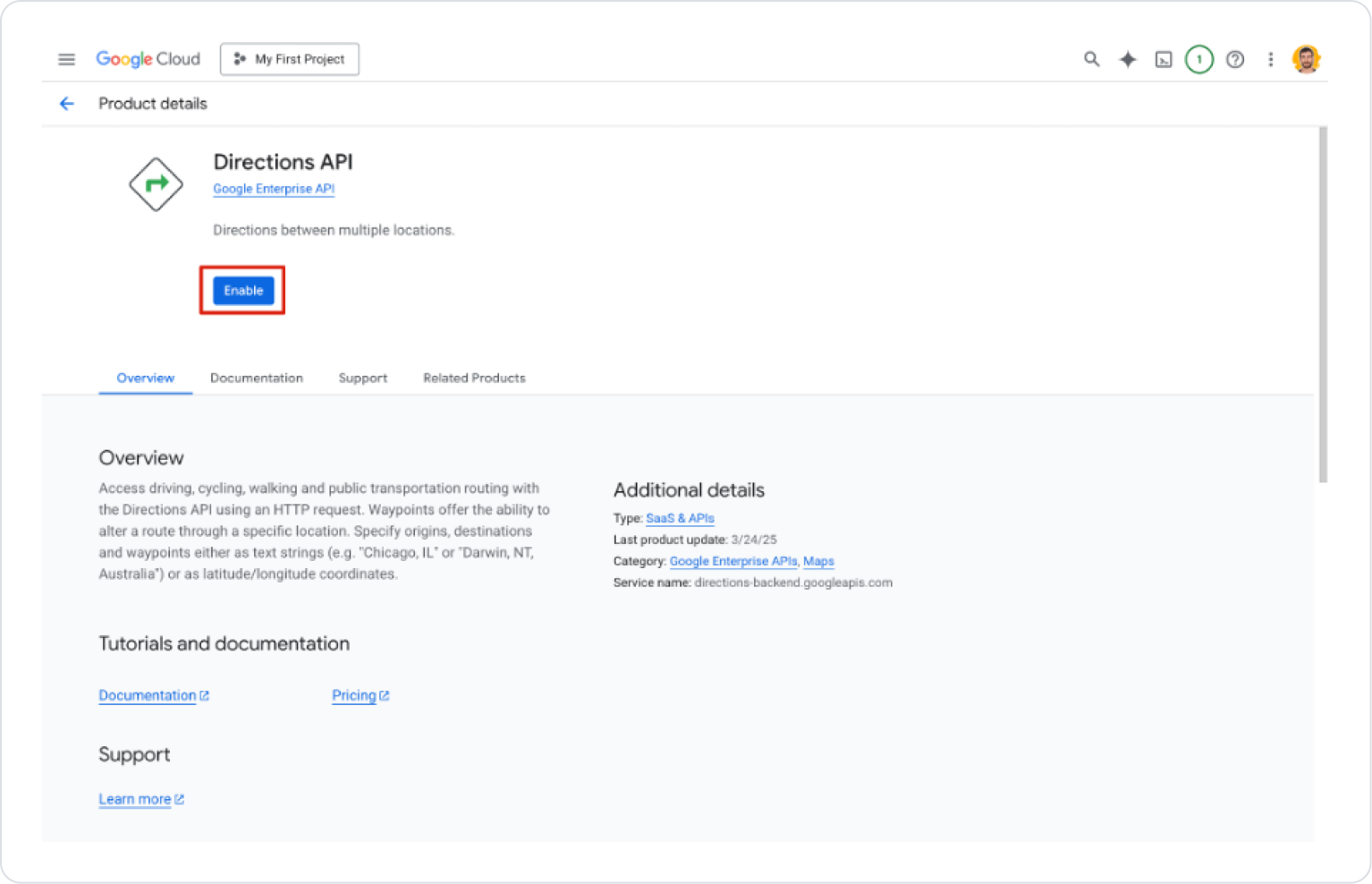
    1. From the menu, go to APIs & Services → Library.
    2. Enable the following APIs:
      • Directions API
      • Distance Matrix API
      • Geocoding API
      • Places API
      • Places API (new)
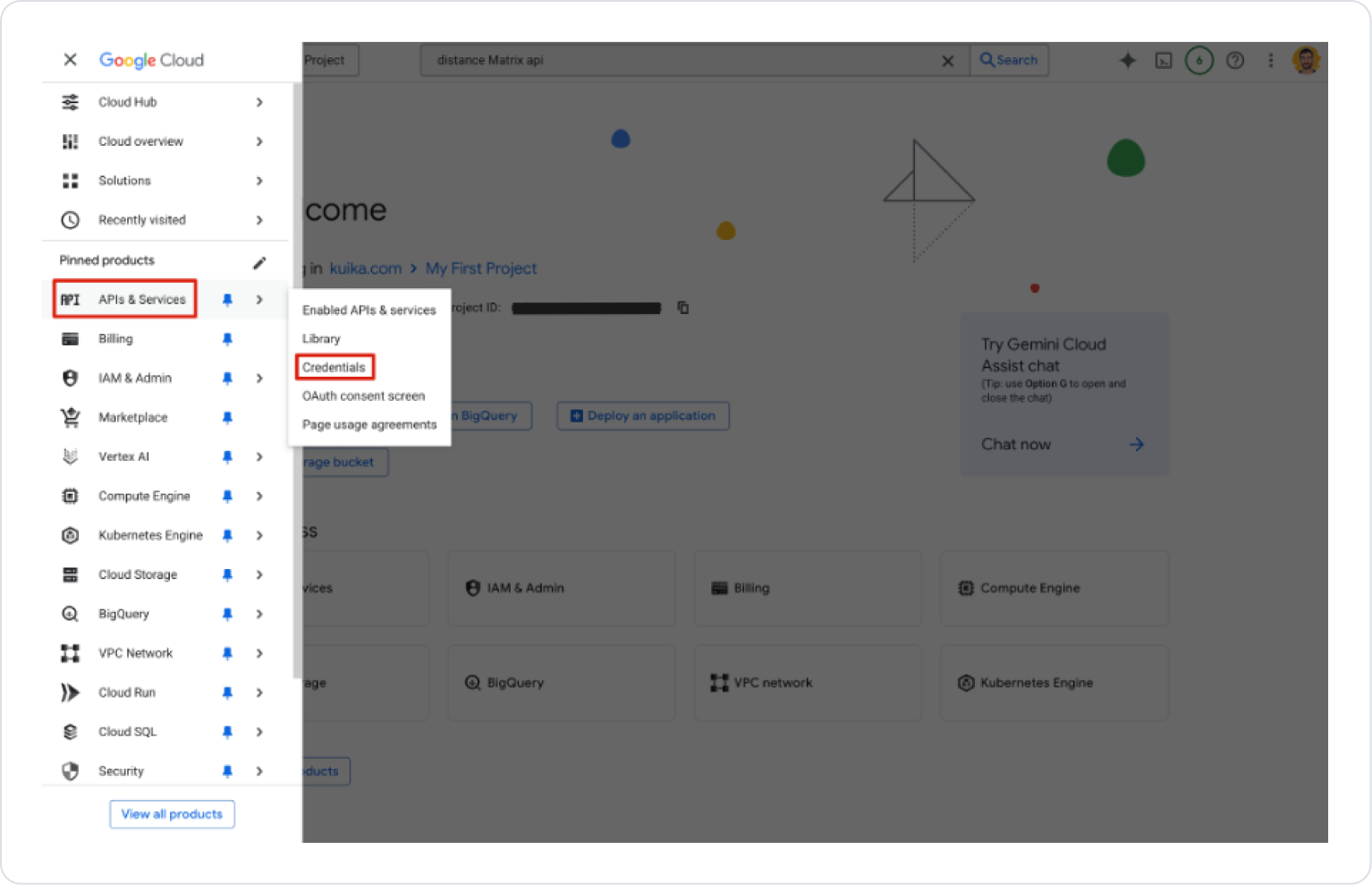
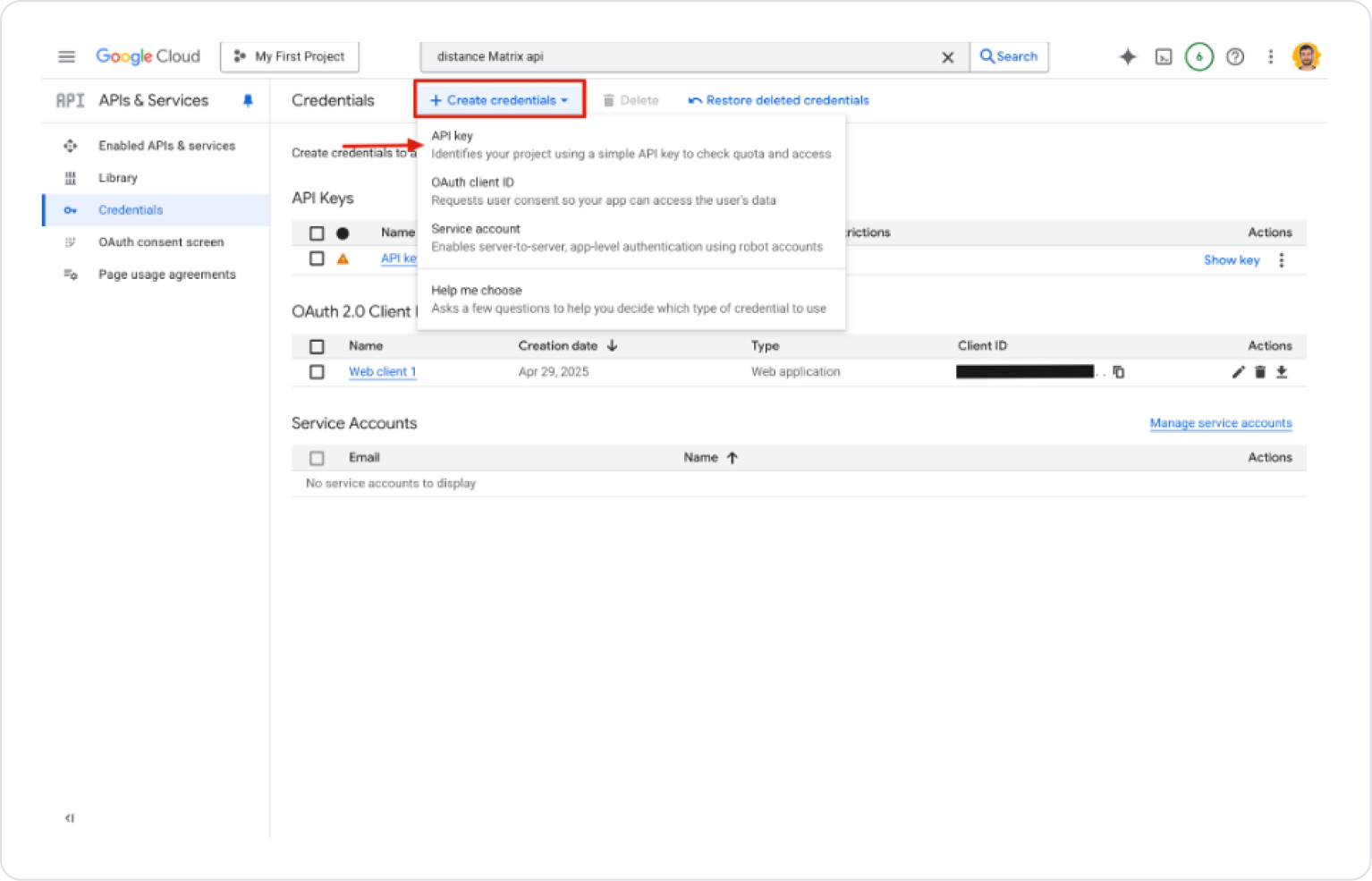
    1. From the menu, go to APIs & Services → Credentials.
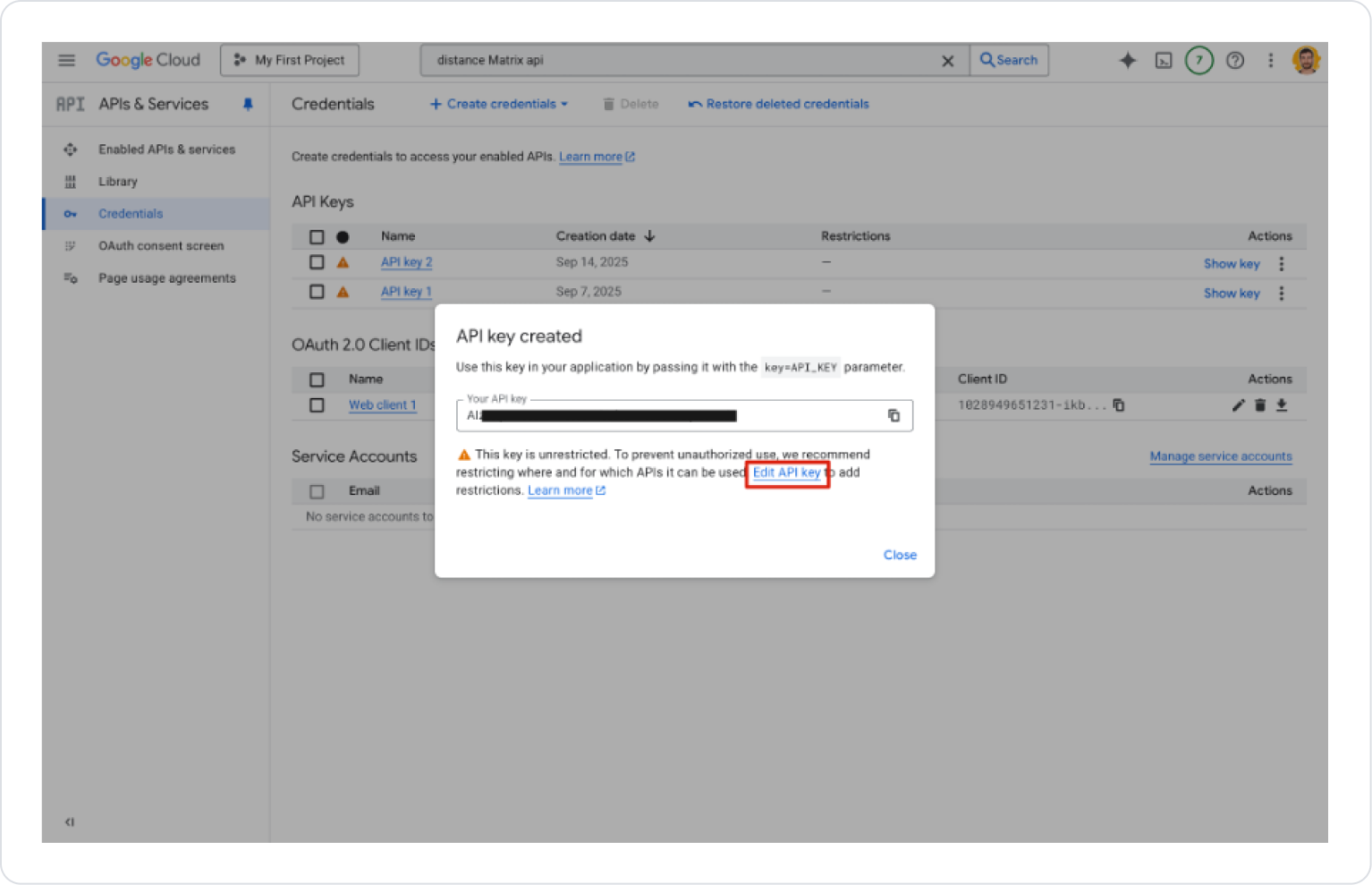
    1. Select Create Credentials → API Key.
    1. Copy the generated API Key.
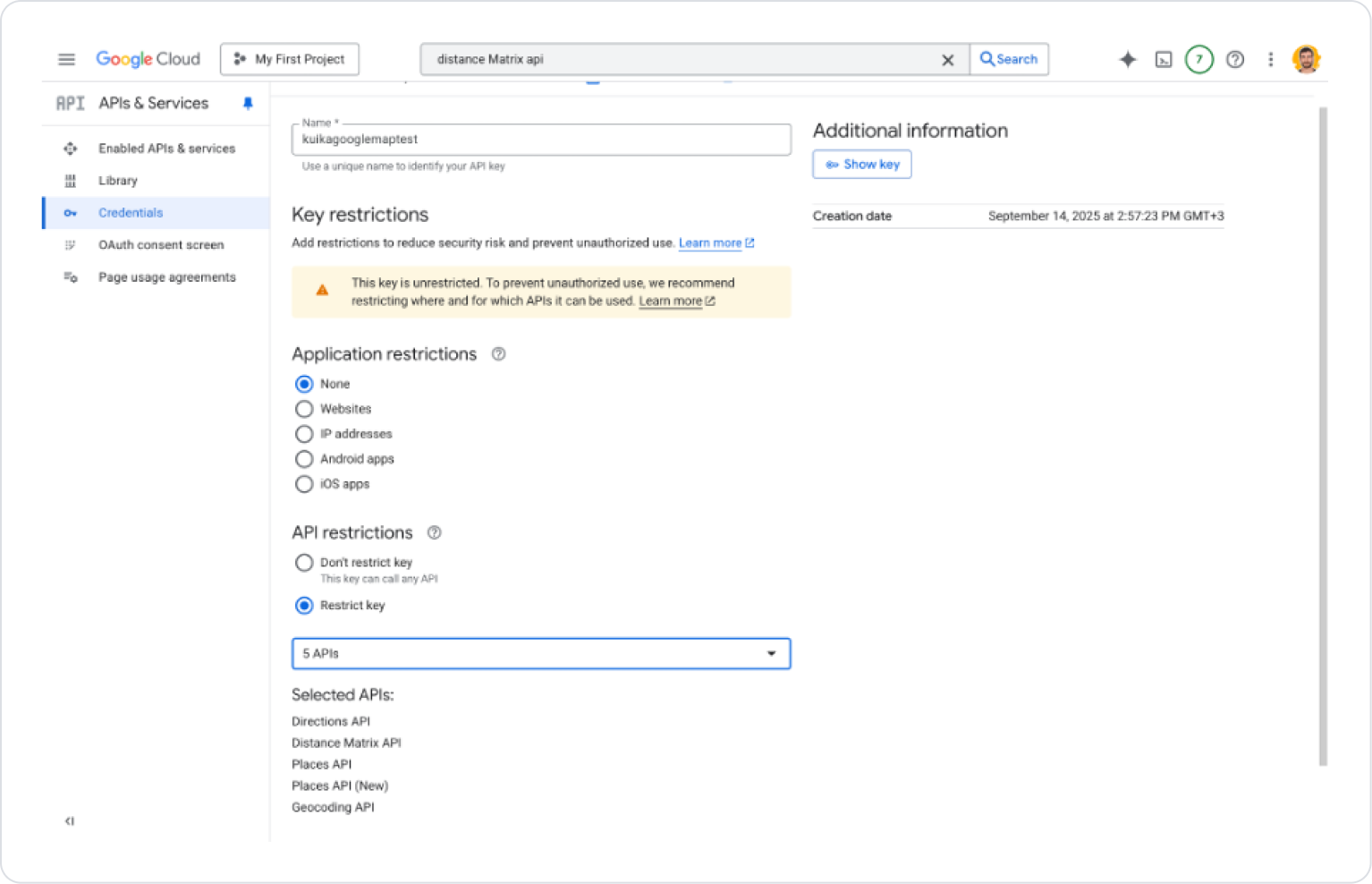
    2. On the Edit API Key page:
    • Application restrictions:
      • For web → HTTP referrer (domain name)
      • For mobile → Android package name / iOS bundle ID
      • For server → IP restriction
      • None → No restriction
    • API restrictions: Only allow the APIs you enabled above.
    1. Save.
    1.  Add the API Key to the Configuration Manager → Google Map Settings field in Kuika.

    Action Types

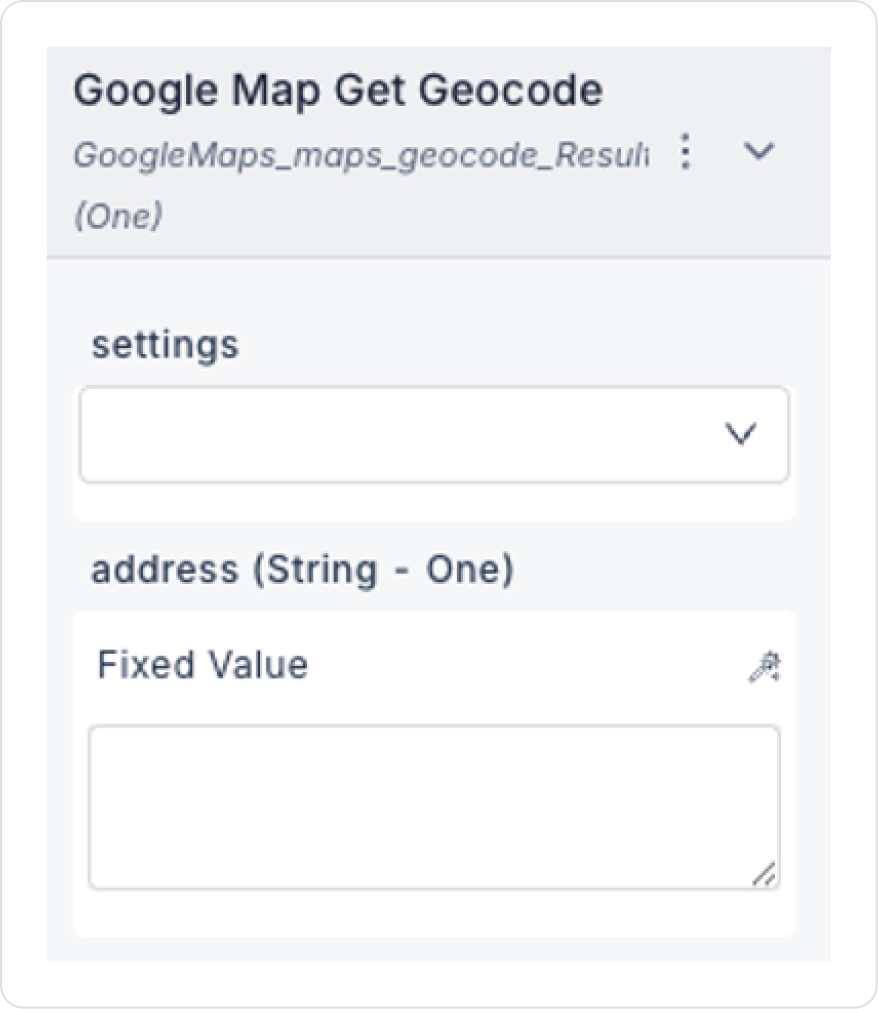
    Google Map Get Geocode

    Converts the address to coordinates.

    Input:

    • settings: Select the Google Map setting created in Config Manager.
    • address (String): Readable address entered by the user. (E.g.: “Istiklal Caddesi, Beyoğlu, İstanbul”)

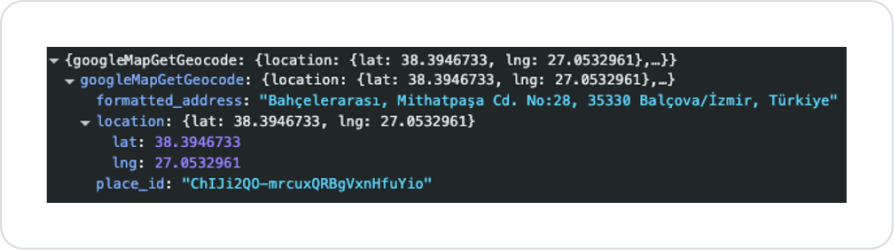
    Output:

    • location.lat, location.lng: Latitude-longitude coordinates.
    • formatted_address: Full address standardized by Google.
    • place_id: Unique ID on Google Maps.

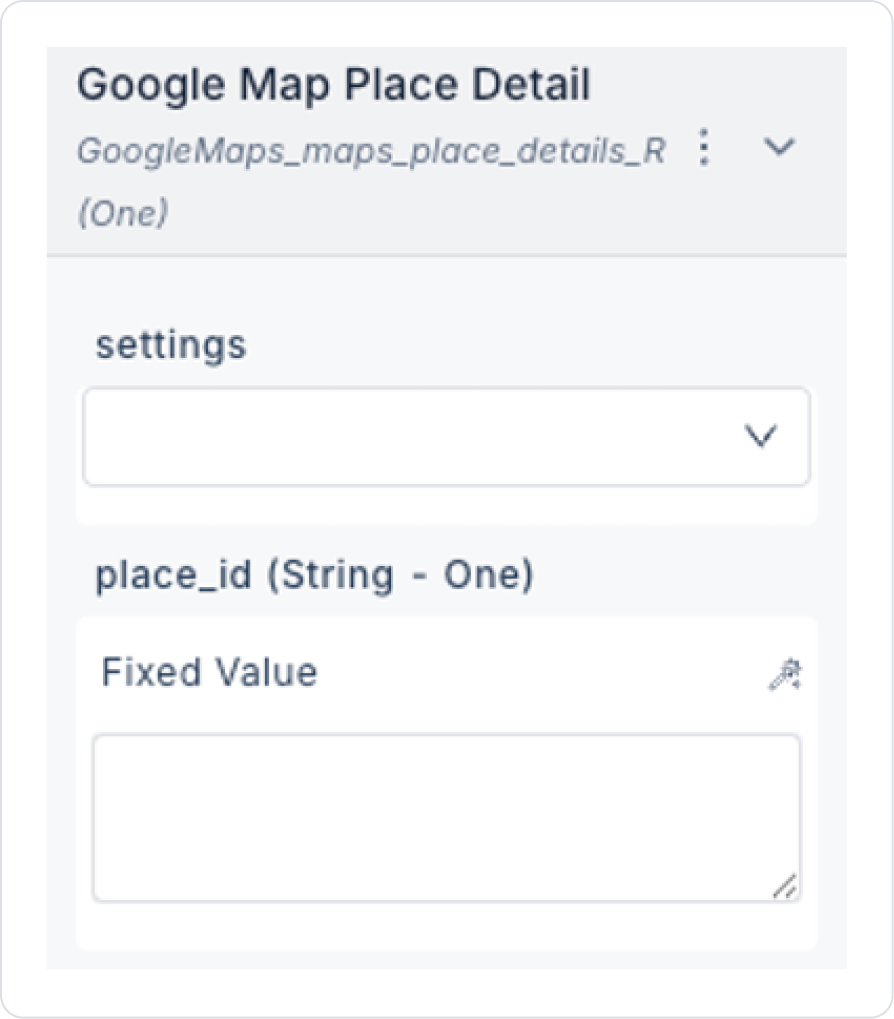
    Google Map Place Detail

    Retrieves details for a specific place_id.

    Input:

    • settings: Select the Google Map setting created in Configuration Manager.
    • place_id (String): The unique identifier of the place. (Obtained from Get Geocode or Search Places results.)

    Output:

    • name: Place/business name.
    • location.lat, location.lng: Latitude-longitude coordinates.
    • formatted_address: Standardized address.

    Google Map Reverse Geocode

    Converts coordinates to an address.

    Input:

    • settings: Select the Google Map setting created in Config Manager.
    • latitude (Decimal): Latitude value.
    • longitude (Decimal): Longitude value.

    Output:

    • formatted_address: Full address information.
    • place_id: Unique identifier.
    • address_components: Subcomponents of the address (street, city, country, postal code).
      • long_name: Full description of the component.
      • short_name: Standard abbreviation.
      • types: Type of the component (e.g., route, locality, country).

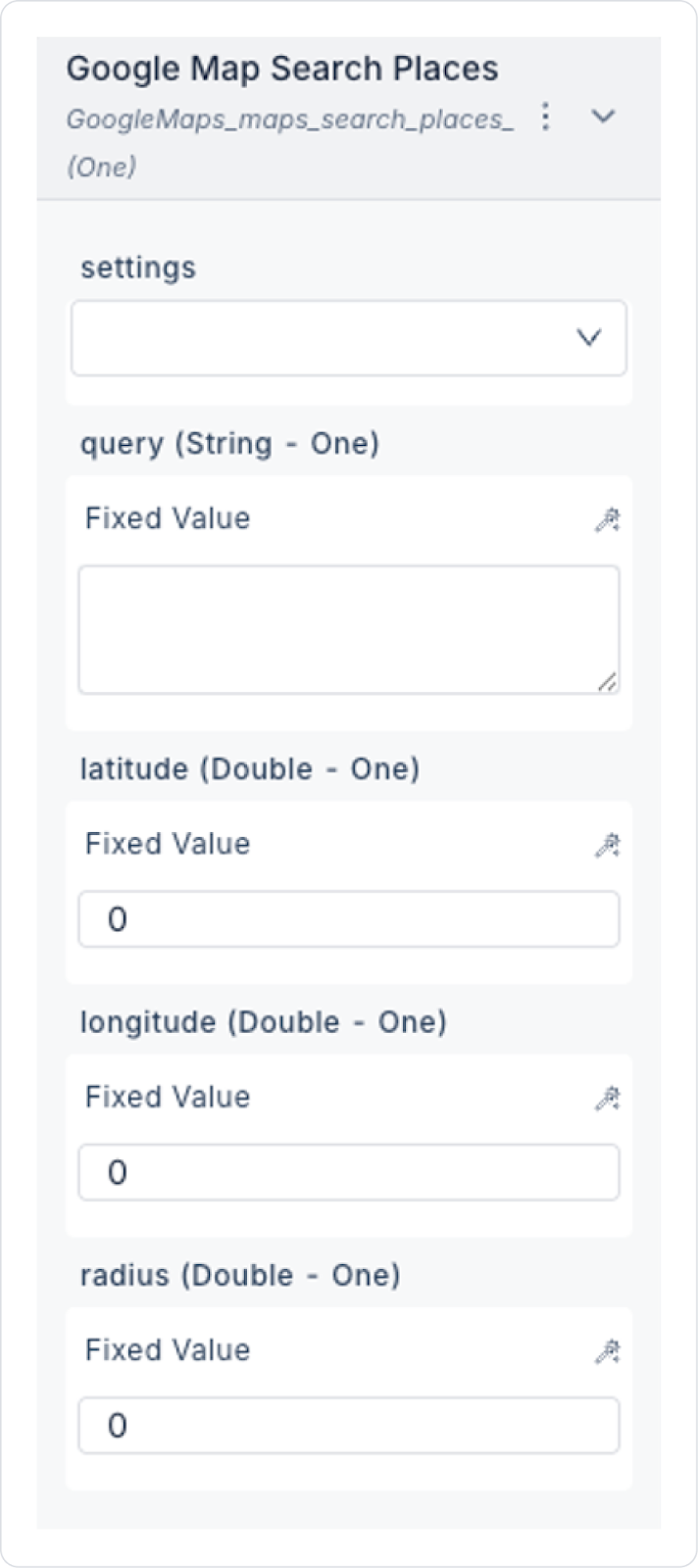
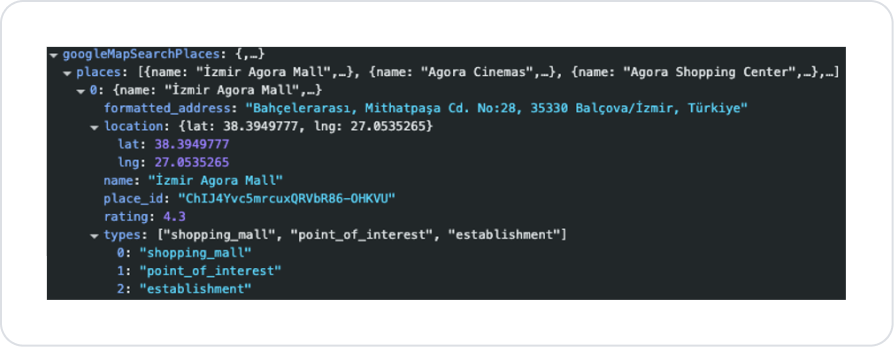
    Google Map Search Places

    Searches for places in a specific area.

    Input:

    • settings: Selects the Google Map setting created in Configuration Manager.
    • query (String): Place name/category (e.g., “cafe,” “hotel”)
    • radius (Integer): Maximum distance from the search center (in meters).
    • latitude (Decimal): Latitude value.
    • longitude (Decimal): Longitude value.

    Output:

    • name: Place name.
    • formatted_address: Full address.
    • location.lat, location.lng: Coordinates.
    • place_id: Unique identifier.
    • rating (Decimal): User rating (1.0–5.0).
    • types: Categories (e.g., “restaurant,” “museum”).

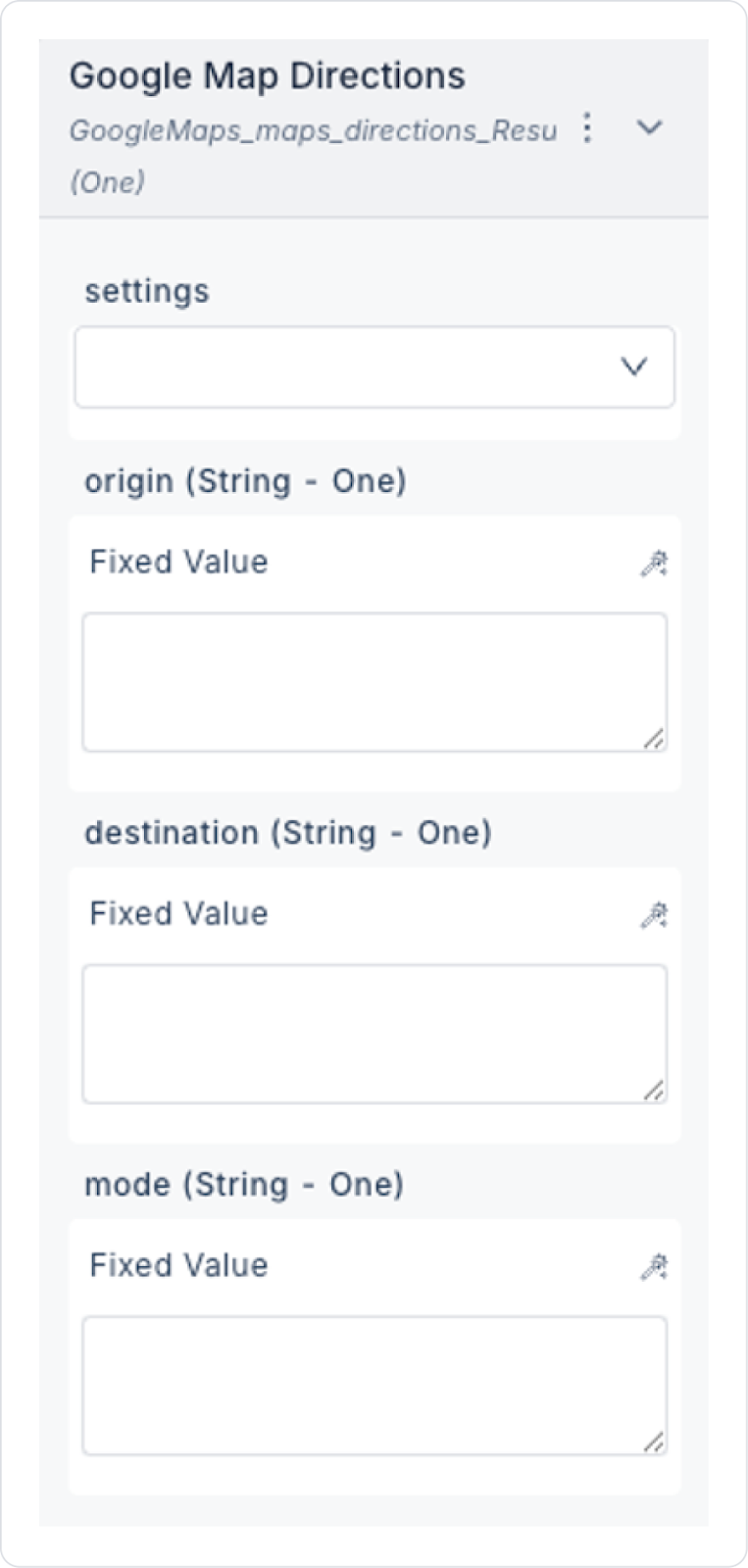
    Google Map Directions

    Calculates the distance and time between two points.

    Input:

    • settings: Selects the Google Map setting created in Config Manager.
    • origin (String/lat,lng): Starting point.
    • destination (String/lat,lng): Destination.
    • mode (String): Transportation mode.
      • driving → By car
      • walking → On foot
      • bicycling → By bicycle
      • transit → By public transportation

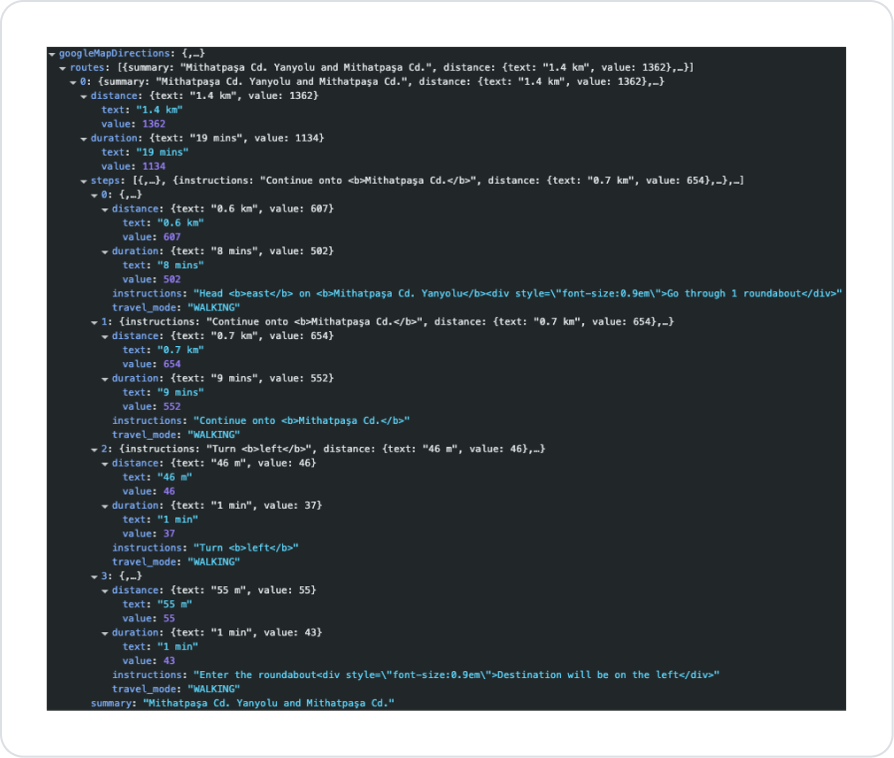
    Output:

    • summary: General description of the route.
    • distance.text / distance.value: Total distance (e.g., “14.3 km”, 14300).
    • duration.text / duration.value: Estimated time (e.g., “20 mins”, 1200).
    • steps: Detailed information for each step.
      • instructions: HTML-formatted directions.
      • travel_mode: Transportation mode used.

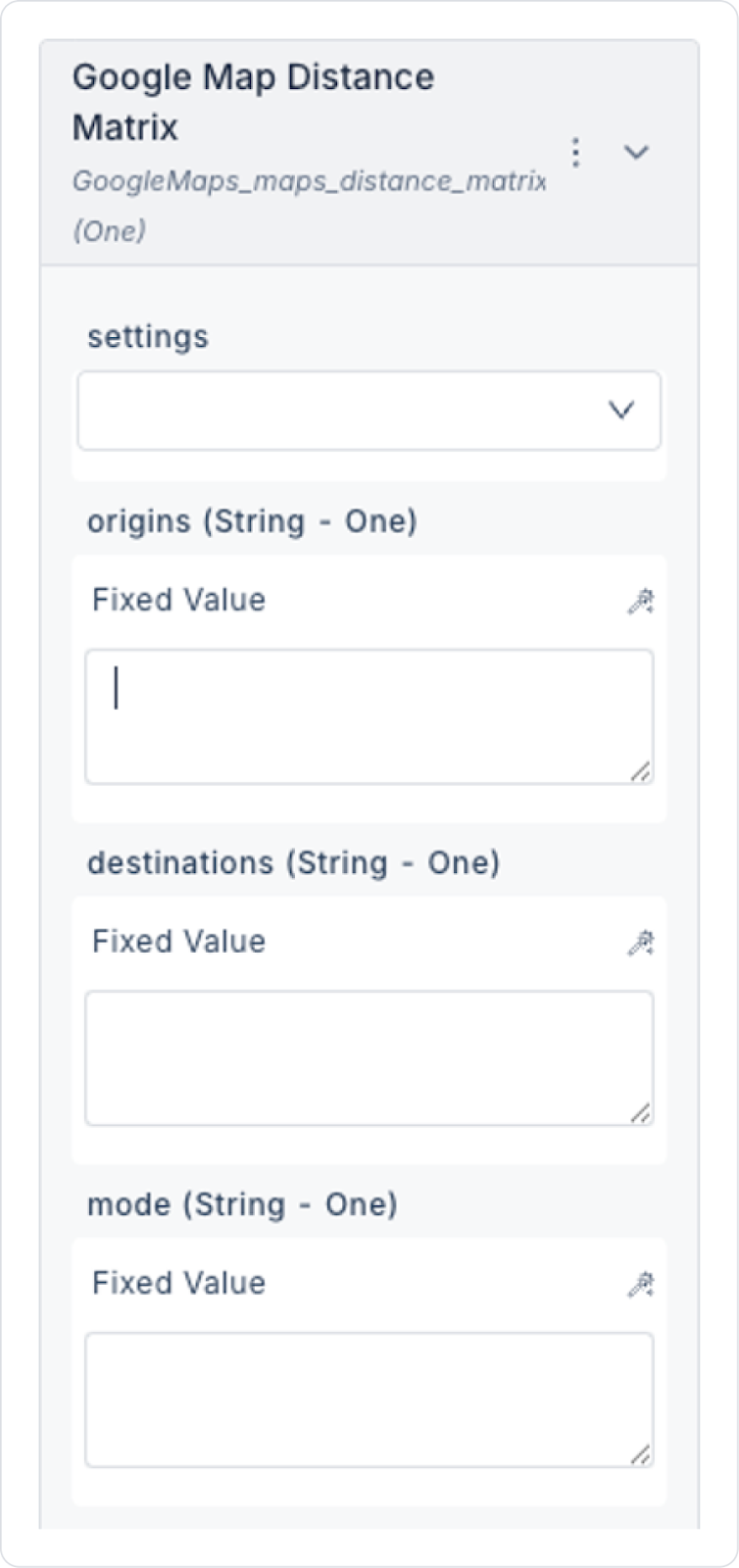
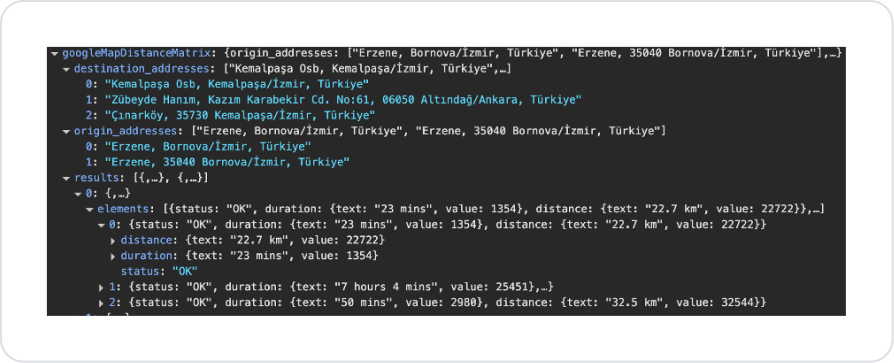
    Google Map Distance Matrix

    ‍

    Input

    • settings: Select the Google Map setting created in Config Manager.
    • origin (String/lat,lng): Starting point.
    • destination (String/lat,lng): Destination point.
    • mode (String): Transportation mode (driving, walking, bicycling, transit).

    Output

    ‍

    • destination_addresses: Formatted destination addresses.
    • origin_addresses: Formatted starting addresses.
    • results: Details for each origin–destination combination.
      • distance: Distance in text and meters.
      • duration: Time in text and seconds.
      • status: Result status (OK, ZERO_RESULTS, etc.).

    Usage Scenarios in Kuika

    • Get an address from the user and convert it to coordinates → Get Geocode
    • Convert a point clicked on the map to an address → Reverse Geocode
    • “Find cafes near me” → Search Places
    • Show the fastest route between two addresses → Distance Matrix
    • Get detailed route steps and directions between two points → Google Map Directions
    • Get details about a place (e.g., rating, address) → Place Detail
    No items found.

    Glossary

    No items found.

    Alt Başlıklar