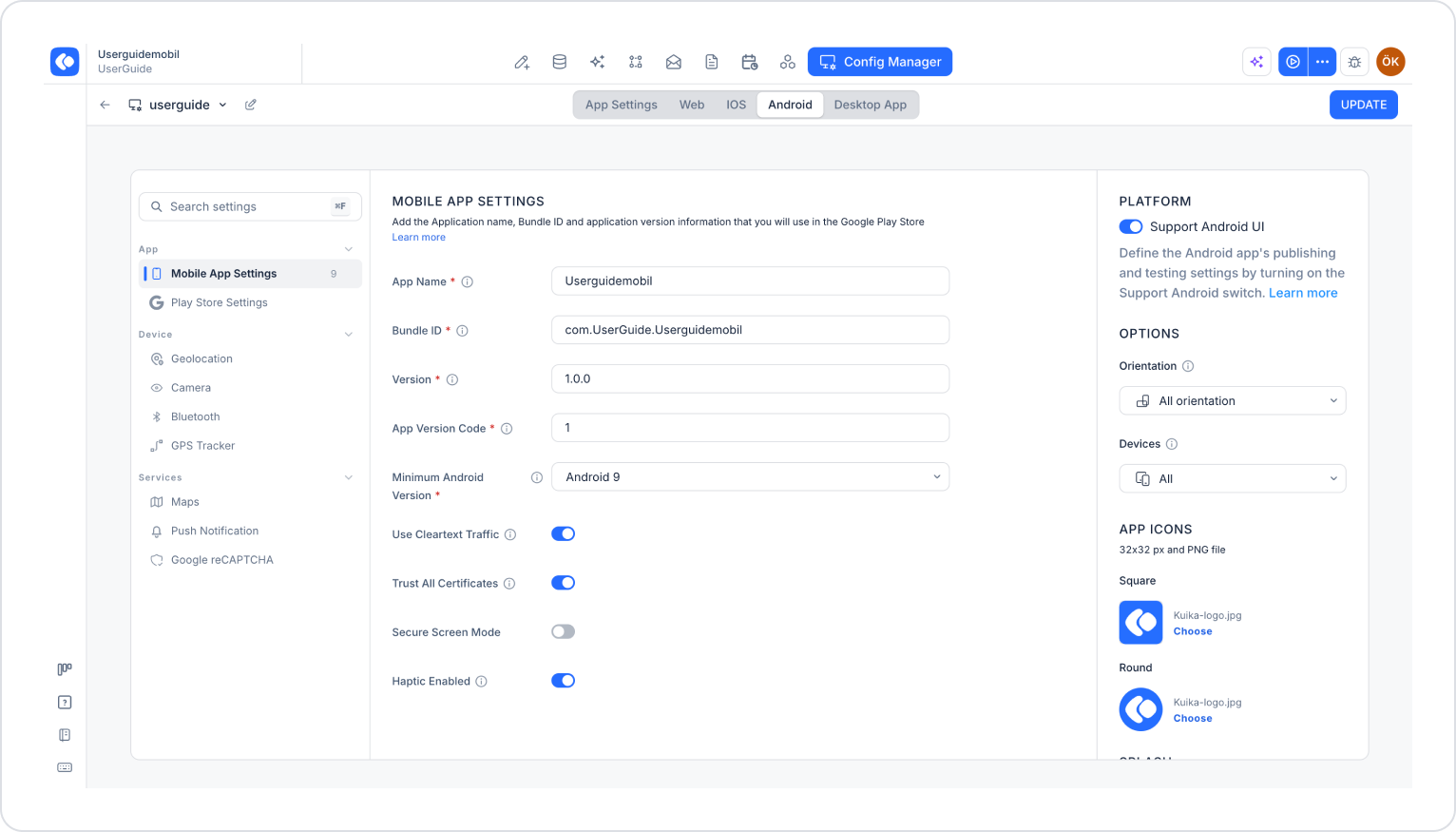
Mobile App Settings allows you to manage your mobile app’s basic configurations, such as its name, Bundle ID, and version information. This information is used to identify your app in the Apple App Store and Google Play Store. You can configure all necessary settings for iOS and Android through Kuika’s Config Manager module.
In this guide, you’ll first learn how to create a mobile app, and then you’ll learn step-by-step how to configure the Mobile App Settings for iOS and Android.
Creating a Mobile App
Log in to the Kuika platform.
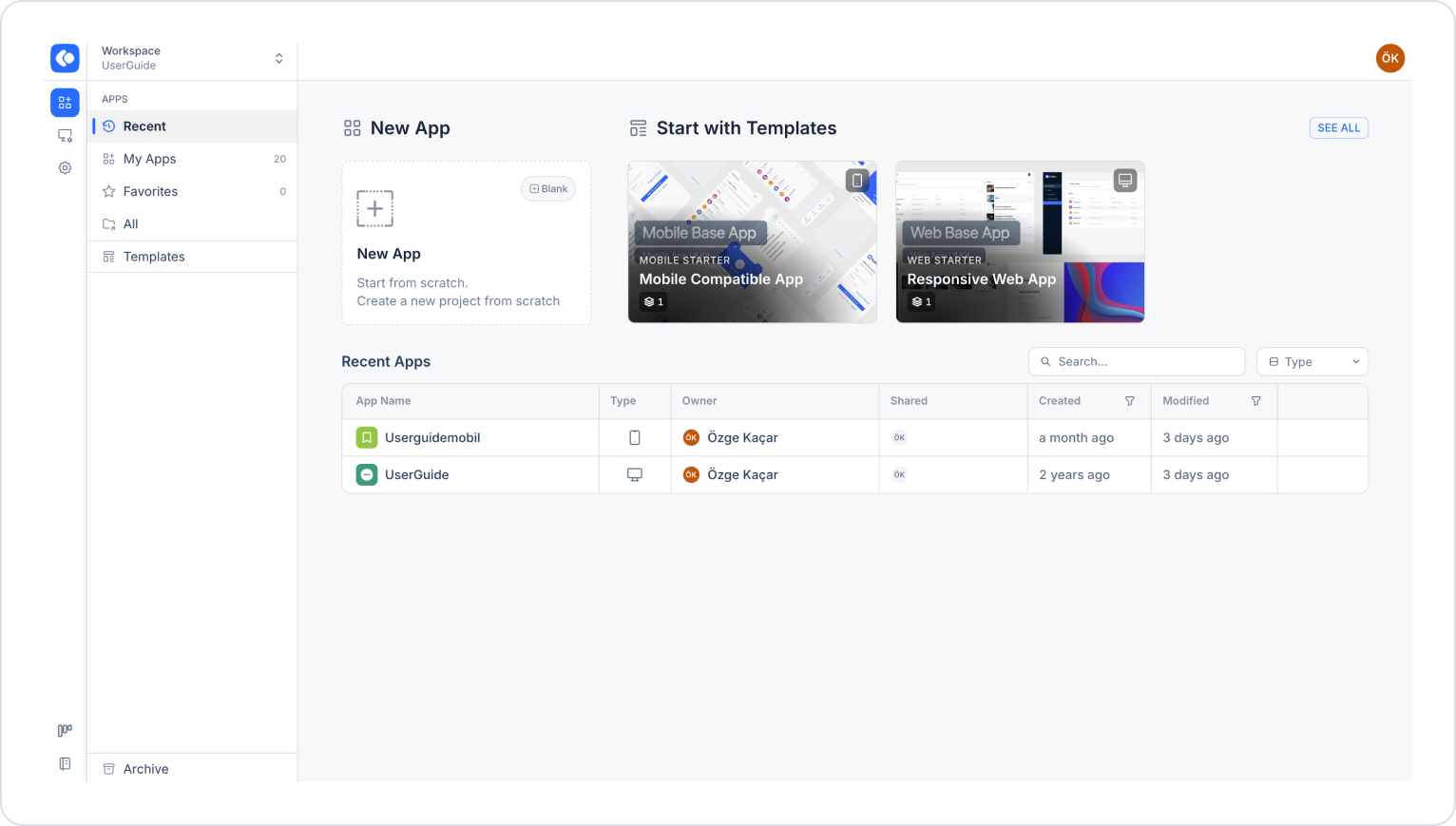
On the Apps screen, click the New App card.
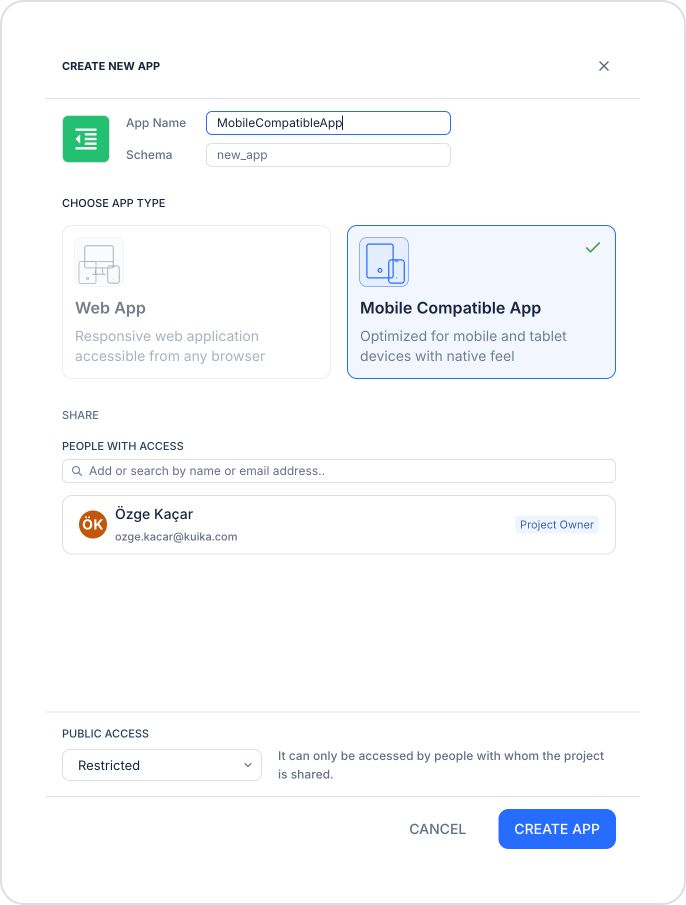
In the CREATE NEW APP window that opens, enter a name for your app in the App Name field.
In the CHOOSE APP TYPE section, select the Mobile Compatible App option.
Click the CREATE APP button to complete the process.
How to Set Up Mobile App Settings?
1. Open or Create a Configuration
Open your mobile app from the Apps screen.
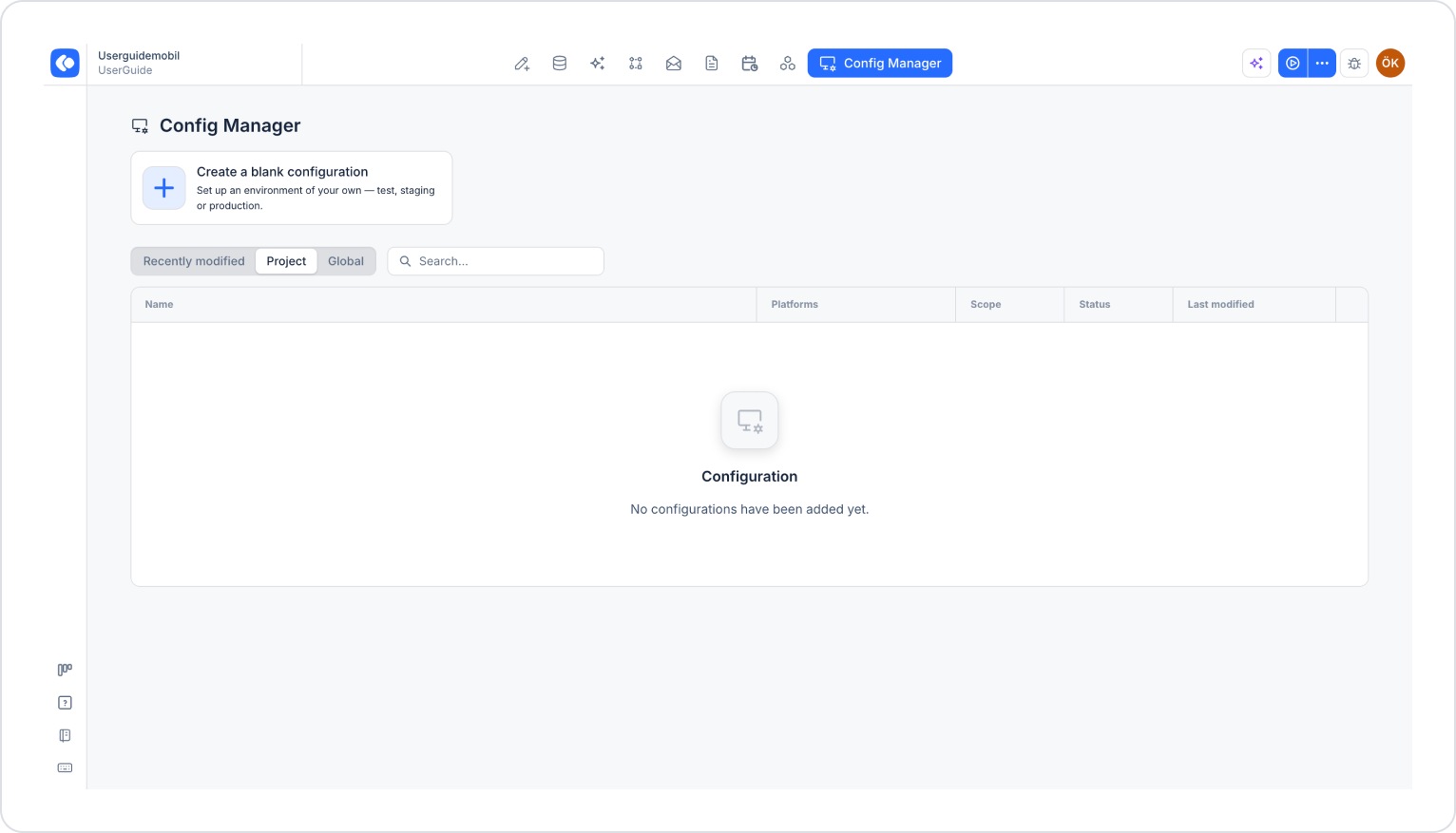
Click the Config Manager module in the top menu.
To create a new configuration, click the Create a blank configuration card, give the configuration a name, and complete the creation process. If you want to use an existing configuration, click its name in the list.
2. Configure iOS Settings
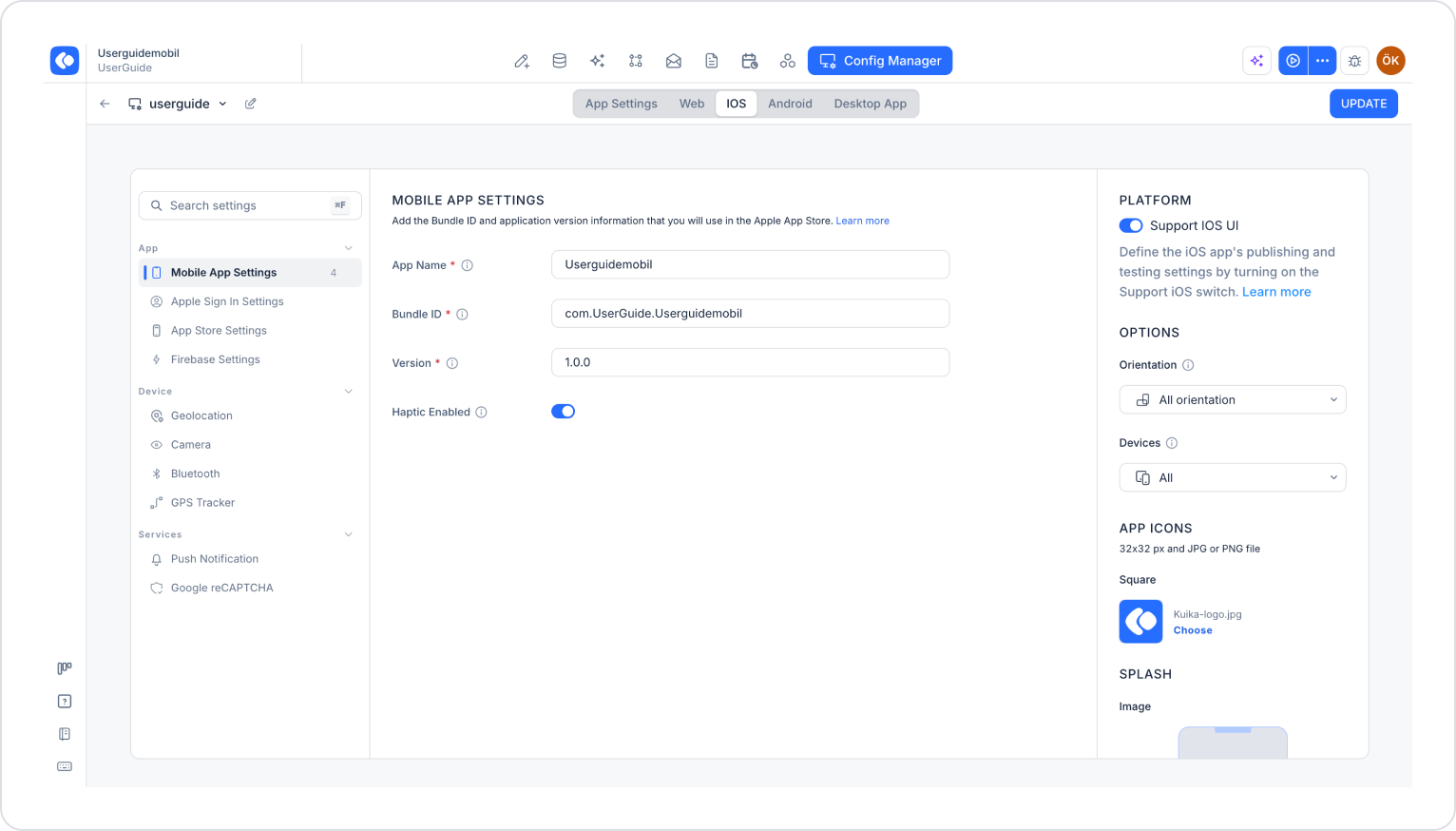
Select the iOS tab from the tabs at the top of the configuration screen.
In the PLATFORM section on the right, make sure the Support iOS UI toggle is enabled.
Under the App heading in the left menu, select Mobile App Settings.
Fill in the following fields:
App Name (required): The name of the app.
Bundle ID (required): The app’s unique identifier (e.g., com.companyname.appname).
Version (required): The app’s version number (e.g., 1.0.0).
Haptic Enabled: A toggle that determines whether haptic (tactile) feedback is enabled.
3. Configure Android Settings
Select the Android tab from the tabs at the top.
In the PLATFORM section on the right, make sure the Support Android UI toggle is enabled.
Under the App heading in the left menu, select Mobile App Settings.
Fill in the following fields:
App Name (required): The name of the app.
Bundle ID (required): The app’s unique identifier.
Version (required): The app’s version number (e.g., 1.0.0).
App Version Code (required): The app’s version code. This value must be incremented with each new upload to the Google Play Store.
Minimum Android Version (required): The lowest Android version required for the app to run. Android 9 is selected by default and is recommended for security reasons. If necessary, Android 8 can be selected manually.
Use Cleartext Traffic: Determines whether the app is allowed to use unencrypted (HTTP) traffic.
Trust All Certificates: Determines whether all certificates are trusted.
Secure Screen Mode: A security mode that prevents screenshots and screen recording within the app. When this mode is enabled, users cannot record app screens using external tools or system features. It is recommended for apps that require the protection of sensitive user data and confidential content.
Haptic Enabled: A toggle that determines whether haptic (tactile) feedback is enabled.
The Kuika platform is compatible with Android 16. Android apps must meet the 16 KB page size requirement. This requirement is important for preventing compatibility errors during the app packaging and publishing processes. We recommend that you take these requirements into account when creating your configuration.
4. Save Settings
Make sure you have filled out all required (*) fields completely and correctly.
Click the UPDATE button in the upper-right corner to save your changes.
5. Test Settings
Click the three dots next to the Preview button in the upper-right corner of the screen.
From the menu that opens, click the RUN option.
Once the process is complete, verify that the settings you specified have been applied correctly.
Important Tips
The Bundle ID cannot be changed after your app is published in the store. Therefore, choose a permanent value that reflects your company and app name.
iOS and Android settings are located in different tabs of the same configuration. If you plan to publish your app on both platforms, fill out both tabs.
The Use Cleartext Traffic and Trust All Certificates options reduce security. Leave these options enabled only when you truly need them, such as in test environments.
Instead of building your mobile app from scratch, you can also start with the Mobile Compatible App template under the Start with Templates section on the Apps screen.
By following these steps, you can configure the Mobile App Settings for iOS and Android and prepare your app for store publication.