In the Endpoint section, enter the Service base URL.
In the Authentication section, select the authentication type from the Authentication type field and fill in the relevant fields.
If necessary, add Custom rows to the header table.
If you wish, enter a note about the data source in the Description field.
Click the CREATE button in the upper right to save the settings. After saving, the endpoint editor opens, and you can begin defining your first endpoint.
Rest API Authentication Types
1. No Auth
Used for services that do not require authentication. No additional configuration is required; if you wish, you can define additional fields using the Custom row in the header table (see rest_4.png).
2. Bearer
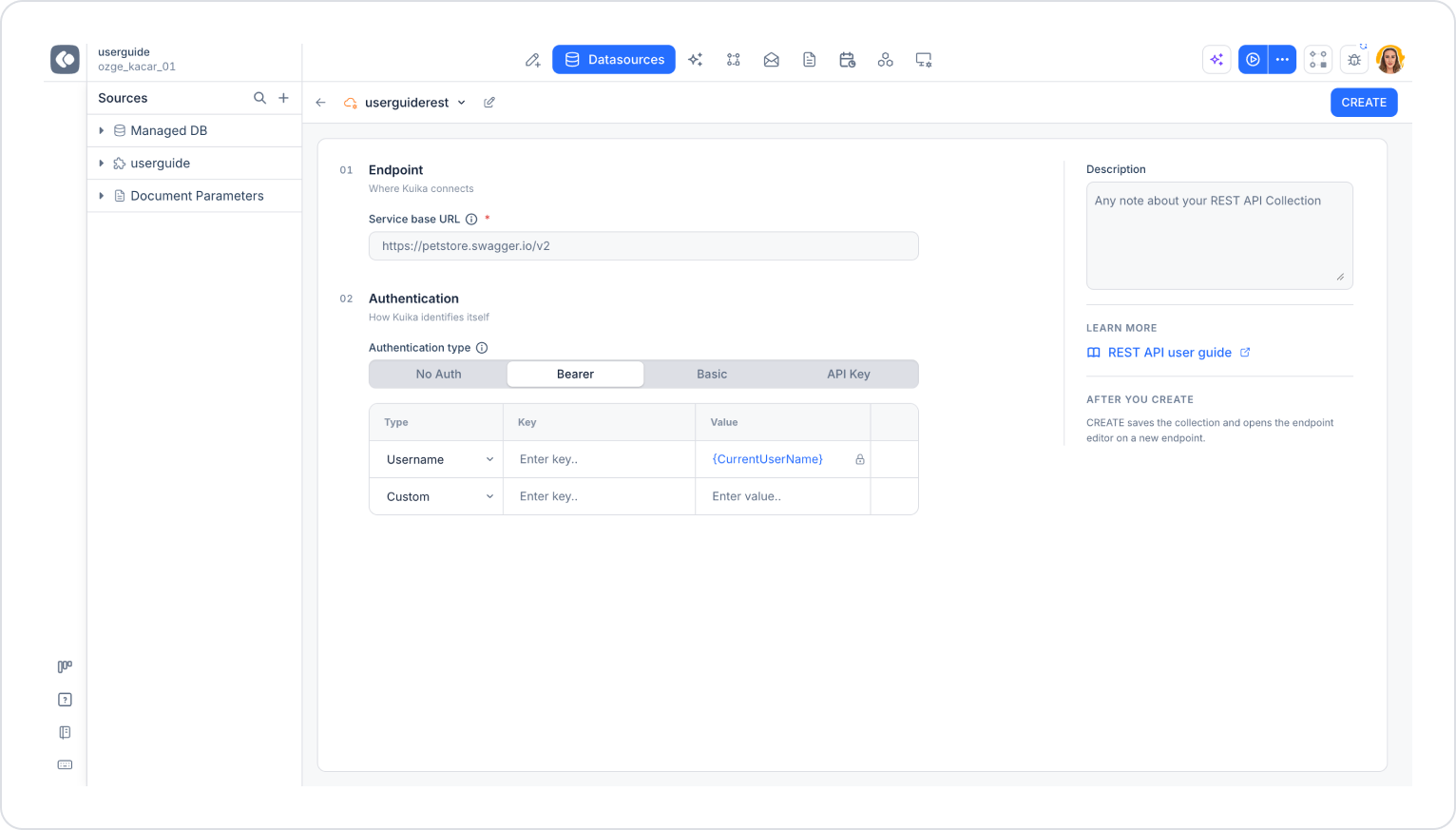
Select the Bearer option from the Authentication type field.
Kuika adds a row of type Username to the header table by default. The value of this row is fixed as {CurrentUserName} and represents the name of the user logged into the application; you can enter the header name to which this value will be sent in the Key field.
You can add custom parameters using Custom rows.
Enter the parameter information in the Key and Value fields (e.g., Key: client_id, Value: your_client_id).
Click the CREATE button to save.
3. Basic
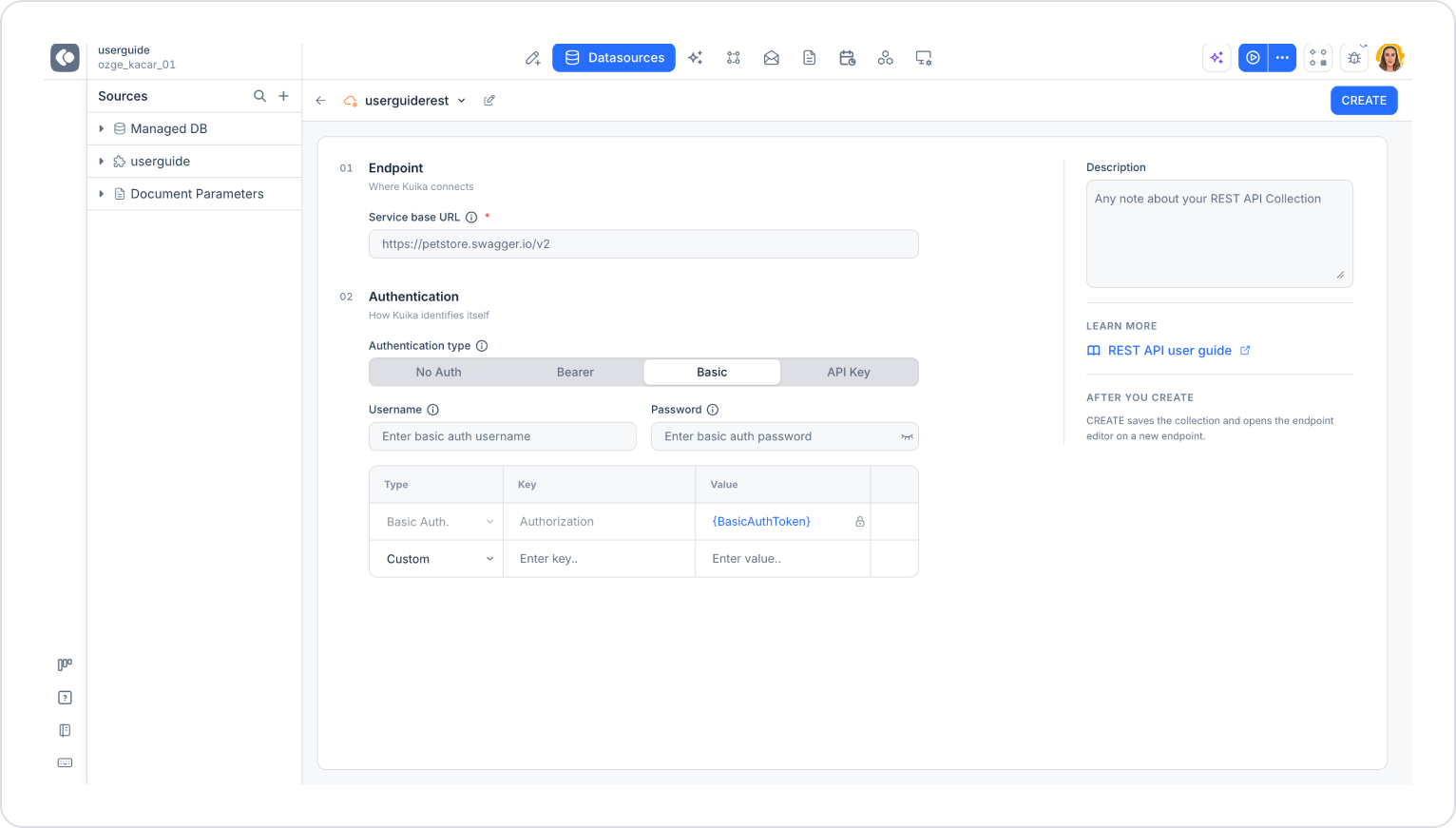
Select the Basic option from the Authentication type field.
Enter the Username and Password information. You can show or hide the password using the eye icon.
Verify that a locked row of type Basic Auth., with the Authorization key and the value {BasicAuthToken}, has been automatically added to the header table. This row sends the token generated from the information you entered.
You can add custom parameters using the Custom rows.
Click the CREATE button to save.
4. API Key
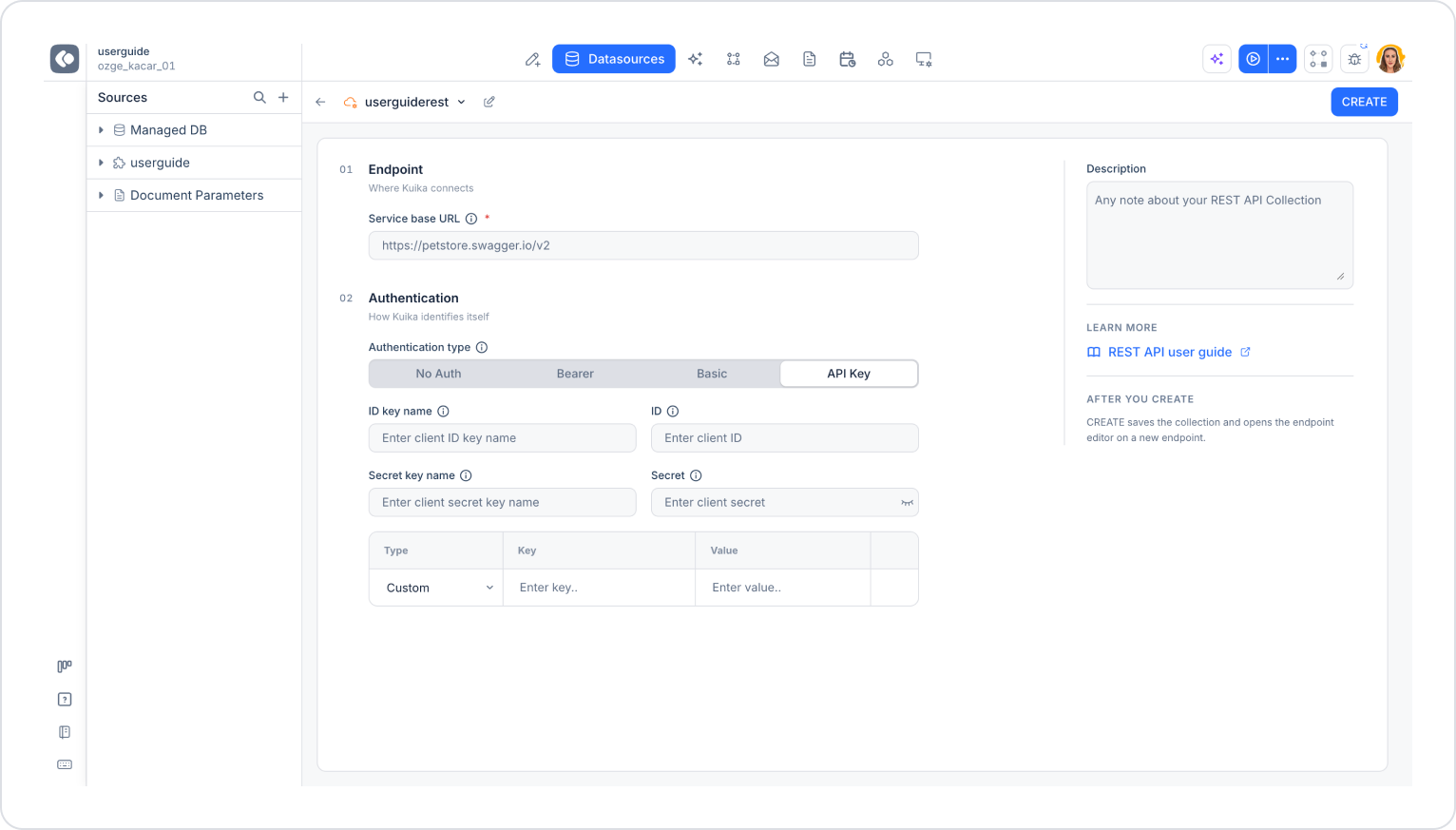
Select the API Key option from the Authentication type field.
Enter the following information:
ID key name: The key name representing the client ID (e.g., client_id).
ID: The client ID.
Secret key name: The key name representing the client secret (e.g., client_secret).
Secret: The client secret. You can show or hide the value using the eye icon.
Custom rows allow you to add custom parameters.
Click the CREATE button to save.
By following these steps, you can integrate the REST API data source into your Kuika applications.