The Resume Process action is used on the Kuika platform to resume a pending or paused workflow from where it left off.
This action allows:
The process to automatically continue once user interaction on the User Task is complete.
Processes to proceed seamlessly after defined breakpoints in the process.
The process restarts after steps such as manual approval, form filling, or data entry.
Like other Process system actions, it is not directly displayed in the action list.
Your application must have at least one Process defined.
Steps to Add the Resume Process Action
Open the Process Automation module.
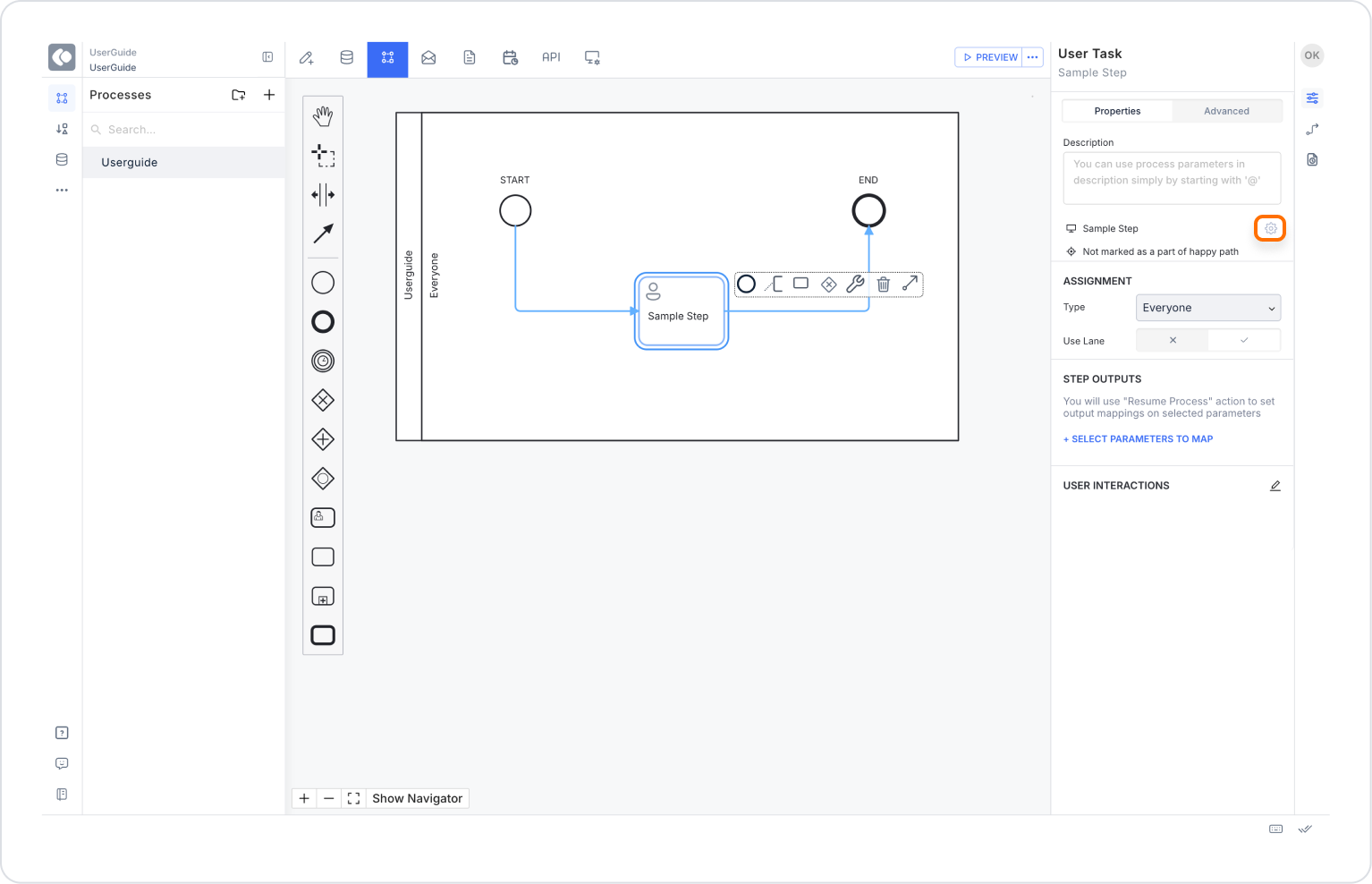
Click on a User Task element on the Canvas.
In the Properties Panel on the right, you will see the warning “No screen set for step yet!”.
Click on the gear icon next to this warning.
In the Workflow Screen window that opens:
You can create a new screen, or
Go to the UI Design module and manually create a new screen from the Screens > Workflow Screens area.
After completing this process, go to the UI Design module.
Go to the screen you created in the Workflow Screens tab in the Screens panel on the left side.
Add an element (e.g., a Button) to the screen.
Click the Add Actions button on the right side.
Follow this path in the menu that opens: Initial Actions → Process Automation → Resume Process
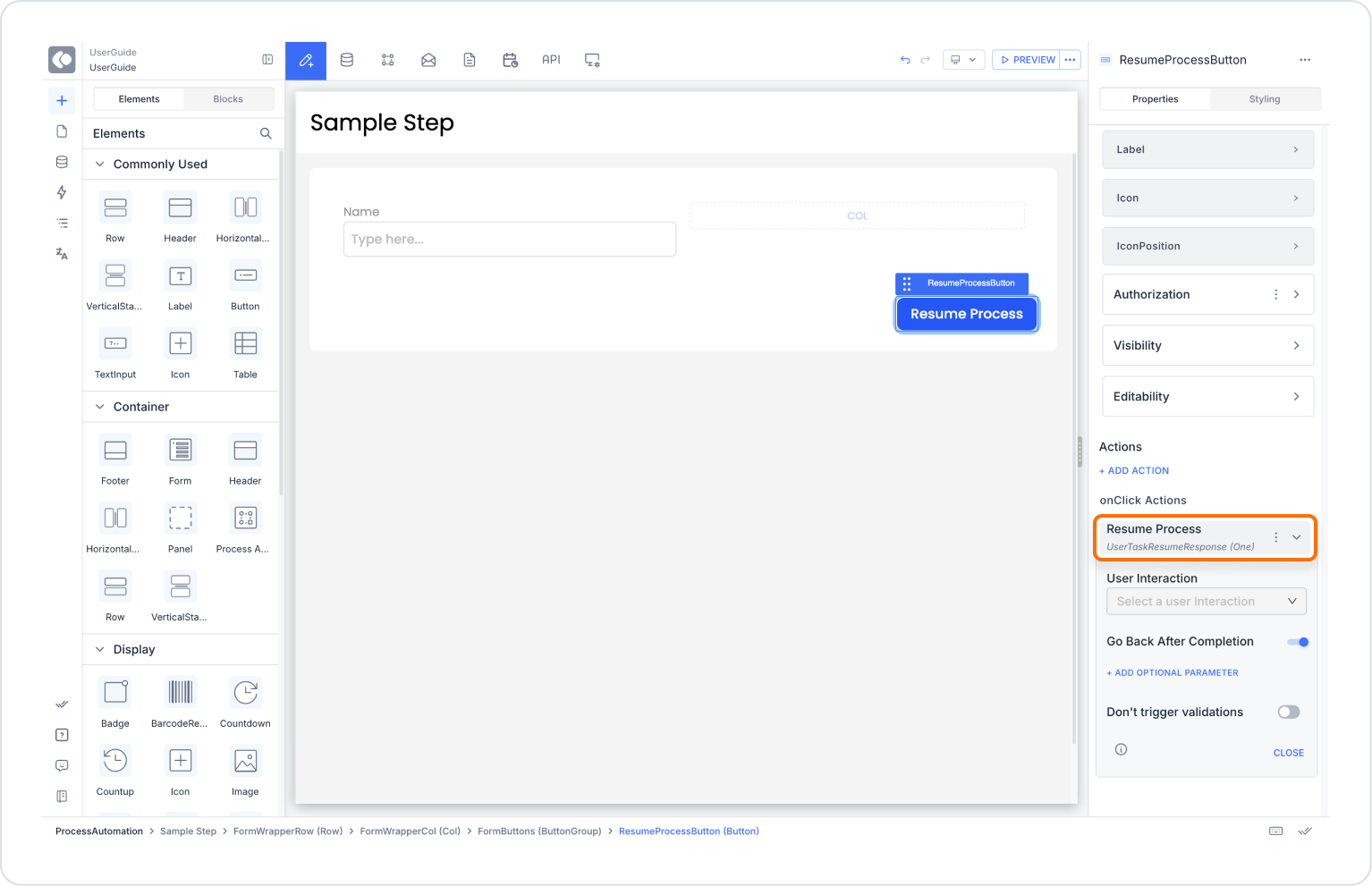
After adding the action, the Resume Process will appear in the onClick Actions section.
Configure the Resume Process Parameters
User Interaction field:
Defines steps that require user interaction (e.g., filling out a form or confirming).
The process can be continued directly with the “None” option.
If the Go Back After Completion option is active, the user is automatically redirected to the previous screen when the process is completed.
You can add the OutcomeMessage parameter by clicking the + ADD OPTIONAL PARAMETER menu:
Used to display a message to the user indicating that the process has successfully continued.
Click the SAVE button to complete the process.
Once you have completed these steps, the Resume Process action automatically continues the process after the interactive steps. Processes thus proceed seamlessly from where they were paused, and the user experience is not interrupted.