Host Settings determine how a service or application operates and interacts with other devices. These settings include network connections, IP addresses, domain name redirects, port numbers, and security configurations. They define how the server connects to the network and how other devices communicate with the server.
For example, a web hosting provider’s Host Settings determine which server incoming requests are routed to and which files are served from that server.
Kuika provides Host Settings through the Config Manager module. If your application’s frontend is hosted in a different location, you can specify the address of the hosting server through this setting. This setting is optional.
Host Settings
1. Open or Create a Configuration
Log in to the Kuika platform.
From the Apps screen, open the project you’ll be working on.
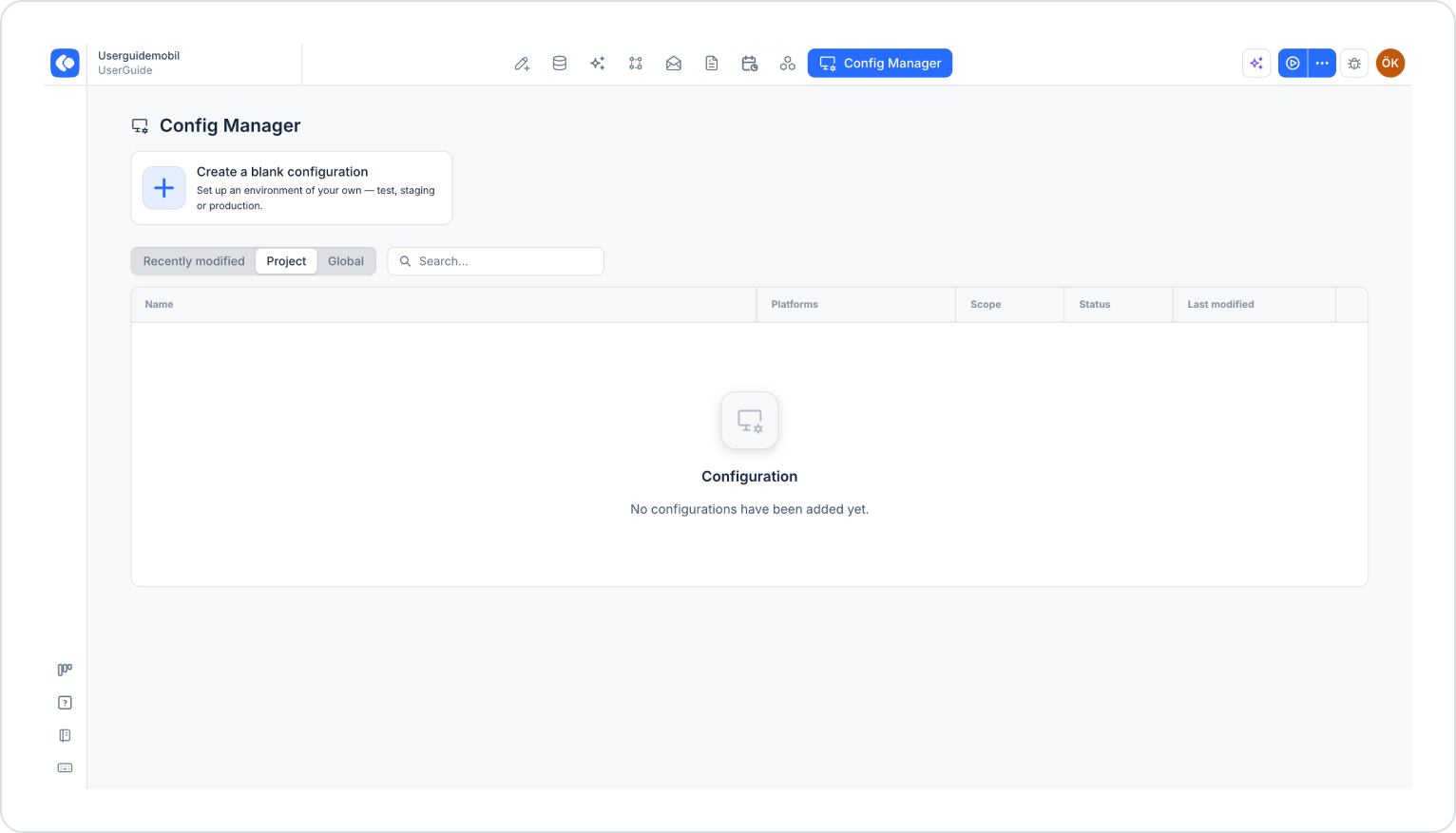
Click the Config Manager module in the top menu.
To create a new configuration, click the Create a blank configuration card, give the configuration a name, and complete the creation process. If you want to use an existing configuration, click its name in the list.
2. Go to Host Settings
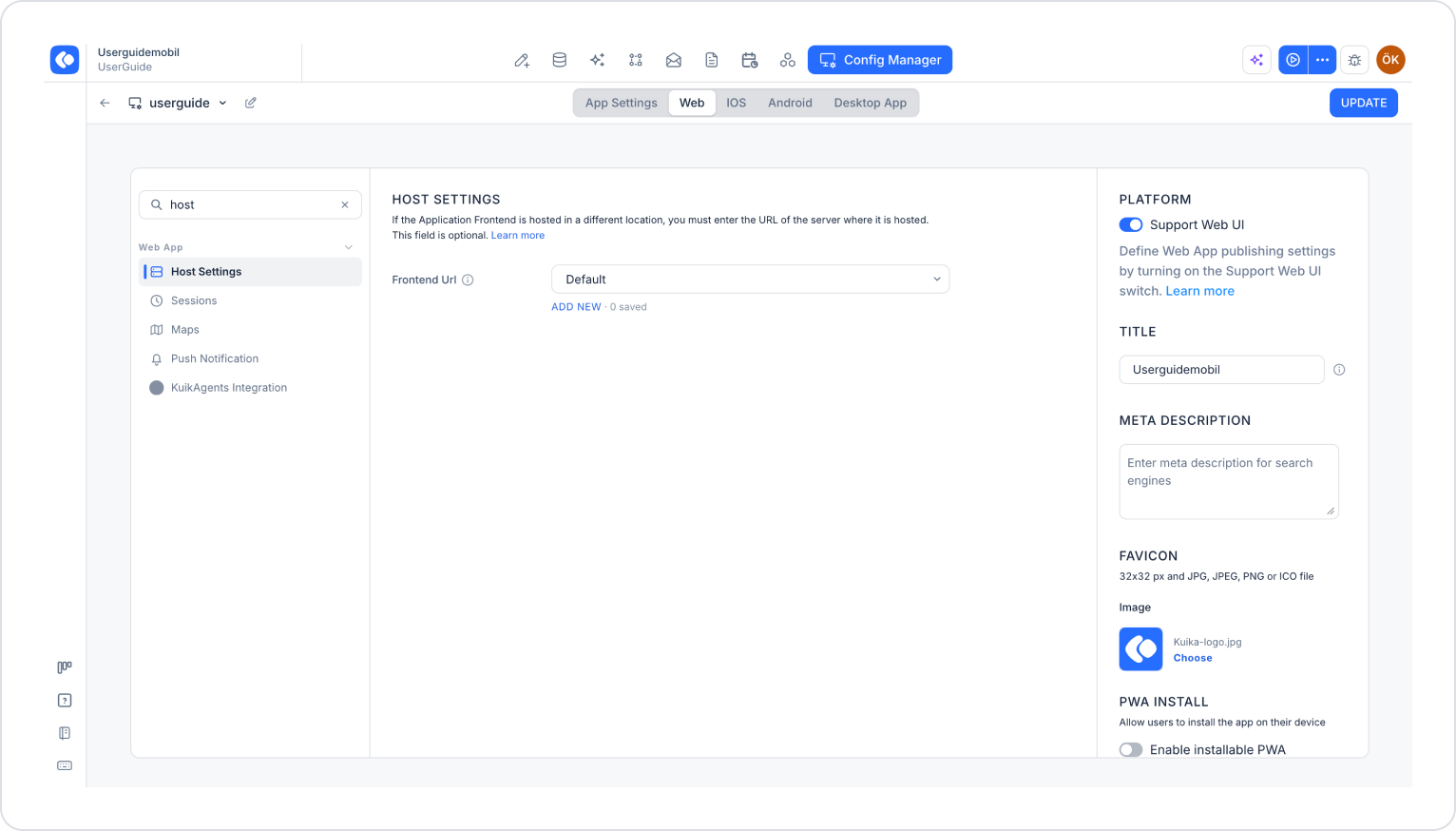
Click the Web tab at the top of the configuration screen.
In the Platform section of the right panel, enable the Support Web UI option.
In the left menu, click the Host Settings option under the WEB APP heading.
3. Configure Host Settings
Click the Add New link below the Frontend URL field.
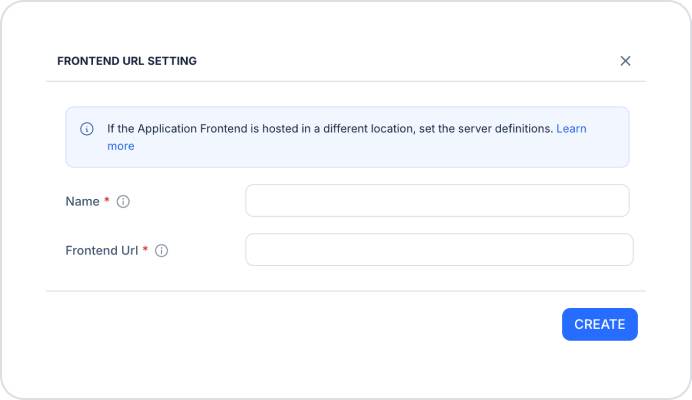
In the Frontend URL Setting window that opens, fill in the following fields (all fields are required):
Name: The descriptive name to assign to the configuration.
Frontend URL: The address of the server hosting your application’s front end.
After filling in all fields, click the Create button.
Select the configuration you created from the Frontend URL dropdown menu.
Click the Save button in the upper-right corner to save your changes. (In an existing configuration, this button appears as Update.)
Using Frontend URLs with Sub-Applications
You can use the sub-application concept to publish two different web applications under a single domain name.
For example, you can publish the kuika.com and akademi.kuika.com applications under the same domain name as kuika.com/akademi.
In this configuration, the /akademi section is the path following the main URL.
After completing these steps, your Host Settings will be applied to your application.