The Kuika Config Manager module allows you to centrally and easily manage your application’s email configuration settings. You can quickly configure email sending using SMTP, Exchange Server, or Amazon Web Services (AWS) infrastructure.
This configuration enables the email sending infrastructure to function properly in both your application’s preview environment and the exported production version.
Configuration is not required in the preview environment, but it can be optionally defined to test email sending.
In exported applications, however, configuration is required for email functions to work.
All necessary settings for sending emails through your own SMTP server, Exchange Server infrastructure, or AWS SES service are defined through this module. Thanks to these configurations, your application’s email traffic is fully routed to your own infrastructure and managed securely without any third-party dependencies.
The Difference Between the Preview and Export Environments
You do not need to configure any email settings for applications in Preview. The Preview environment continues to operate with the existing email behavior.
However, when the application is exported or the source code is downloaded, email transmissions are not routed through Kuika’s default infrastructure. From this point onward, the system executes all email operations according to the settings you defined in Config Manager.
Therefore, SMTP, AWS, or Exchange Server configurations are required only for applications that will be exported.
Where Are These Configurations Used?
The email configuration you define enables the following functions to work:
User verification emails (Sign-up verification code)
Password reset emails (Forgot password)
Process Automation task notifications
System emails sent via the SendMail action
Email delivery will not work in exported applications unless these settings are configured.
Email Configuration Steps
1. Open or Create a Configuration
Log in to the Kuika platform.
Open the project you’ll be working on from the Apps screen.
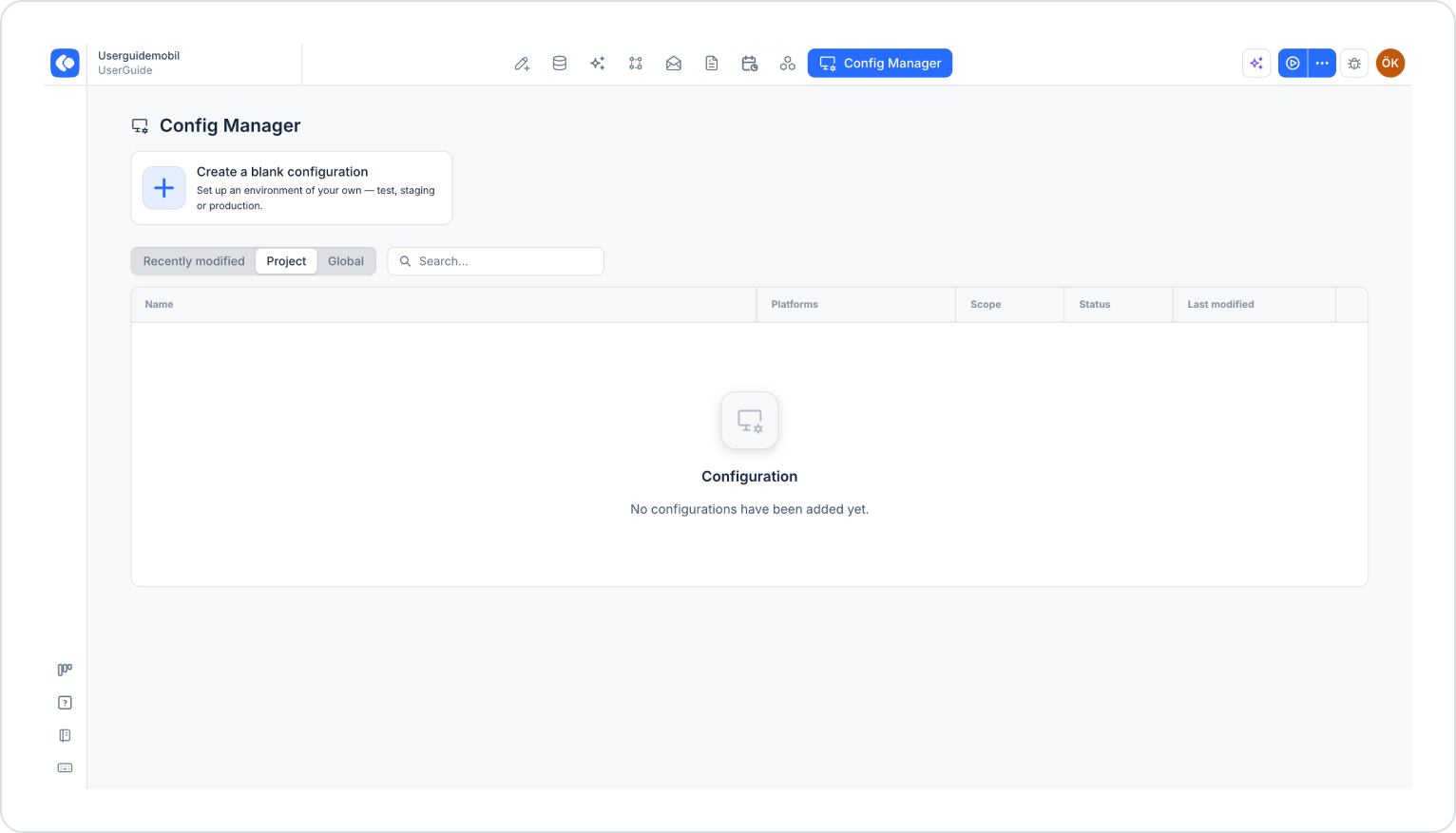
Click the Config Manager module in the top menu.
To create a new configuration, click the Create a blank configuration card, give the configuration a name, and complete the creation process. If you want to use an existing configuration, click its name in the list.
2. Go to Mail Settings
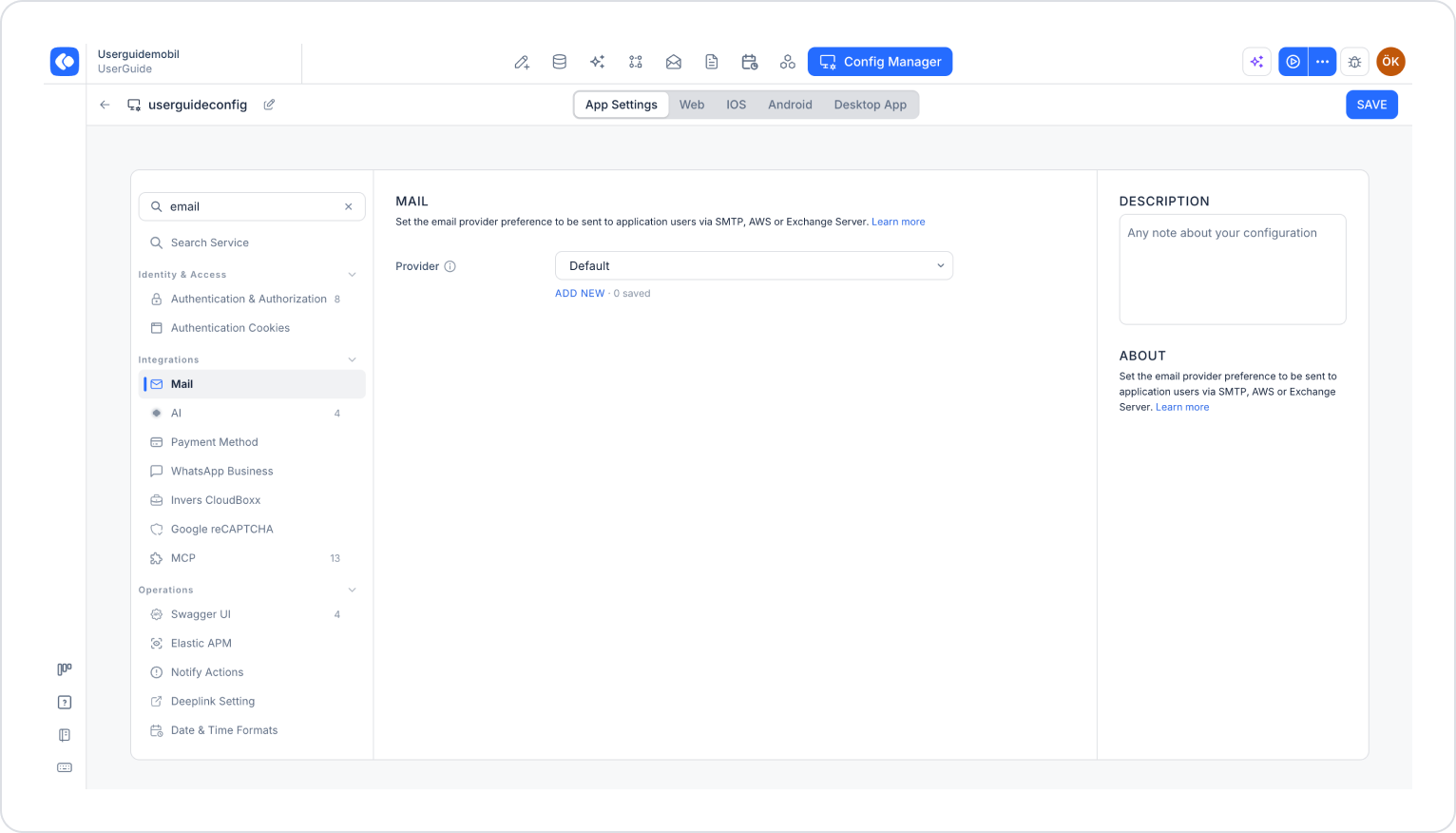
Make sure the App Settings tab is selected at the top of the configuration screen.
In the left menu, click the Mail option under the INTEGRATIONS heading. You can also quickly access this setting by typing “email” into the Search settings field at the top of the menu.
Click the Add New link under the Provider field.
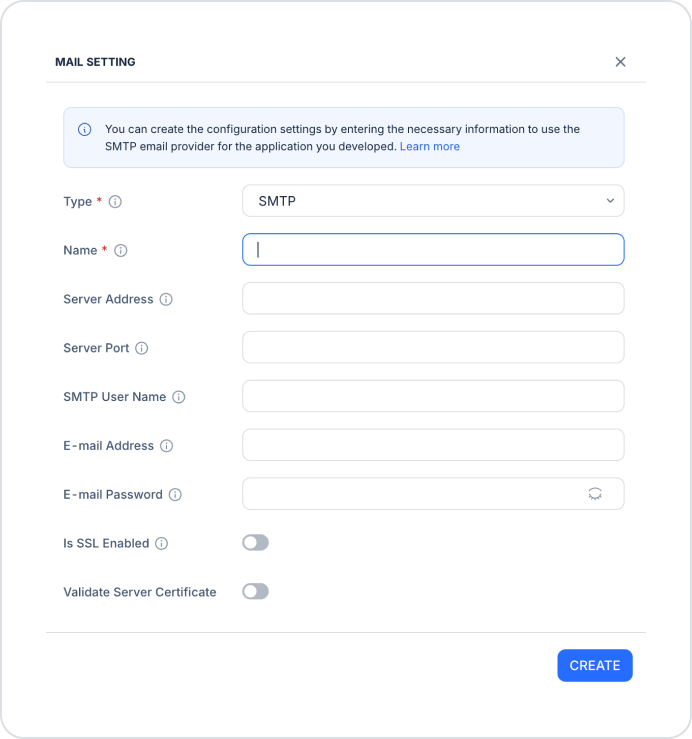
In the Mail Setting window that opens, select the email provider you want to use from the Type field. The fields you need to fill out will vary depending on your selection.
3. Setting Up an Email Provider via SMTP
Select the SMTP option from the Type field and enter the information for your SMTP server:
Name (required): The name you will give to this configuration.
Server Address: The address of the SMTP server.
Server Port: The port number of the SMTP server.
SMTP User Name: The username used to connect to the SMTP server.
Email Address: The sender’s email address.
Email Password: The password for the email account.
Is SSL Enabled: Enable this option to encrypt the connection using SSL.
Validate Server Certificate: Enable this option to validate the server certificate.
After entering the information, click the Create button to create the SMTP configuration.
4. Mail Provider Setup with AWS
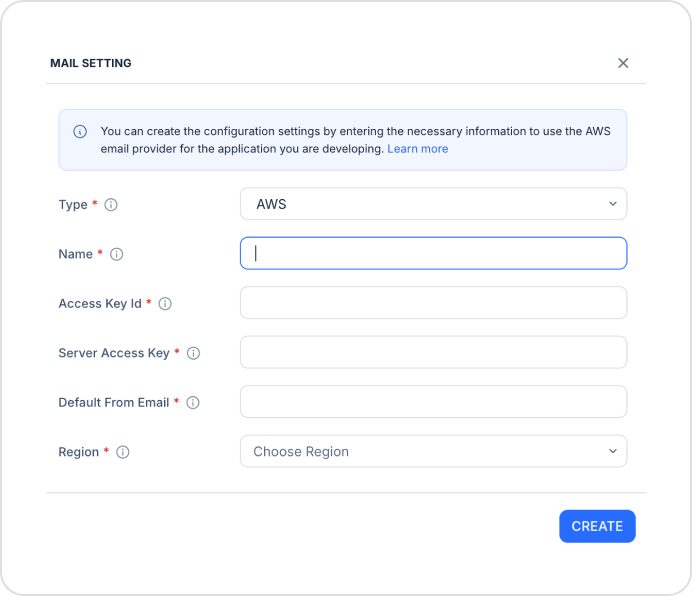
Select the AWS option from the Type field and enter your AWS account information (all fields are required):
Name: The name you will give to the configuration.
Access Key ID: The AWS access key ID.
Server Access Key: The AWS secret access key used in conjunction with the Access Key ID.
Default From Email: The address from which emails will be sent by default. This address must be verified on AWS SES.
Region: The region where your AWS SES service is located.
After entering the information, click the Create button to create the AWS configuration.
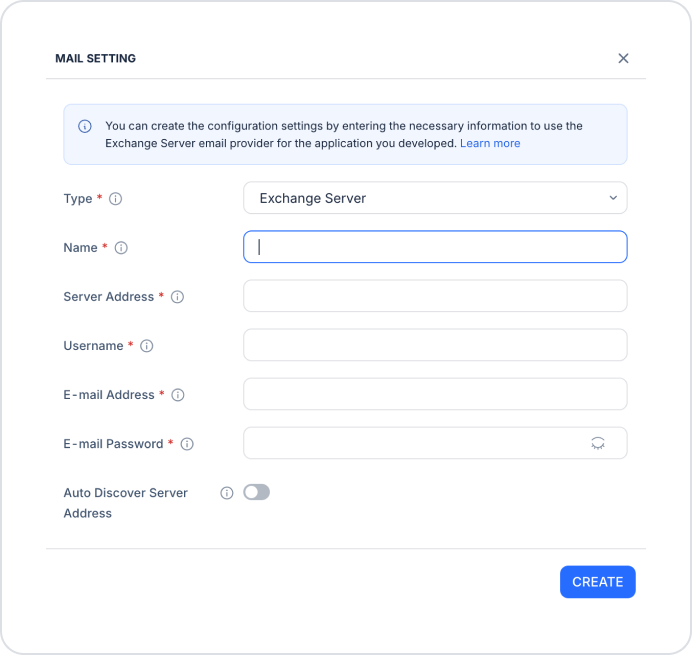
5. Mail Provider Setup with Exchange Server
Select the Exchange Server option from the Type field and fill in the required fields:
Name (required): The name you will give to the configuration.
Server Address (required): The address of the Exchange server.
Username (required): Your Exchange username.
Email Address (required): Your sender email address.
Email Password (required): Your email password.
Auto Discover Server Address: Enable this option if you want the server address to be detected automatically.
After entering all the information, click the Create button to create the Exchange Server configuration.
6. Select and Save the Configuration
Select the configuration you created from the Provider drop-down menu.
Click the Save button in the upper-right corner to save the changes. (In an existing configuration, this button appears as Update.)
After completing these steps, you can use the SMTP, Exchange Server, or AWS configuration for sending email in your application.