Kullanıcı Kılavuzu

Connection Settings

12/10/26
Connection Settings

Connection Settings is the settings area used to manage connection configurations, primarily for an app’s database and backend connections.
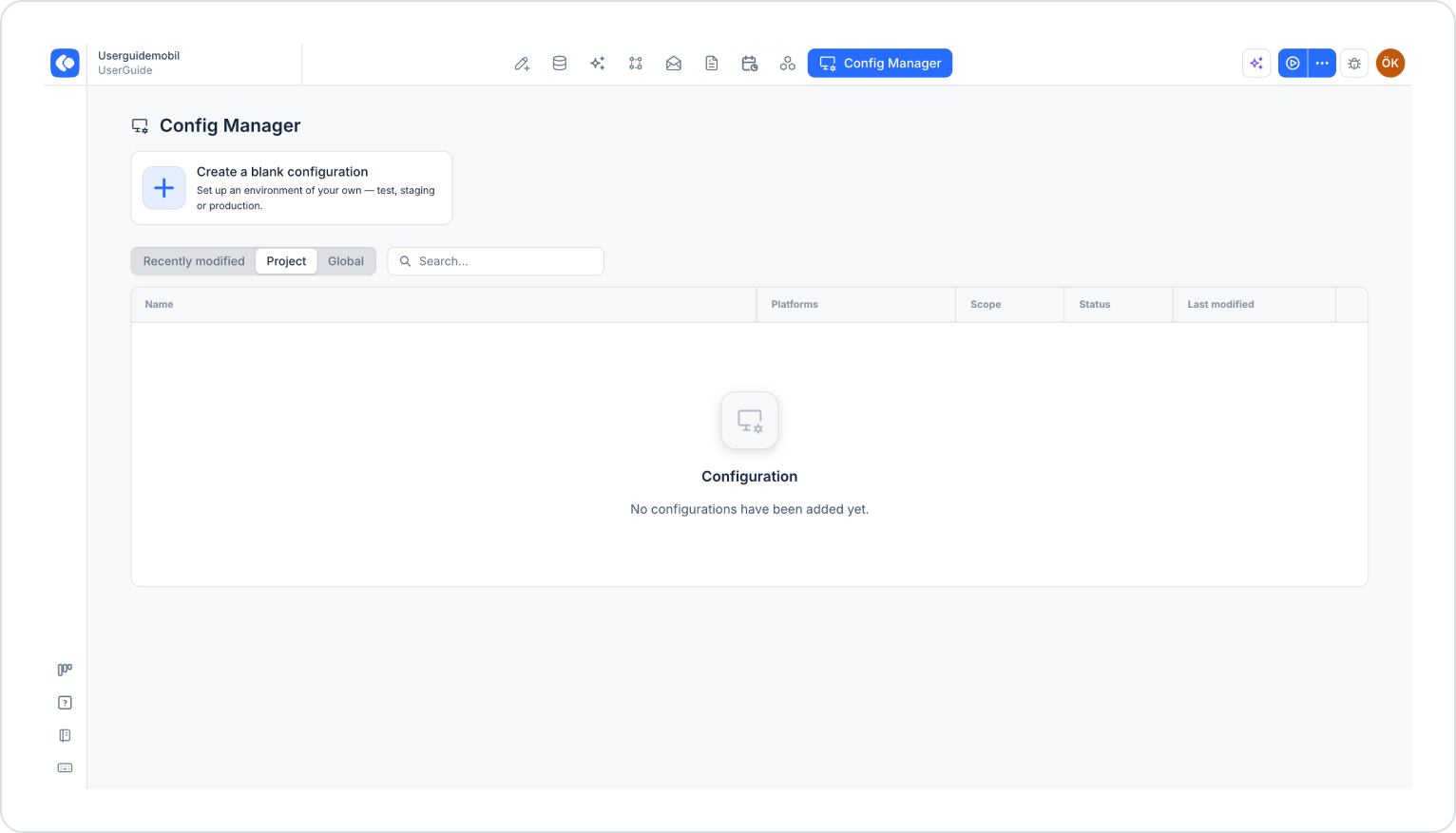
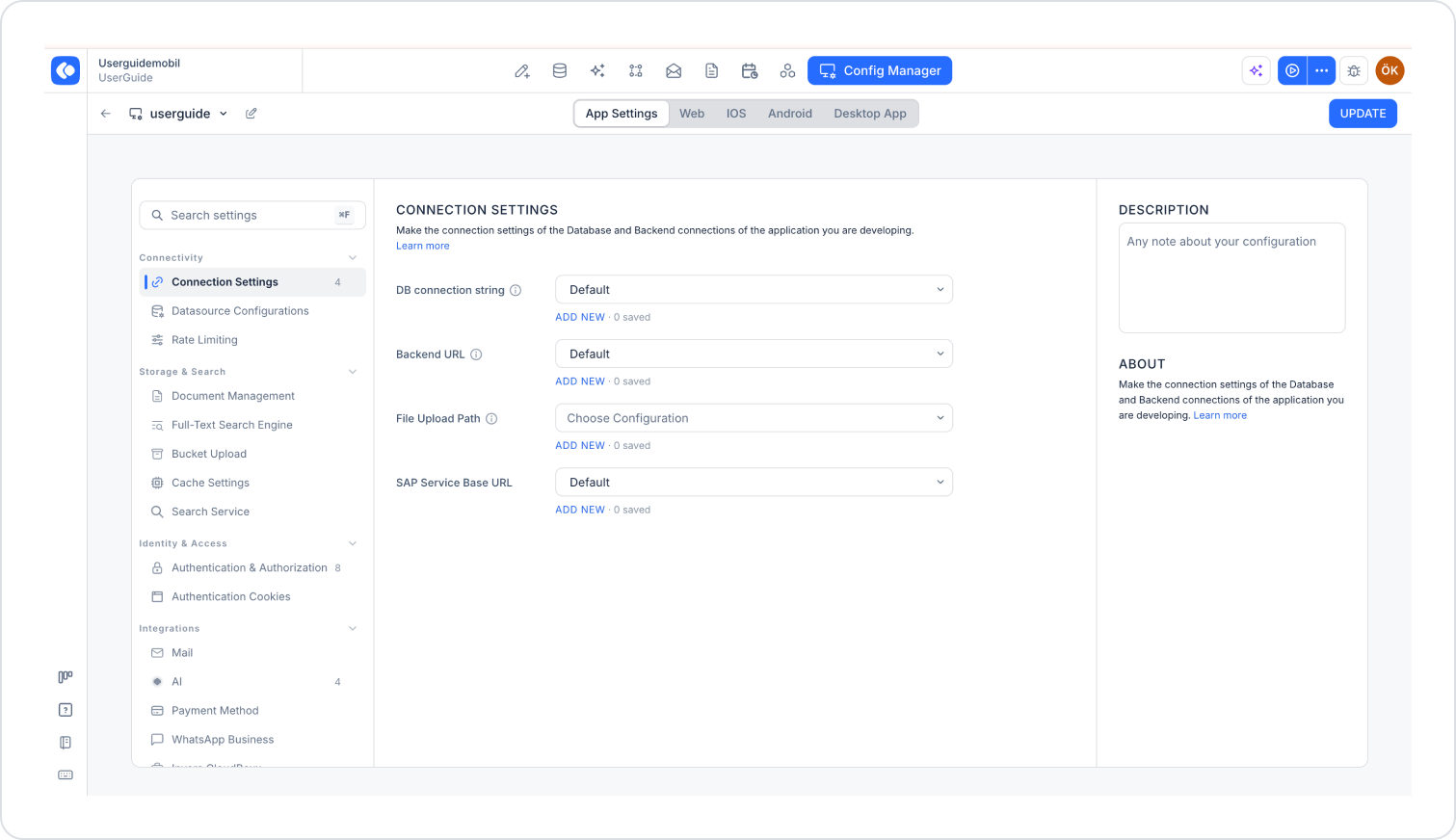
Accessing Connection Settings

  1. Log in to the Kuika platform and open the project you’ll be working on from the Apps screen.
  2. Click the Config Manager module in the top menu.
  1. To edit an existing configuration, click its name in the list, or create a new configuration using the Create a blank configuration card.
  2. Make sure the App Settings tab is selected at the top of the configuration screen.
  3. In the left menu, click the Connection Settings option under the CONNECTIVITY heading.

Connection Settings Section

The Connection Settings screen contains the following four configuration fields:

  • DB connection string
  • Backend URL
  • File Upload Path
  • SAP Service Base URL

For each field, you can select a saved configuration from the drop-down menu or create a new configuration using the Add New link below the field. After creating the new configuration, you must select it from the drop-down menu and save it using the Save button in the upper-right corner. (In an existing configuration, this button appears as Update.)

1. DB Connection String

Defines the connection string containing the parameters required for the application to access the database.

The DB Connection String Setting window contains two required fields:
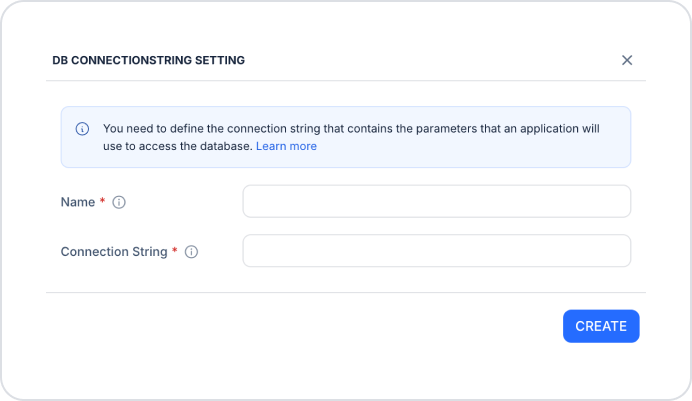
  • Name: A unique name to assign to the configuration.
  • Connection String: The connection string containing the database access parameters.

Example Connection String:

Server=myServerAddress;Database=myDataBase;User Id=myUsername;Password=myPassword;

Important Notes:

  • Security: Be sure to store information such as usernames and passwords securely.
  • Accuracy: Correct configuration of the Connection String is essential for seamless access to the database.
  • Environments: Different connection string values can be used for development, test, and production environments.

2. Backend URL

Defines the address used to access the application’s backend server.

The Backend URL Setting window contains two required fields:
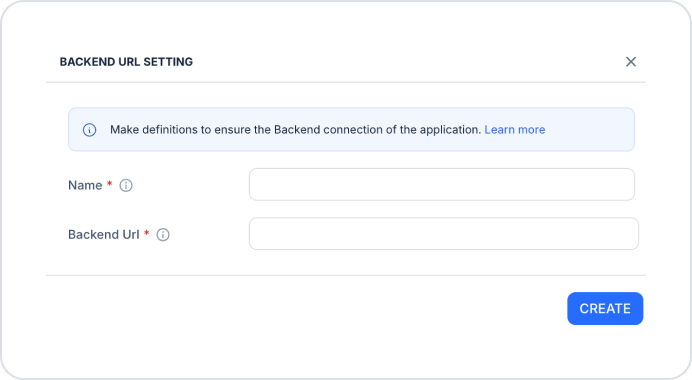
  • Name: A unique name to be assigned to the configuration.
  • Backend URL: The full address of the backend server.

(i) Backend URL settings accept “IP” and “Port” information.

3. File Upload Path

Specifies the directory or path where uploaded files will be stored during the file upload process on the server.

The File Upload Path Setting window contains two required fields:
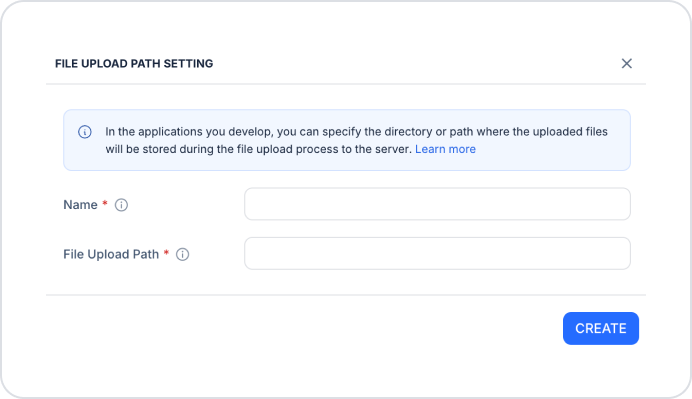
  • Name: A unique name to be assigned to the configuration.
  • File Upload Path: The server directory or path where files will be uploaded (e.g., /upload/user_documents/).

4. SAP Service Base URL

Defines the base address the application uses to connect to SAP services.

The SAP Service Base URL Setting window contains two required fields:
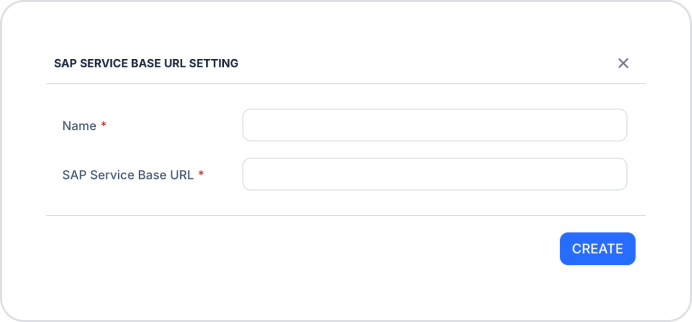
  • Name: A unique name to be assigned to the configuration.
  • SAP Service Base URL: The base access address for SAP services.

By defining the configurations in Connection Settings, you can ensure that your application has seamless access to database and backend resources. The correct configuration of these settings is critical for your application’s performance and security.

‍

No items found.

Sözlük

No items found.

Alt Başlıklar